
Mammals (Cattle)
Nelore
Nelore
Classification and scientific name: Bos indicus
Sources checked:
White or pale gray coats, a shoulder hump and skin below the neck are common
The Nelore is zebu-derived beef cattle related to India’s Ongole cattle. It developed into an important breed in South American beef production. White or pale gray coats, a shoulder hump and skin below the neck are common. Ear shape differs from the Brahman’s.
Origins and distribution
Improved in Brazil and elsewhere from Indian-derived zebu
- Nelore
- Improved in Brazil and elsewhere from Indian-derived zebu
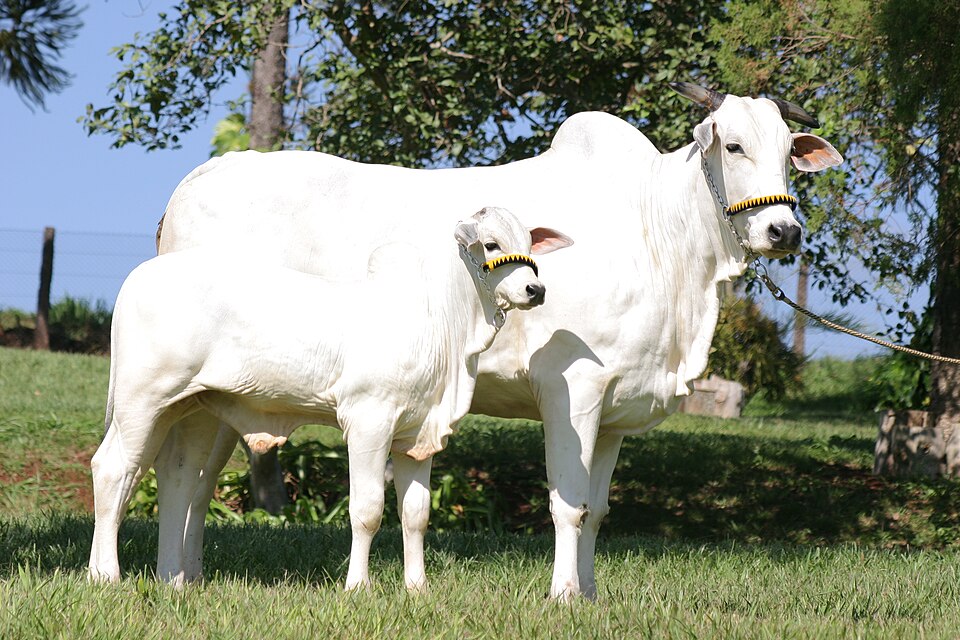
Reference photograph
Reference photograph of Nelore. Examine this individual’s color and form alongside the identification descriptions in the text.
Source: Eduardo Ferraz Pacheco de Castro e Sebastião de Oliveira · Original material · CC0
1. Classification, origins and habitat
The Nelore is zebu-derived beef cattle related to India’s Ongole cattle. It developed into an important breed in South American beef production.
Distinguishing South Asian origins associated with Ongole from beef selection in Brazil and elsewhere explains Nelore’s spread. A regional name and a current registered population are separate information; not all white cattle raised in South America are Nelore.
2. Appearance and identification
White or pale gray coats, a shoulder hump and skin below the neck are common. Ear shape differs from the Brahman’s.
Observe short ears, the shoulder hump and hanging skin beneath the neck together for comparison with the Brahman’s long drooping ears. Bulls can appear darker around the neck and shoulders, with differences by sex and age. Hump size alone does not establish breed.
Beside the Brahman known for long drooping ears, Nelore’s relatively shorter ears provide a comparison clue. Both share zebu-derived features; check registration and regional formation history rather than naming them from the hump alone.
3. Behavior and way of life
The breed relates to beef production in hot regions. Distinguishing Indian origin from Brazilian registration and improvement history helps explain its spread.
It is a zebu-derived breed used for grazing beef cattle in tropical and subtropical regions. Adaptation to outdoor environments provides context for foraging ability and production records, but does not justify leaving animals to endure seasonal shortages of pasture or water.
4. Observation, conservation and care
Consider grazing environment and breeding records together. Zebu-derived heat tolerance does not replace clean water, shade and adequate nutrition.
Make pasture water, shade and movement routes accessible to the whole herd. Compare growth and reproductive records at matching age and sex; a famous breed does not justify ignoring local climate and management differences. Photographs support, rather than replace, registration records.
Evidence and references
- Oklahoma State University — Nelore
Classification, origins, appearance, ecology or uses of the breed
- Defra — Cattle welfare guidance on behavior, feeding and environment
General principles of feed, water, rest and handling. A United Kingdom source, not guidance on Korean legislation.