
Mammals (Cattle)
Piedmontese
Piedmontese
Classification and scientific name: Bos taurus
Sources checked:
Adults are grayish white, while young calves may be fawn
The Piedmontese is a cattle breed developed in northwestern Italy. It is known for myostatin-related characteristics influencing muscle development. Adults are grayish white, while young calves may be fawn. The ratio of muscle to skeletal structure receives important attention in breed descriptions.
Origins and distribution
Piedmont, Italy
- Piedmontese
- Piedmont, Italy
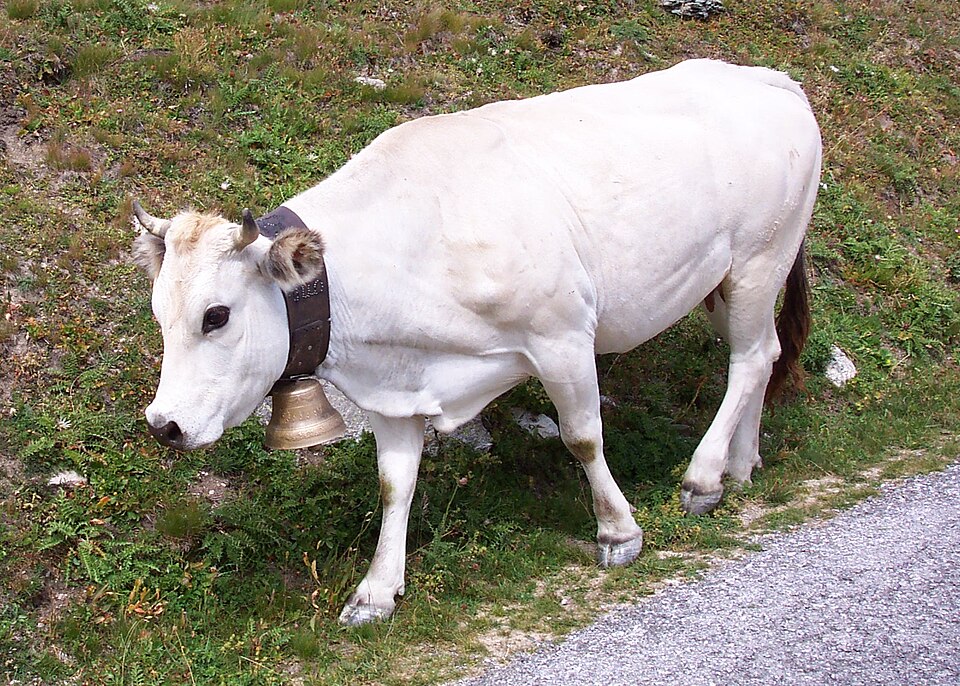
Reference photograph
Reference photograph of Piedmontese. Examine this individual’s color and form alongside the identification descriptions in the text.
Source: Aleks · Original material · CC BY-SA 3.0
1. Classification, origins and habitat
The Piedmontese is a cattle breed developed in northwestern Italy. It is known for myostatin-related characteristics influencing muscle development.
Traditional uses in Piedmont can be considered together with improvement selecting for muscle development. Different Korean names, “피에드몬테세” and “피에몬테 우”, should not lead to duplicate descriptions as separate breeds when the English name Piedmontese is the same.
2. Appearance and identification
Adults are grayish white, while young calves may be fawn. The ratio of muscle to skeletal structure receives important attention in breed descriptions.
Fawn young animals and pale adults can occur within one breed. Observe the adult grayish-white coat, muzzle and feet where the skin appears dark, and muscles of body and hindquarters together. Despite muscle development like that of Belgian Blue cattle, color and breed history differ.
Several Korean spellings of Piedmontese reflect differences in writing, not taxonomy. Checking the English name when collecting photographs reduces the risk of mistaking records of the same breed for different populations.
3. Behavior and way of life
The breed relates to both meat production and traditional dairy use. Muscle development must not be equated with every individual’s health or ease of calving.
Beef and regional dairy uses illustrate livestock’s multipurpose history. Muscle-related genetic traits explain appearance and production characteristics, but do not assess an individual’s fitness or personality. Descriptions of meat properties should also be distinguished from actual records.
4. Observation, conservation and care
Manage individuals using breeding and growth records. The spellings “피에드몬테세” and “피에몬테 우” can refer to the same Piedmontese, so check the registered English name.
Breeding information should consider parental ancestry and individual condition together; body form alone cannot predict calving outcomes. Use live-animal photographs to observe muscular outlines, while considering the health and welfare demands created by selection for productivity.
Evidence and references
- Oklahoma State University — Piedmontese
Classification, origins, appearance, ecology or uses of the breed
- Defra — Cattle welfare guidance on behavior, feeding and environment
General principles of feed, water, rest and handling. A United Kingdom source, not guidance on Korean legislation.