
Mammals (Cattle)
Salers
Salers
Classification and scientific name: Bos taurus
Sources checked:
A dark reddish-brown coat and horns are typical
Salers cattle developed in the Auvergne region of France. Traditionally used for milk and work, they are also used for beef production. A dark reddish-brown coat and horns are typical. Black or polled lines also occur, so do not judge by coat color alone.
Origins and distribution
Auvergne, France
- Salers
- Auvergne, France
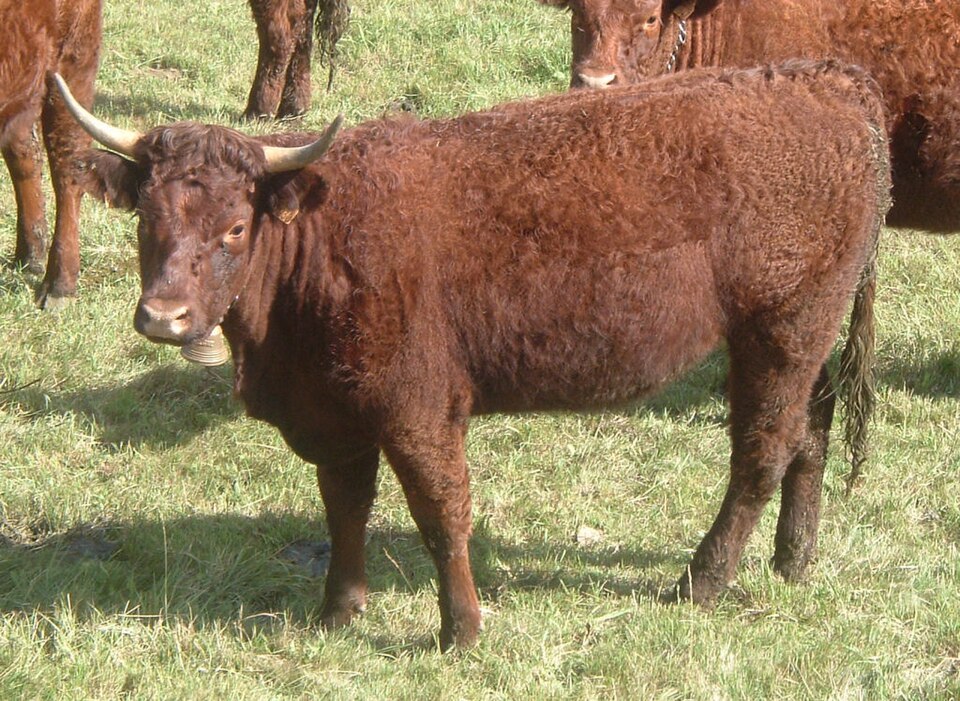
Reference photograph
Reference photograph of Salers. Examine this individual’s color and form alongside the identification descriptions in the text.
Source: Fabien1309 · Original material · CC BY-SA 3.0
1. Classification, origins and habitat
Salers cattle developed in the Auvergne region of France. Traditionally used for milk and work, they are also used for beef production.
They have a history of providing labor, milk and meat in the Auvergne uplands. Current beef-oriented records and records of lines used in traditional cheesemaking have different purposes and should be distinguished. One place name may refer to both a breed and a food.
2. Appearance and identification
A dark reddish-brown coat and horns are typical. Black or polled lines also occur, so do not judge by coat color alone.
Dark red hair and relatively long horns create the traditional impression. Knowing that polled lines and other colors also occur prevents treating one photograph as the sole standard. Neck and shoulder hair can look different with season and sex.
Traditional reddish-brown adults with strongly curving horns can differ in appearance from polled individuals. Observe balance among face, ears, shoulders and body, and do not classify other European-derived cattle as the same breed simply because they are red.
3. Behavior and way of life
The breed is associated with mountain grazing. Compare maternal rearing traits and productivity through records.
Breed sources discuss upland grazing together with maternal rearing traits. A history of rough terrain does not guarantee that every individual is easy to handle or calves easily. Production indicators should be checked alongside individual records and environmental conditions.
4. Observation, conservation and care
Management varies with pasture movement and uses such as dairy or beef production. Association with traditional cheese does not mean all individuals are kept under the same dairy system.
Husbandry involving mountain movement should consider pasture condition, travel routes and access to water together. Provide space to prevent large-horned adults crowding narrow feeders. A cheese brand’s tradition does not replace an individual cow’s welfare and health condition.
Evidence and references
- Oklahoma State University — Salers
Classification, origins, appearance, ecology or uses of the breed
- Defra — Cattle welfare guidance on behavior, feeding and environment
General principles of feed, water, rest and handling. A United Kingdom source, not guidance on Korean legislation.