
Mammals (Cattle)
Shorthorn
Shorthorn
Classification and scientific name: Bos taurus
Sources checked:
Red, white or roan coats mixing hairs of the two colors occur
The Shorthorn developed in the northeastern United Kingdom. Later improvement diverged toward beef and dairy populations. Red, white or roan coats mixing hairs of the two colors occur. The name comes from horn form, but polled lines also exist.
Origins and distribution
Northeastern United Kingdom
- Shorthorn
- Northeastern United Kingdom
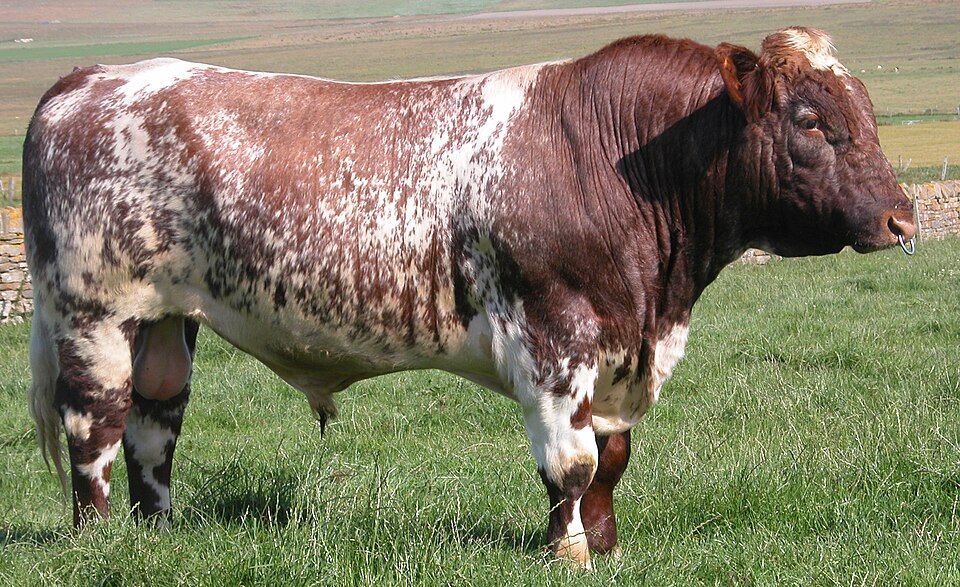
Reference photograph
Reference photograph of Shorthorn. Examine this individual’s color and form alongside the identification descriptions in the text.
Source: Robert Scarth · Original material · CC BY-SA 3.0
1. Classification, origins and habitat
The Shorthorn developed in the northeastern United Kingdom. Later improvement diverged toward beef and dairy populations.
Its history runs from northeastern British dual-purpose livestock to several registered groups with dairy and beef purposes. Its extensive contribution to cattle improvement helps explain why Shorthorn repeatedly appears in other breeds’ origins.
2. Appearance and identification
Red, white or roan coats mixing hairs of the two colors occur. The name comes from horn form, but polled lines also exist.
Roan mixing red and white hairs can look like a single pale color from a distance. Distinguish broad white patches from individual hairs of mixed colors. Although the name means short horns, that does not justify excluding polled individuals from the breed.
Roan is red and white hairs mixed in the same area, unlike large separate patches. Color impressions can differ between close-ups and whole-body views. Historical horned photographs and modern polled-line photographs can be understood together.
3. Behavior and way of life
These cattle have been widely used in improvement and crossing with other breeds. Do not mix dairy Shorthorn and beef Shorthorn production records for comparison.
Populations selected for milk and those selected for meat have different emphases in build and production records. Combining records from different populations into an average does not aid breed understanding. Distinguish foundation ancestry contributions from the purposes of modern individuals as well.
4. Observation, conservation and care
First establish the registered line and production purpose. Reproduction, milking or beef records, alongside coat pattern and body size, are important for breed comparisons.
At farms and exhibitions, check the exact registered name and use. Clarify whether productivity comparisons measure milk yield or growth, and provide safe movement routes suited to horns and build. Do not approach and touch an animal because of an unusual color.
Evidence and references
- Oklahoma State University — Shorthorn
Classification, origins, appearance, ecology or uses of the breed
- Defra — Cattle welfare guidance on behavior, feeding and environment
General principles of feed, water, rest and handling. A United Kingdom source, not guidance on Korean legislation.