
Mammals (Cattle)
Ayrshire
Ayrshire
Classification and scientific name: Bos taurus
Sources checked:
Red or brown patches appear on white, and some individuals have horns
The Ayrshire is a dairy breed developed in the Ayr region of Scotland. It spread to dairying in a variety of environments. Red or brown patches appear on white, and some individuals have horns.
Origins and distribution
Scotland
- Ayrshire
- Scotland
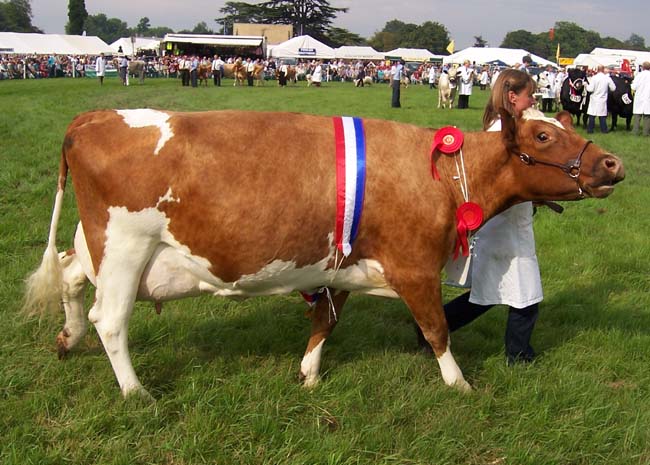
Reference photograph
Reference photograph of Ayrshire. Examine this individual’s color and form alongside the identification descriptions in the text.
Source: No machine-readable author provided. Malcolm Morley~commonswiki assumed (based on copyright claims). · Original material · Public domain
1. Classification, origins and habitat
The Ayrshire is a dairy breed developed in the Ayr region of Scotland. It spread to dairying in a variety of environments.
Development in a regional Scottish dairy environment connects Ayrshire coat color with its use. Not every red-and-white dairy animal is an Ayrshire, so distinguish the history of origin from the present individual’s registration information.
2. Appearance and identification
Red or brown patches appear on white, and some individuals have horns.
Patches may appear from dark red to brown, and white areas vary in extent. For photographs resembling a red Holstein, check names and pedigree information as well. Horn presence is also affected by human management history.
Red Holsteins can also have large red-and-white patches, making a single marking insufficient to distinguish the two breeds. Consider Ayrshire origin and registration information; comparing cows, bulls and calves at matching growth stages clarifies differences in build.
3. Behavior and way of life
These dairy cattle have been selected for milk yield together with body form. Do not use the breed name as a uniform personality description or a guarantee of productivity in every environment.
Comparisons of dairy breeds should consider milk composition, bodily balance and actual activity environment as well as yield. Ranking breeds using records with different feeds and lactation periods can mistake differences in conditions for breed differences.
4. Observation, conservation and care
Consider udder and hoof condition and actual feed-use records alongside body size. Management suited to local climate and barn conditions matters as much as breed choice.
Checking comfortable lying and rising and non-slip routes to feeders connects to production records. Do not dismiss udder or hoof abnormalities as breed appearance features; address them through individual management records and professional health assessment.
Evidence and references
- Oklahoma State University — Ayrshire
Classification, origins, appearance, ecology or uses of the breed
- Defra — Cattle welfare guidance on behavior, feeding and environment
General principles of feed, water, rest and handling. A United Kingdom source, not guidance on Korean legislation.