
Mammals (Cattle)
Guernsey
Guernsey
Classification and scientific name: Bos taurus
Sources checked:
Fawn-and-white markings are common, and the yellowish color of the milk is explained in relation to beta-carotene
The Guernsey is a dairy cattle breed developed on Guernsey in the English Channel. Despite sharing an island-based naming pattern, it is a separate breed from the Jersey. Fawn-and-white markings are common, and the yellowish color of the milk is explained in relation to beta-carotene.
Origins and distribution
Guernsey, a British Crown Dependency
- Guernsey
- Guernsey, a British Crown Dependency
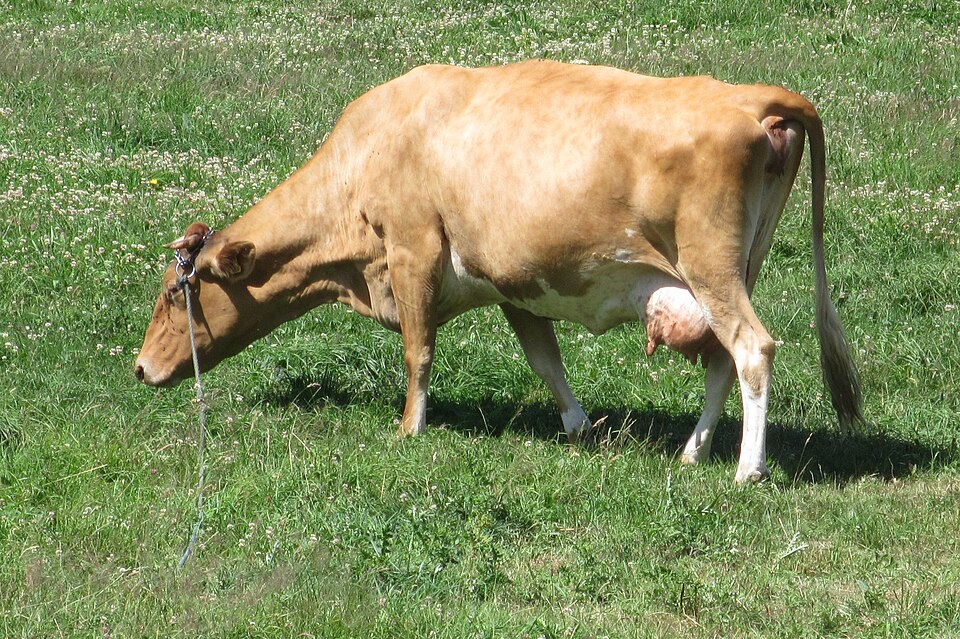
Reference photograph
Reference photograph of Guernsey. Examine this individual’s color and form alongside the identification descriptions in the text.
Source: Man vyi · Original material · Public domain
1. Classification, origins and habitat
The Guernsey is a dairy cattle breed developed on Guernsey in the English Channel. Despite sharing an island-based naming pattern, it is a separate breed from the Jersey.
Although both come from islands in the English Channel, Guernsey and Jersey are separately registered breeds. In dairy history, consider local pedigree conservation alongside spread elsewhere. Do not understand the island’s name merely as a color or a milk product name.
2. Appearance and identification
Fawn-and-white markings are common, and the yellowish color of the milk is explained in relation to beta-carotene.
The position and extent of white areas on a fawn body vary. Side-by-side comparison with the relatively solid-colored Jersey can help identification, but one pattern alone cannot establish registered pedigree. Consider growth stage and sex when observing a dairy animal’s build.
The similarly named Jersey from the English Channel is currently registered separately. Comparing white body areas, fawn patches and facial and leg proportions can reveal differences. Yellowish milk does not mean that the cow’s coat color passes directly into its milk.
3. Behavior and way of life
The breed is used for dairying that makes use of milk composition, with individual differences in yield and composition. Milk color alone cannot establish nutritional or health effects.
The possibility of yellowish milk illustrates the relationship between feed and pigments. Avoid comparisons claiming that a deeper color always means better nutrition. Distinguishing milk yield and composition, feed use and individual body condition makes breed descriptions more accurate.
4. Observation, conservation and care
Changes in pasture and feed affect milk yield and composition. Breed comparisons should consider lactation period, feeding conditions and production records together.
Observe actual intake and body condition in seasons when feed changes. Dairy hygiene, rest and water supply matter more to management than a breed’s characteristic color. Do not use milk appearance to diagnose the adult cow’s health.
Evidence and references
- Oklahoma State University — Guernsey
Classification, origins, appearance, ecology or uses of the breed
- Defra — Cattle welfare guidance on behavior, feeding and environment
General principles of feed, water, rest and handling. A United Kingdom source, not guidance on Korean legislation.