
Mammals (Cattle)
Dexter
Dexter
Classification and scientific name: Bos taurus
Sources checked:
A small body with black, red or dun coats
The Dexter is a small-bodied cattle breed originating in Ireland. It was used for the dual purposes of milk and meat. A small body with black, red or dun coats. Lines differ in leg length; this does not simply mean cattle as small as calves.
Origins and distribution
Ireland
- Dexter
- Ireland
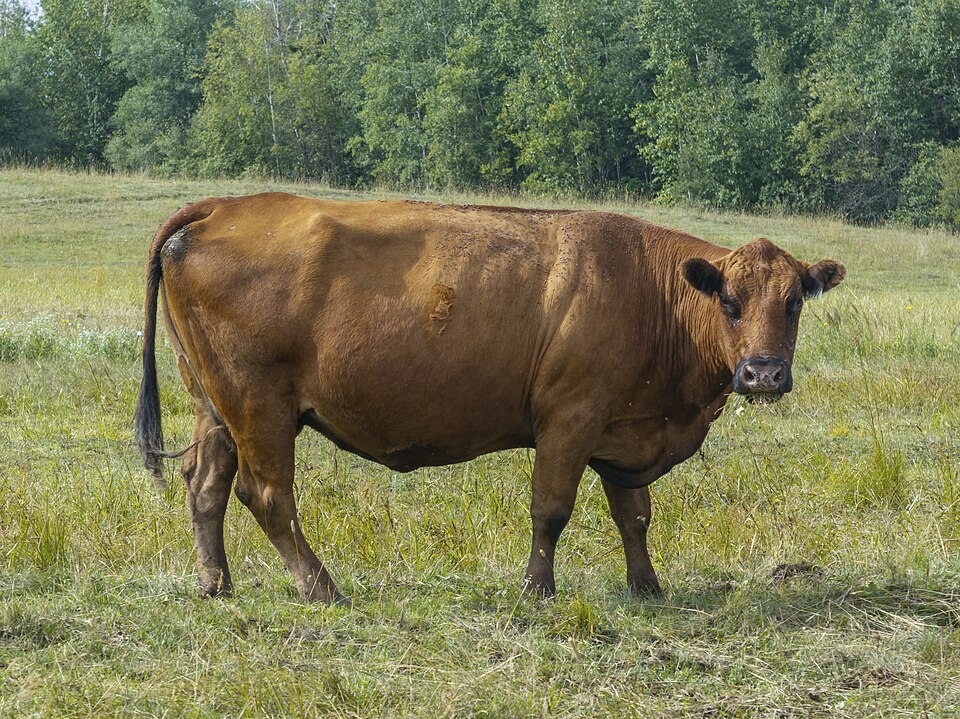
Reference photograph
Reference photograph of Dexter. Examine this individual’s color and form alongside the identification descriptions in the text.
Source: Hayden Soloviev · Original material · CC BY 4.0
1. Classification, origins and habitat
The Dexter is a small-bodied cattle breed originating in Ireland. It was used for the dual purposes of milk and meat.
It illustrates small domestic cattle used for both milk and meat. A small build must not be read as a calf that never matures or an indoor companion animal. Size and pedigree are separate information.
2. Appearance and identification
A small body with black, red or dun coats. Lines differ in leg length; this does not simply mean cattle as small as calves.
Dexters can have short or relatively longer legs. Observing black, red and dun coats together with horn presence reveals diversity. Nearby fences and adult body proportions in photographs help explain impressions of size.
Despite small size, adult head, neck and body proportions differ from calves of larger breeds. Descriptions of short-legged appearance relate to genetic traits, but a photograph cannot reveal an individual’s genetic-test results.
3. Behavior and way of life
The breed is described as dual-purpose livestock for small farms. A small body alone does not establish that keeping it in a confined space will be trouble-free.
Its dual-purpose role on small farms varies with environment. Actual milk and meat production depend on age, sex and feeding, so do not compare productivity with large cattle through a simple weight ratio. Herd relationships with other cattle are also basic parts of life.
4. Observation, conservation and care
Breeding requires attention to genetic traits related to cartilage development. Consider body-form and pedigree information, and prepare facilities for adult behavior and safety.
A small build does not make keeping an animal alone in a cramped space appropriate. In breeding, do not treat short-leg-related genetic traits solely as cute features; check pedigrees and test records. Handling routes and feeders should also fit the actual body size.
Evidence and references
- Oklahoma State University — Dexter
Classification, origins, appearance, ecology or uses of the breed
- Defra — Cattle welfare guidance on behavior, feeding and environment
General principles of feed, water, rest and handling. A United Kingdom source, not guidance on Korean legislation.