
Mammals (Cattle)
Red Poll
Red Poll
Classification and scientific name: Bos taurus
Sources checked:
A red coat and naturally hornless form are typical
The Red Poll is a dual-purpose breed developed from cattle in Norfolk and Suffolk, Britain. It was used for both milk and meat production. A red coat and naturally hornless form are typical. Poll in the name relates to this hornless feature.
Origins and distribution
Britain
- Red Poll
- Britain
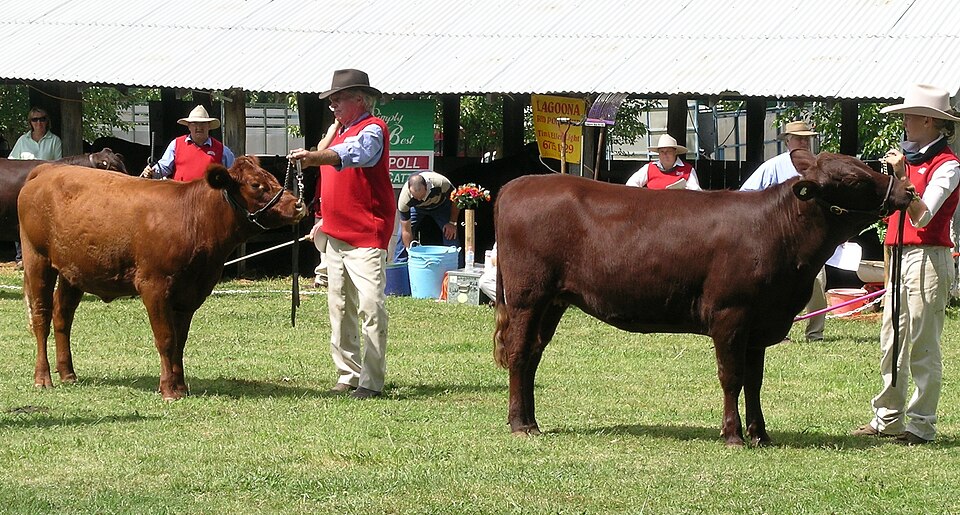
Reference photograph
Reference photograph of Red Poll cattle. Examine this individual's color and form alongside the identification descriptions in the text.
Source: Cgoodwin · Original material · CC BY 3.0
1. Classification, origins and habitat
The Red Poll is a dual-purpose breed developed from cattle in Norfolk and Suffolk, Britain. It was used for both milk and meat production.
This British dual-purpose breed developed by combining local Norfolk and Suffolk cattle; the red color and polled feature in its name help recall its appearance. Some populations place greater emphasis on beef in different countries, so distinguish historical use from current production aims.
2. Appearance and identification
A red coat and naturally hornless form are typical. Poll in the name relates to this hornless feature.
Look at the red coat and hornless head outline together. Other red polled cattle exist, so color and horns alone cannot establish breed. In photographs, you can also observe lighter areas around the muzzle and body, and sex-related differences in the neck and shoulders.
Poll is a term associated with the absence of horns. Appearance can overlap with other red cattle whose horns were removed during management, making it difficult to identify a registered breed from head and color alone. Read the Norfolk and Suffolk history alongside the present individual's registration documents.
3. Behavior and way of life
Some populations shifted from dual-purpose use toward beef production. Distinguish the breed name from its purpose in each country.
Livestock used for both milk and meat need context when compared with cattle selected for a single production measure. Do not mix historical dairy and modern beef records in one table and describe them as the whole breed's fixed ability.
4. Observation, conservation and care
Even hornless animals require handling that accounts for the strength and herd behavior of large livestock. Compare production using individual records rather than breed descriptions.
Do not equate the advantage of having no horns with an invariably safe temperament around people. Consider large cattle moving as a herd and competing for food, and provide nutrition and resting space suited to their production purpose. In breed conservation material, check the actual size of the registered population and the survey date.
Evidence and references
- Oklahoma State University — Red Poll
Classification, origin, appearance, ecology or breed uses
- Defra — Cattle behavior, feeding and environmental welfare guidance
General principles of feed, water, rest and handling. This is British material, not guidance on Korean law.