
Mammals (Horses)
Haflinger
Haflinger
Classification and scientific name: Equus caballus
Sources checked:
A chestnut coat with a light mane and tail is characteristic
The Haflinger developed in the Tyrol region. Its small size and varied uses often lead to comparisons with larger riding horses. A chestnut coat with a light mane and tail is characteristic. Although relatively small, it has a solid body.
Origins and distribution
Tyrol in the Alps
- Haflinger
- Tyrol in the Alps
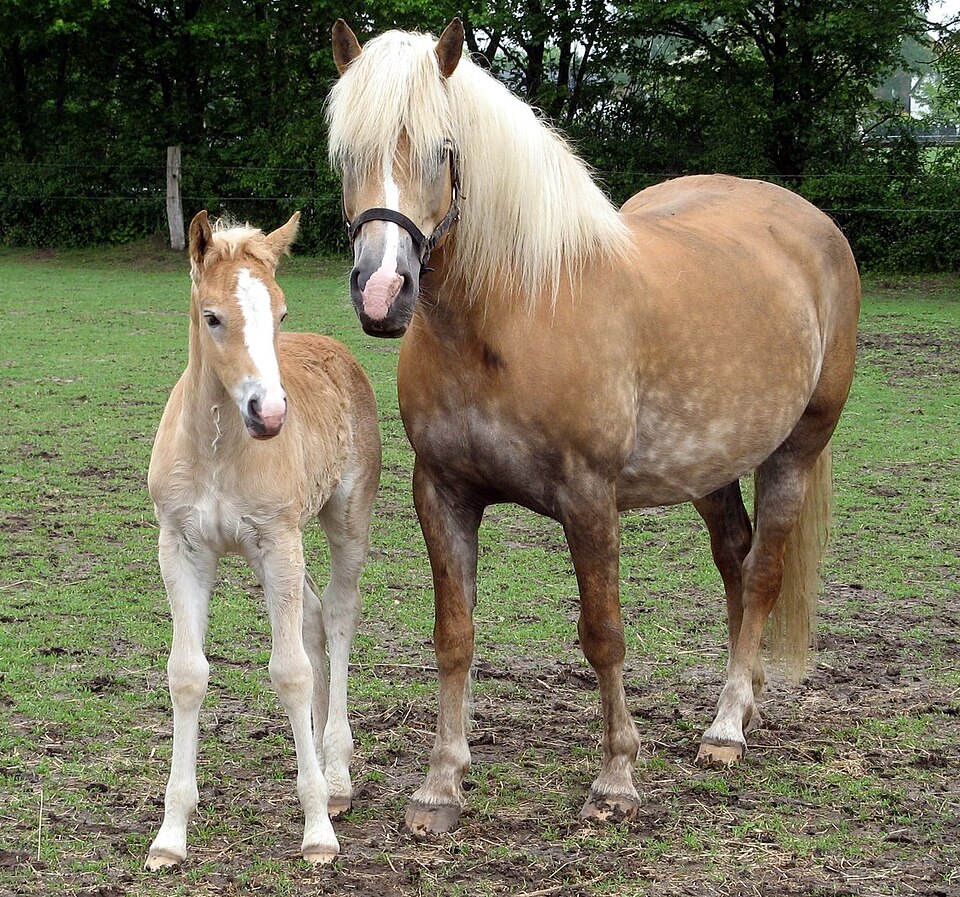
Reference photograph
Reference photograph of a Haflinger horse. Compare the photographed individual's color and form with the identification information in the text.
Source: Matthias Walther · Original material · CC BY-SA 3.0
1. Classification, origins and habitat
The Haflinger developed in the Tyrol region. Its small size and varied uses often lead to comparisons with larger riding horses.
Its history concerns a small horse developed in the Alps and used for both riding and pulling. Read the origin of the place name separately from modern registration criteria. A size classification as a small horse does not place it in the same bloodline as every other pony or restrict it to a single purpose.
2. Appearance and identification
A chestnut coat with a light mane and tail is characteristic. Although relatively small, it has a solid body.
The contrast between the chestnut body and light mane and tail is a memorable distinguishing feature. The body is compact and the legs appear relatively short, although conformation varies between individuals. Other horses have similar color combinations, so color alone cannot establish that a horse is a Haflinger.
A light mane combined with a chestnut body also occurs in other horses. Considering the low height at the withers, solid body and proportions of the head and legs together, and checking pedigree information in the source, reduces confusion caused by relying on color alone.
3. Behavior and way of life
Haflingers are used for riding and driving. Not every chestnut horse with a light mane is a Haflinger; the breed has its own registered bloodlines.
A history of mountain work, driving and riding means photographs show several roles. Being described as versatile does not mean every individual is familiar with every item of equipment or instruction. Even a small adult can push a person or move suddenly when startled, so training and management are necessary.
4. Observation, conservation and care
A small horse is not automatically safe for children. Check actual training, the horse's responses and the instructor's management arrangements together.
Check saddle and harness fit for the smaller body, and assess feed and body condition according to actual activity. Treating an adult like a foal and keeping it in cramped surroundings is inappropriate. When a child rides, consider the horse's training and reactions together with the instructor's supervision.
Evidence and references
- Oklahoma State University — Haflinger
Classification, origins, appearance, ecology or breed uses
- Defra — Welfare code for horses and ponies
Suitable surroundings, feed, companionship, training and long-term care responsibilities