
Mammals (Horses)
Welsh Pony
Welsh Pony
Classification and scientific name: Equus caballus
Sources checked:
Build ranges widely, from small ponies to larger cobs
Welsh Ponies and Cobs are registered populations developed in Wales. Registries distinguish several sections by size and build. Build ranges widely, from small ponies to larger cobs. One fixed weight cannot apply to the entire population.
Origins and distribution
Wales
- Welsh Pony and Cob
- Wales
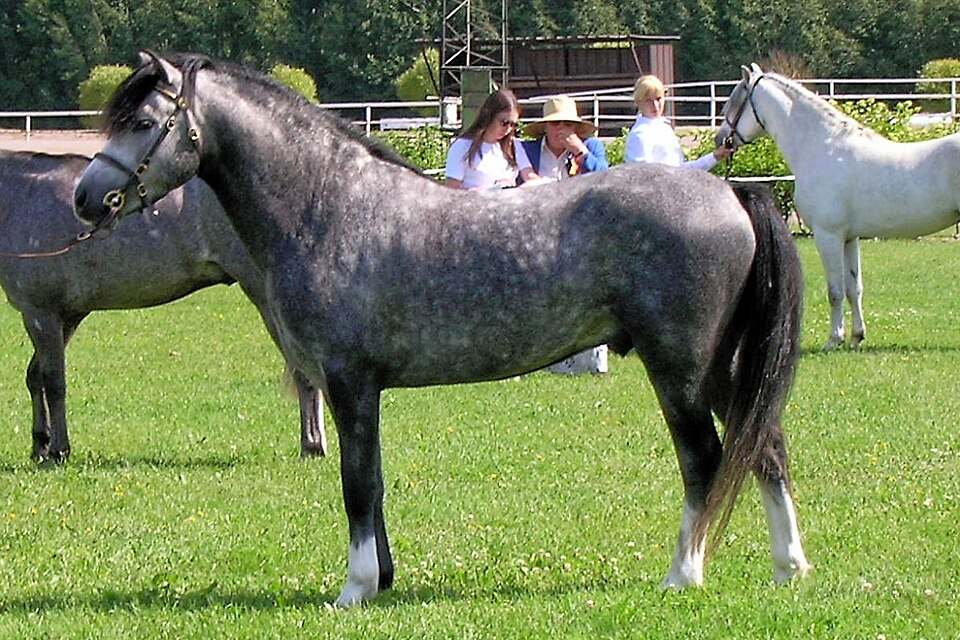
Reference photograph
Reference photograph of a Welsh Pony. Examine this individual's color and form alongside the identification descriptions in the text.
Source: Hanna V · Original material · CC BY-SA 3.0
1. Classification, origins and habitat
Welsh Ponies and Cobs are registered populations developed in Wales. Registries distinguish several sections by size and build.
Regional Welsh horses developed into registered sections of different sizes and builds. Checking the section within the broad Welsh Pony and Cob category avoids describing small mountain ponies and larger cobs as the same size. Also distinguish registration standards between countries.
2. Appearance and identification
Build ranges widely, from small ponies to larger cobs. One fixed weight cannot apply to the entire population.
The range extends from a small pony's refined head to a large cob's strong body. Coat colors vary, and the height in one photograph should not be used as a fixed figure for the whole population. While observing mane, neck and leg proportions, it helps to check which section the representative photograph shows.
The existence of several sections of different sizes is central to understanding the scope of a representative photograph. Do not extend one pony's small build into a fixed size for all Welsh animals, including cobs.
3. Behavior and way of life
They serve various purposes, including riding and driving. Checking the horse's section makes its build and use easier to understand.
Although used for riding, driving and other purposes, section size and the individual's actual training matter. Welsh is not a synonym for suitable for children. A ridden photograph shows that individual's training experience, without guaranteeing the suitability of every registered horse.
4. Observation, conservation and care
Do not judge a horse suitable for children from the Welsh name alone. Consider the section, actual height, training history and management environment together.
Prepare equipment and activities for actual height, body condition and training history. When keeping horses of different builds together, also examine their access to food and resting space. Even small-section animals are adult horses needing opportunities to move and engage in social behavior with other horses.
Evidence and references
- Oklahoma State University — Welsh Pony and Cob
Classification, origin, appearance, ecology or breed uses
- Defra — Horse and pony welfare guidance
Suitable environments, food, companions, training and responsibility for long-term care