
Mammals (Horses)
Icelandic Horse
Icelandic Horse
Classification and scientific name: Equus caballus
Sources checked:
A thick coat, abundant mane and various coat colors occur
The Icelandic Horse is a breed conserved and developed in Iceland. Despite its small size, the name horse is generally used rather than pony. A thick coat, abundant mane and various coat colors occur. Coat thickness varies seasonally.
Origins and distribution
Iceland
- Icelandic Horse
- Iceland
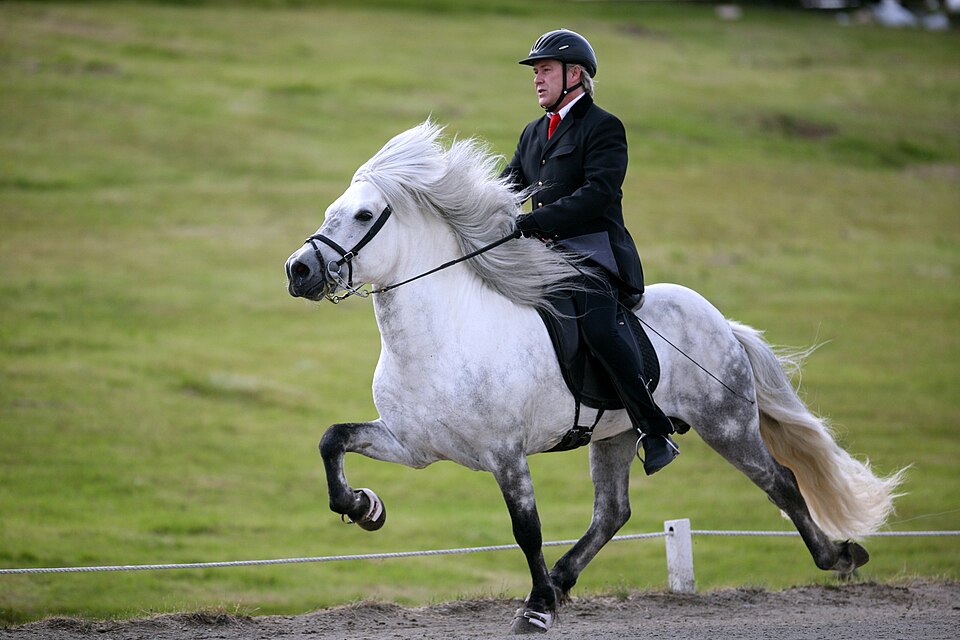
Reference photograph
Reference photograph of an Icelandic Horse. Compare the photographed individual's color and form with the identification information in the text.
Source: Dagur Brynjólfsson · Original material · CC BY-SA 2.0
1. Classification, origins and habitat
The Icelandic Horse is a breed conserved and developed in Iceland. Despite its small size, the name horse is generally used rather than pony.
Its history of preserving and developing bloodlines on the island can be considered alongside regional riding culture. Even when its size falls within international descriptions of a small horse, the breed name often uses horse. Size terminology and the actual registered breed name need not coincide.
2. Appearance and identification
A thick coat, abundant mane and various coat colors occur. Coat thickness varies seasonally.
A thick winter coat and abundant mane and tail characterize the cold season; summer photographs show a sleeker appearance. Several colors and patterns occur, so do not fix one color as the standard appearance. The photographed season also affects the impression of body size.
Photographs of thick winter hair and lighter summer hair can give very different impressions of the same breed. Considering actual gait, build and registration information alongside the shape of the long mane helps explain its characteristic features.
3. Behavior and way of life
The four-beat gait called tölt is characteristic, and some individuals also perform a fast pace. Not every individual has the same gait abilities.
Tölt has four beats and a different footfall sequence from an ordinary trot. Distinguish a fast pace performed by some individuals from a claim that every horse performs the same gait. A still photograph documents appearance; movement and actual records are needed to verify gait.
4. Observation, conservation and care
Compare gait names in breed sources with actual foot movements. Learning a gait must be matched to individual ability and training level.
Gait training should suit the horse's abilities, growth and health. A thick coat and cold-region origins do not mean adaptation to every climate without care. Consider water, rest, saddle fit and hooves together, and take rider experience into account.
Evidence and references
- Oklahoma State University — Icelandic Horse
Classification, origins, appearance, ecology or breed uses
- Defra — Welfare code for horses and ponies
Suitable surroundings, feed, companionship, training and long-term care responsibilities