
Other Mammals
Alpaca
Alpaca
Classification and scientific name: Vicugna pacos
Sources checked:
An alpaca with highland domestic life and varied fiber
The alpaca is a camelid domesticated in the South American Andes.
Origins and distribution
South American Andes
- Camelid
- Livestock
- Group living
- Fiber
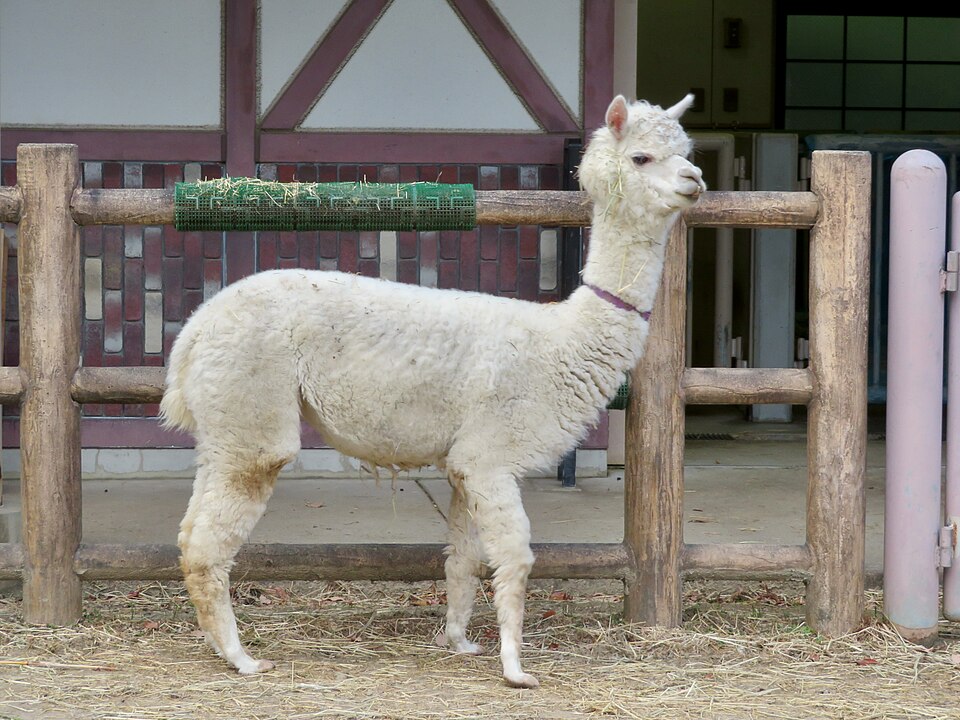
Reference photograph
Reference photograph of an alpaca. Compare the photographed individual's color and form with the identification information in the text.
Source: KKPCW · Original material · CC BY-SA 4.0
1. Classification, origins and habitat
The alpaca is a camelid domesticated in the South American Andes. Although closely related to the llama, it is not simply a small young llama; its history is principally associated with fiber use. The scientific name is Vicugna pacos, while older sources use Lama pacos. Distinguish the background of livestock using highland grasslands from modern visitor-farm life. Known ancestry relationships with vicuñas do not justify merging conservation and husbandry information for wild vicuñas and domestic alpacas. One breed's fiber properties are not common traits of all camelids.
2. Appearance and identification
A long neck, relatively small head, short upright ears and body-covering fiber are characteristic. Colors include white, brown and black, while Huacaya and Suri lines differ in how their fiber appears. Photographs of abundant crimped fleece and long hanging locks do not depict separate species. Llamas generally offer comparison through larger size and longer curved ears, but distant apparent size alone is insufficient for identification. Feet have camelid pads, unlike a horse's single hoof. Shearing changes the visible body outline, so consider appearance together with actual build.
3. Behavior and way of life
Alpacas use grasses and other plant foods and move within social relationships. Ear and tail postures, sounds and spitting relate to communication and conflict. A scene of spitting toward a person does not establish an aggressive temperament, while a gentle-looking face does not mean enjoyment of contact with everyone. Young form relationships with mothers and learn through the group's movements. An elevated neck scanning the surroundings and a lowered feeding posture need interpretation in their respective situations. Coat color does not determine temperament or responses to people.
4. Observation, conservation and care
Livestock management considers group life, grazing, clean water and shelter from weather. Shearing for fiber needs attention to season, individual condition, safety and welfare during the work. Do not transfer an image of llama pack work into an account of carrying the same weight on alpacas. At visitor farms, follow prescribed feeding and contact instructions, without chasing or approaching faces closely. Identify photographs as domestic lines, and understand the heat and hygiene management associated with abundant fiber. Do not assign detailed breed or sex labels from appearance where these are unconfirmed.
Evidence and references
- Animal Diversity Web — Lama pacos
Classification, distribution, appearance, diet and reproductive behavior
- Smithsonian — Alpaca
Alpaca domestication, fiber, diet and social life