
Other Mammals
Giant Panda
Giant Panda
Classification and scientific name: Ailuropoda melanoleuca
Sources checked:
A black-and-white bear adapted to bamboo forests
The giant panda belongs to the bear family and uses bamboo as its principal food in China's mountain forests.
Origins and distribution
Mountain forests of central China
- Bear family
- Bamboo
- Mountain forests
- Thumb-like bone
Reference photograph
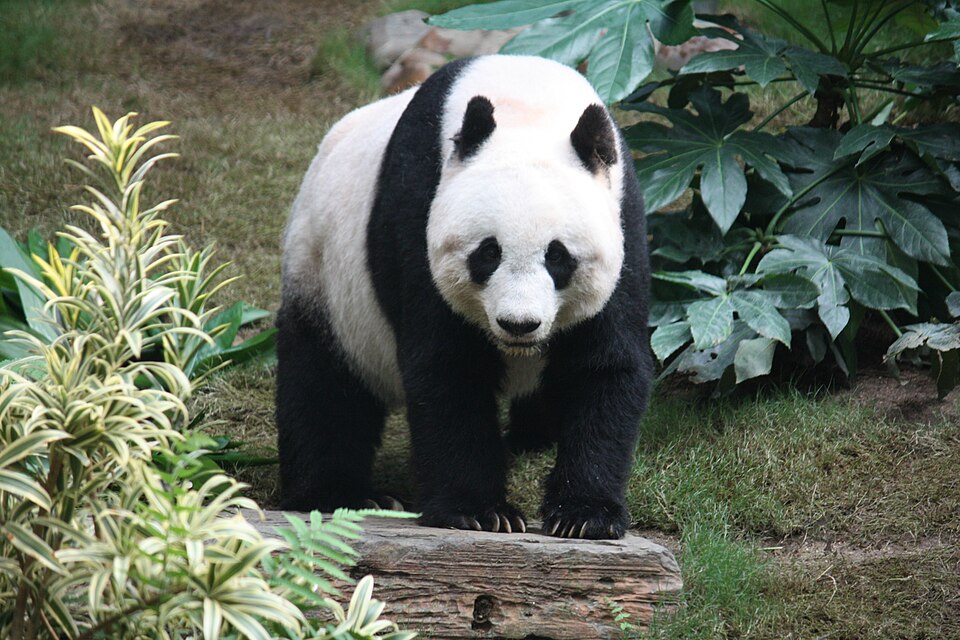
Reference photograph of a giant panda. Examine this individual's color and form alongside the identification descriptions in the text.
Source: J. Patrick Fischer · Original material · CC BY-SA 3.0
1. Classification, origins and habitat
The giant panda belongs to the bear family and uses bamboo as its principal food in China's mountain forests. The red panda, despite sharing panda in its name, belongs to a different family. Environments combining forest trees, bamboo underneath and resting space are important. Do not use the same map to describe the broad distribution in old records and today's habitats; also consider forest fragmentation by roads and development. Individuals observed in zoos live differently depending on management conditions, so their schedules do not exactly match wild behavior. A cub's small appearance cannot establish an adult's space and dietary requirements.
2. Appearance and identification
A rounded head, sturdy body and short tail accompany black areas on the ears, around the eyes, shoulders and legs, contrasting with white fur. Several studies address the functions of this color arrangement, so do not present one explanation as the single settled answer. When grasping bamboo, a thumb-like structure formed from a modified wrist bone in the forepaw is clearly visible. This does not mean having six fingers just like a person's. Strong jaws and molars process tough bamboo. Considering photographs of gripping bamboo and chewing together makes it easier to connect appearance with feeding life.
3. Behavior and way of life
The bamboo parts used, including leaves, stems and young shoots, vary with season and resources. Classification in the order Carnivora does not mean eating only meat. Pandas spend much time feeding and resting, and climb trees or obtain information about other individuals through scent marks. Wild adults generally move separately, but contact occurs in breeding and mother-cub relationships. Several individuals in one frame at a captive facility should not lead to describing a species that always lives in large groups. A mother's cub-care behavior is easily overlooked if solitary life is the only description.
4. Observation, conservation and care
Conservation considers connectivity for movement between habitats alongside the area of forest where bamboo grows. It is difficult to reduce all requirements to planting plenty of bamboo. Population surveys, habitat management and human land use interact. When watching, accept eating and sleeping alike as normal parts of life, without using noise or food to provoke a reaction. If a photographed panda holds bamboo, the forepaw structure and selected food part can be explained. Do not expand a particular zoo's breeding success into a claim that every wild population's problems have ended; check the date and region of the material.
Evidence and references
- Animal Diversity Web — Ailuropoda melanoleuca
Classification, distribution, appearance, diet and reproductive behavior
- San Diego Zoo — Giant panda
Bamboo feeding, forepaw structure, life and conservation