
Other Mammals
Lion
Lion
Classification and scientific name: Panthera leo
Sources checked:
Understanding lions through pride relationships and open habitats
The lion is a large cat with wild populations remaining in various parts of Africa and a limited area of western India.
Origins and distribution
Parts of Africa and western India
- Cat family
- Pride
- Predator
- Social relationships
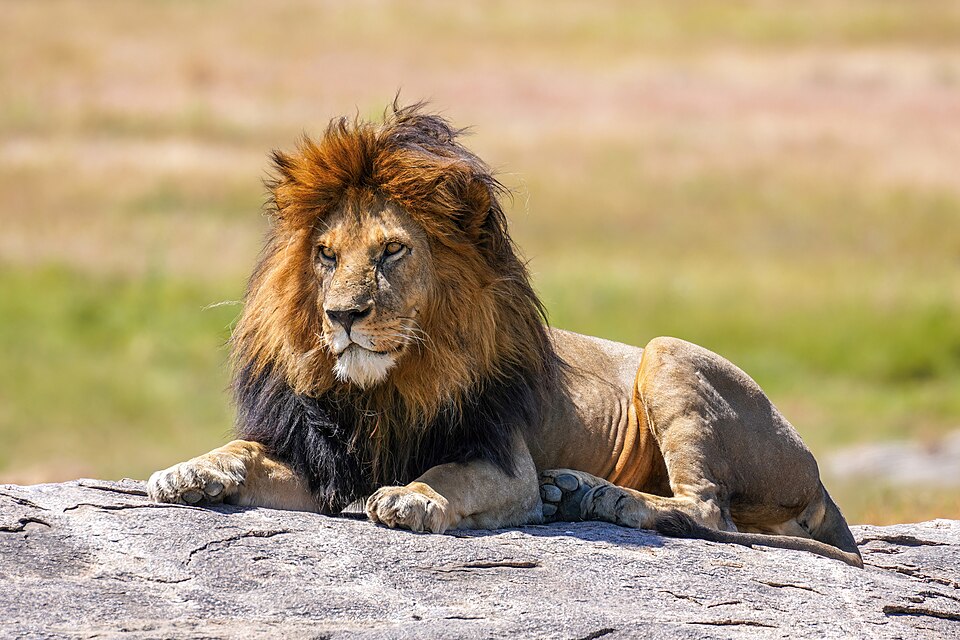
Reference photograph
Reference photograph of a lion. Examine this individual's color and form alongside the identification descriptions in the text.
Source: Giles Laurent · Original material · CC BY-SA 4.0
1. Classification, origins and habitat
The lion is a large cat with wild populations remaining in various parts of Africa and a limited area of western India. Distinguish its historically wider distribution from present habitats. It uses environments with shrubs and trees as well as grassland, so should not be presented as exclusively a desert animal. Herbivore prey, water, resting places and places to conceal cubs all relate to its life. African and Asiatic lions can be compared in appearance and social structure, but old subspecies divisions should not be asserted as the only current classification. In a zoo photograph, the location of photography does not itself indicate wild origin.
2. Appearance and identification
Lions generally have tawny fur, powerful forelegs and a tuft at the tail tip; the adult male's mane is conspicuous. Mane size and color are affected by age, genetics, body condition and environment, so not all males have equally abundant manes. Young lions may show faint spots, and females also have external features distinguishing sex. Claws and teeth are used to seize and process prey. A lying-down photograph can make the body look much smaller, and a mane alone cannot determine individual health or rank. Distinguish skin and coat color variation from a standard for the whole species.
3. Behavior and way of life
Lions are well known for forming social groups called prides. Relationships between females, cubs and adult males change with the group and period, making a simple king-and-family structure inadequate. Cooperative hunting occurs, but males also hunt, and lions may feed on dead animals. Long daytime rest and activity when the sun is lower adjust to temperature, prey and human influence. Roars, scent marks and rubbing bodies are used in relationships with other individuals. Sleeping is not evidence of a lack of vitality, and one hunt's outcome cannot establish the whole species' success rate.
4. Observation, conservation and care
Protecting lions requires addressing conflict in boundary areas where people and livestock live, alongside extensive habitat and prey animals. Driving vehicles after a pride or provoking reactions with noise can disturb rest and movement. Do not assume cub-contact experiences necessarily help conserve wild lions; examine operating practices and evidence. Photographs can explain the presence or absence of manes and growth stages, while avoiding the impression that males alone represent lions. It is also useful to remember that a frame showing only part of a pride may not show the full social group.
Evidence and references
- Animal Diversity Web — Panthera leo
Classification, distribution, appearance, diet and reproductive behavior
- San Diego Zoo — Lion
Lion social structure, appearance, diet and conservation