
Other Mammals
Domestic sheep
Sheep
Classification and scientific name: Ovis aries
Sources checked:
Social grazing animals understood through more than their wool
Long domestication and selective breeding have produced many sheep breeds used for meat, milk and fleece.
Origins and distribution
Domesticated lines from Southwest Asia, now found worldwide
- Livestock
- Rumination
- Group living
- Breed diversity
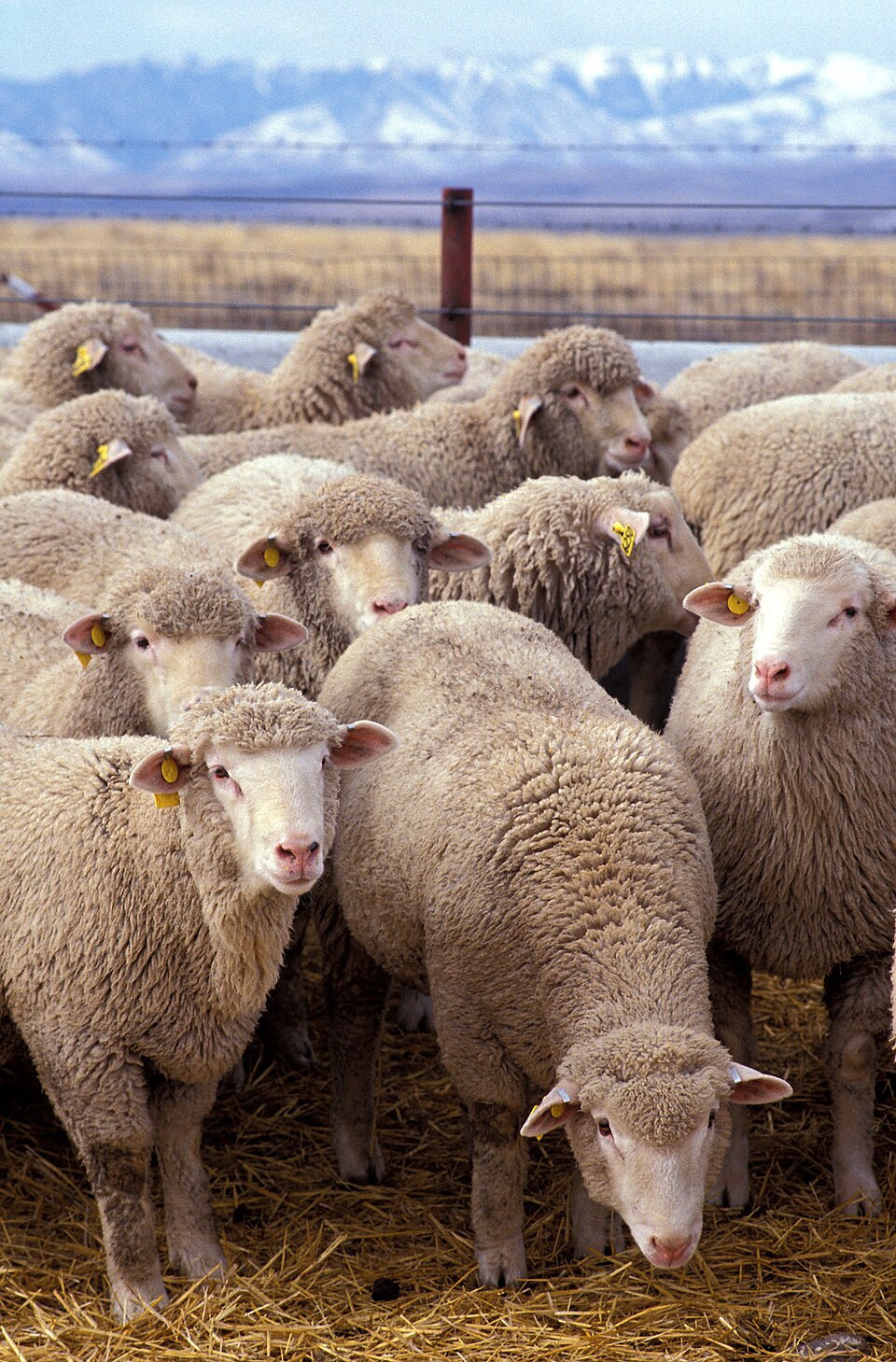
Reference photograph
Reference photograph of domestic sheep. Compare the photographed individuals' color and form with the identification information in the text.
Source: Keith Weller · Original material · Public domain
1. Classification, origins and habitat
Long domestication and selective breeding have produced many sheep breeds used for meat, milk and fleece. This page concerns domestic sheep, Ovis aries, distinguished from wild mountain ungulates and goats. English sheep sources can concern both domestic lines and wild sheep, so check scientific names and breeds. Environments range from grazing to farms supplying feed. Even photographs of similarly white sheep may represent high-altitude grazing breeds and wool-producing breeds with different living conditions. Do not describe a particular breed's productivity as a fixed ability of the entire species.
2. Appearance and identification
Sheep have cloven hooves and a digestive system for ruminating plant material. A thick white fleece is familiar, but black, brown and patterned sheep also occur, with varied fleece properties. Horn presence, size and direction of curvature vary with sex and breed. Horns alone therefore cannot accurately distinguish the sexes of every sheep. Horizontally elongated pupils and side-facing eyes can be observed alongside scanning the surroundings while grazing. Tail length and shape are also affected by breed and husbandry; a photographed short tail is not necessarily a common natural feature.
3. Behavior and way of life
Sheep are social herbivores that may become distressed when separated from the group. Moving in response to one another relates to watching for predators and gaining safety. Beyond an image of merely following others, they distinguish foods, environmental changes and familiar individuals. Chewing again while resting after grazing is part of rumination. Lambs drink their mothers' milk and increasingly use plant foods as they grow. Competition and familiar relationships coexist within groups, so do not assume every individual is always comfortable at the same distance.
4. Observation, conservation and care
Management considers dry resting places, hoof-safe flooring and group relationships alongside food and water. Some breeds selected for continued fleece growth need appropriate shearing, but this does not apply identically to all wild sheep and domestic breeds. Obtaining wool is a management process requiring consideration of body condition, season and methods. At visitor farms, do not offer unauthorized foods or chase lambs. A grazing animal cannot safely eat every plant. Photographs and text should not present the fleece or horns of an unidentified breed as the standard for all sheep.
Evidence and references
- Animal Diversity Web — Ovis aries
Classification, distribution, appearance, diet and reproductive behavior
- RSPCA — Sheep
Sheep housing, social needs, fleece care and welfare