
Other Mammals
Capybara
Capybara
Classification and scientific name: Hydrochoerus hydrochaeris
Sources checked:
A large social rodent moving between water and grassland
The capybara is a large South American rodent within the same broad lineage as guinea pigs.
Origins and distribution
South American rivers, wetlands and neighboring grasslands
- Rodent
- Semiaquatic
- Group living
- Herbivory
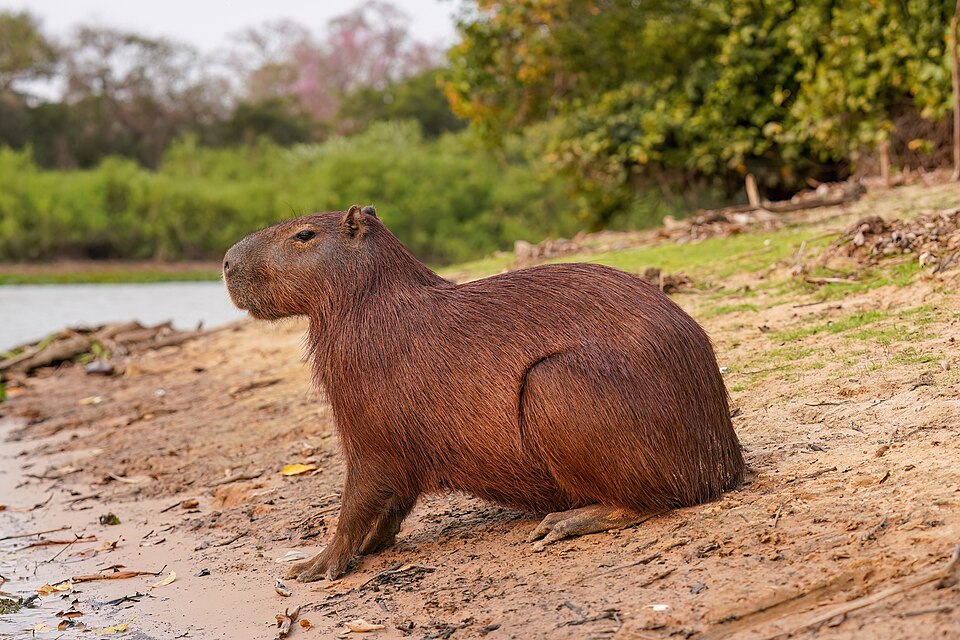
Reference photograph
Reference photograph of a capybara. Compare the photographed individual's color and form with the identification information in the text.
Source: Giles Laurent · Original material · CC BY-SA 4.0
1. Classification, origins and habitat
The capybara is a large South American rodent within the same broad lineage as guinea pigs. This entry concerns Hydrochoerus hydrochaeris, distinguished from records of another closely related capybara species. It uses rivers, lakes and wetland surroundings where it can graze and escape into water. Food grasses, resting places and seasonal water-level changes matter alongside the presence of water. Familiar zoo hot-spring photographs do not mean hot water is an essential natural habitat condition. Distinguish scenes created in captive facilities from life in wild wetlands.
2. Appearance and identification
Short, coarse brown hair covers a substantial body with relatively short legs and no conspicuous external tail. Eyes, ears and nostrils sit high on the head, aiding awareness while the body is lowered in water. Partial webbing between toes relates to movement in water. Continuously growing incisors are also a rodent feature. Photographs of a submerged animal may understate leg and body size, while wet and dry coats show different colors. Adults and young together help size comparison, but one scene cannot establish all individual growth differences.
3. Behavior and way of life
The capybara is a herbivore using grasses and aquatic plants, moving between waterside and land to forage. Individuals form groups and interact through sounds, scents and body movements. A photograph with small birds or other animals nearby shows a relationship at one moment, not proof of conflict-free life with every animal. Water provides cooling and escape, and young move with the group. Distinguish developed gut fermentation and eating feces in this rodent from the digestive system of ruminating cattle. Activity times and group sizes vary with nearby food, water and human influence.
4. Observation, conservation and care
Protecting capybara life involves connections between wetlands and grasslands, water quality and access. Large bodies, social relationships and extensive land and water space make a relaxed expression insufficient grounds to call it an easy pet. During wild observation, do not block escape to water or split a group. Luring animals with human snacks can alter feeding and distance-keeping. Explain whether photographs show zoo, captive or wild individuals, avoiding an impression that hot springs and human contact are the natural life of the entire species. A calm-looking moment and individual welfare are different judgments.
Evidence and references
- Animal Diversity Web — Hydrochoerus hydrochaeris
Classification, distribution, appearance, diet and reproductive behavior
- San Diego Zoo — Capybara
Semiaquatic adaptations, diet, group life and reproduction