
Other Mammals
Tiger
Tiger
Classification and scientific name: Panthera tigris
Sources checked:
Understanding stripes and solitary life within the tiger's habitat
The tiger is a large cat adapted to various Asian environments.
Origins and distribution
Parts of Asia's forests, grasslands and wetlands
- Stripes
- Cat family
- Solitary life
- Habitat connectivity
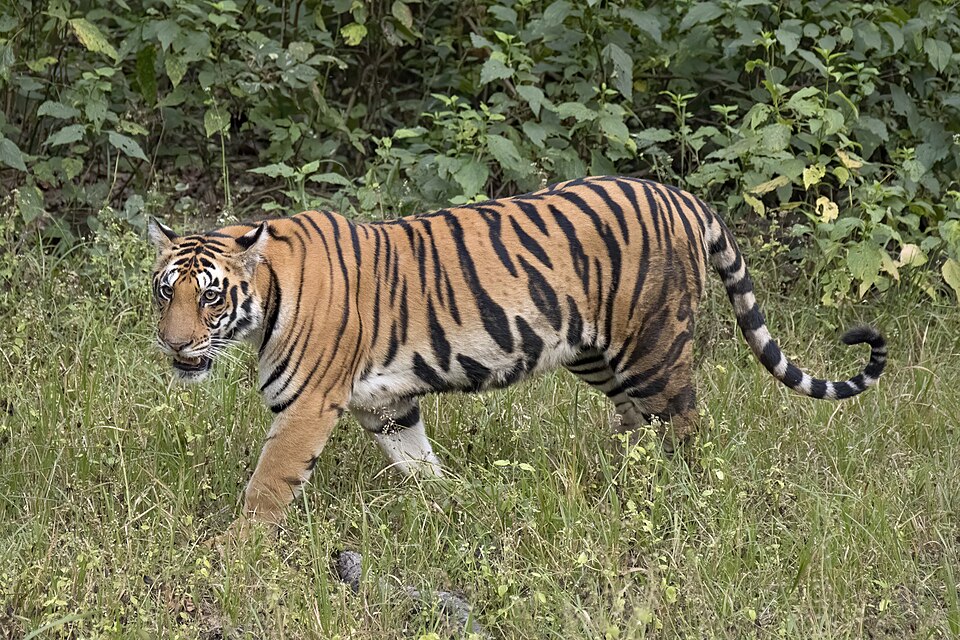
Reference photograph
Reference photograph of a tiger. Examine this individual's color and form alongside the identification descriptions in the text.
Source: Charles J. Sharp · Original material · CC BY-SA 4.0
1. Classification, origins and habitat
The tiger is a large cat adapted to various Asian environments. Habitats range from tropical forests and reedbeds to wetlands and cold-region forests, so a single snowy forest scene cannot readily represent the entire species. Today's wild habitats are fragmented compared with historical distribution; distinguish regional populations from classification systems when reading material. Do not use the largest male recorded in one region as the average build of all tigers. Prey animals, cover and movement routes needed for reproduction and dispersal must all be present. If a photograph was taken in a zoo, do not assign a wild subspecies from the image alone.
2. Appearance and identification
An orange-toned body bears black stripes, with a pale belly and parts of the face. Stripe arrangements differ individually and can be used as identification clues in field surveys. How patterns break up the outline among light and shadow in grass and forests is easier to understand by considering both still photographs and real environments. Powerful forelegs, large paws and teeth form a body that seizes prey. White tigers relate to color variation, not a separate natural species or a representative form found in every region. Coat length and body size differ by region, season and sex, so do not apply figures from one photograph to the entire species.
3. Behavior and way of life
Adults generally move alone, using scent marks and sounds to obtain information about others. This does not exclude contact between mothers and cubs or during breeding. They can be seen approaching prey closely before a short rush, crossing water or cooling their bodies. Saying all cats dislike water fails to explain tiger life. Activity times and territory size vary with prey, habitat and human activity. Do not label repetitive walking in a zoo as wild hunting behavior on that observation alone; recording observation conditions is necessary too.
4. Observation, conservation and care
Tiger conservation requires reducing poaching while securing prey animals and forest connectivity. It is difficult to argue that increasing numbers alone is enough while ignoring conflict experienced by people and livestock near habitats. During wildlife observation, do not block paths or rouse animals with noise; follow designated distances and routes. A small cub approaching people familiarly does not make a wild animal suitable for keeping at home. Match photographs and text to coat color, stripes and the photographic setting, without assigning unverified subspecies names. When quoting current population numbers or threat categories, check survey region and year together.
Evidence and references
- Animal Diversity Web — Panthera tigris
Classification, distribution, appearance, diet and reproductive behavior
- San Diego Zoo — Tiger
Stripes, hunting behavior, reproduction and habitat conservation