
Other Mammals
Elephant
Elephant
Classification and scientific name: Loxodonta africana
Sources checked:
The African savanna elephant explores its environment with large ears and a trunk
Elephants include Asian elephants and distinct African lineages.
Origins and distribution
Savanna and forest areas of sub-Saharan Africa
- African elephant
- Trunk
- Family group
- Herbivory
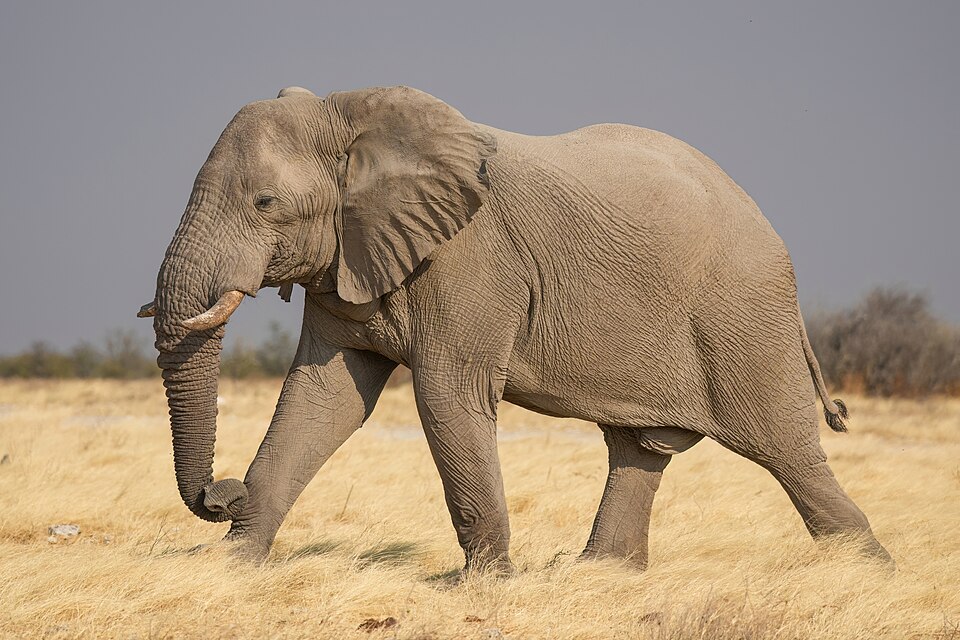
Reference photograph
Reference photograph of an elephant. Examine this individual's color and form alongside the identification descriptions in the text.
Source: Giles Laurent · Original material · CC BY-SA 4.0
1. Classification, origins and habitat
Elephants include Asian elephants and distinct African lineages. This page focuses on the African savanna elephant Loxodonta africana, distinguishing it from the African forest elephant. Older material may group African populations as one species, so consider current classification alongside the material's date. They use plants including grass, leaves and branches, moving according to water and food distribution. Wooded environments are part of their life as well as open savanna grassland. Where elephants occur, tree structure and waterways can change, connecting the behavior of one large animal with the surrounding ecosystem.
2. Appearance and identification
Large ears, a long trunk and pillar-like supporting legs are characteristic. The trunk is an elongated nose and upper lip used for smelling, grasping food, carrying water and contact. The projections at the trunk tip provide a clue when comparing with Asian elephants. Interpret ear movement according to context, including temperature regulation and communication. Tusks are developed incisors, but not every individual has them at the same length. Skin wrinkles and coloration from soil and water vary with photographic circumstances. Take care not to describe the small-eared Asian elephant's features for an African savanna elephant photograph.
3. Behavior and way of life
Females and young form family relationships, while adult males often follow different social paths. Older individuals' experience, herd movement and relationships around calves matter in everyday life. Information is exchanged through low-frequency sounds, contact and smell. Drawing water into the trunk and then transferring it to the mouth to drink should not be described as swallowing directly through the trunk. Eating plants, moving seeds and trampling ground also affect the surroundings. A single photograph of walking cannot establish all family relationships or individual ranks in a group.
4. Observation, conservation and care
Conservation addresses illegal trade targeting tusks, habitat fragmentation and conflict with farmland together. For wide-ranging animals, a protected area's boundaries alone do not fully secure living space. Observation vehicles must not come between a group and its calves, and should respect the animals' direction of travel. Photographs of carrying people or performing particular actions do not make these equivalent to natural behavior. Captions should clarify the species covered and photographic circumstances, rather than grouping every African elephant as one species. Population conservation and the welfare of individual captive animals are related, but their evidence and scope of assessment differ.
Evidence and references
- Animal Diversity Web — Loxodonta africana
Classification, distribution, appearance, diet and reproductive behavior
- San Diego Zoo — Elephant
Comparison of elephant species, trunks and tusks, family relationships and conservation