
Other Mammals
Northern giraffe
Giraffe
Classification and scientific name: Giraffa camelopardalis
Sources checked:
A giraffe connecting a long neck with feeding on high leaves
Giraffe classification includes sources treating giraffes as one broad species and research separating several species.
Origins and distribution
African areas within the northern giraffe's distribution
- Giraffe family
- Long neck
- Leaves
- Northern giraffe
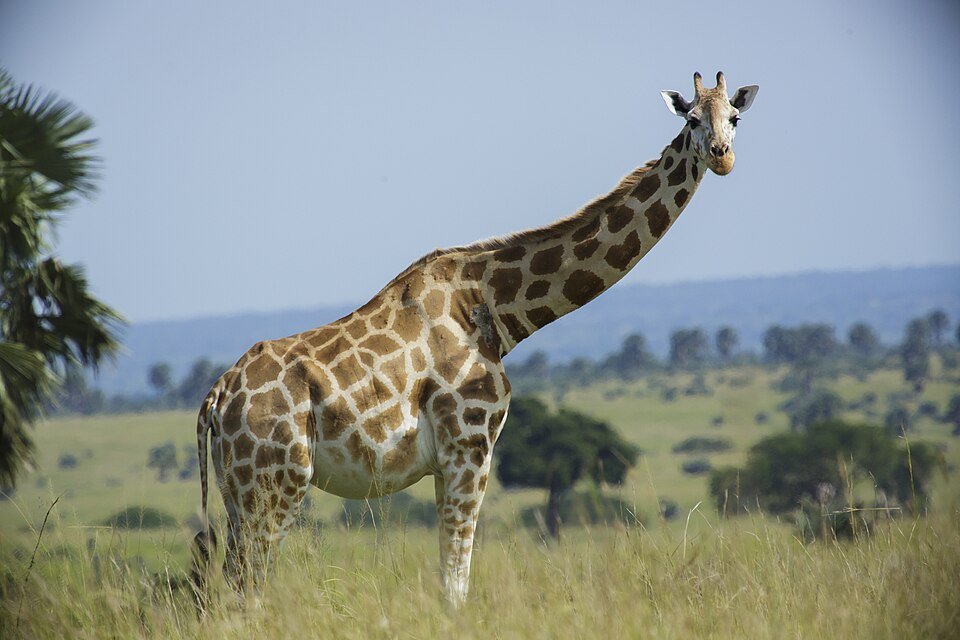
Reference photograph
Reference photograph of a northern giraffe. Compare the photographed individual's color and form with the identification information in the text.
Source: Thomas Fuhrmann · Original material · CC BY-SA 4.0
1. Classification, origins and habitat
Giraffe classification includes sources treating giraffes as one broad species and research separating several species. This entry centers on Giraffa camelopardalis as the northern giraffe, distinguishing older sources using the same scientific name broadly for all giraffes. Do not merge every African pattern and population record into one group. Giraffes browse in environments with trees and shrubs, moving to find food, water and safe travel space. A photograph of a sparsely treed plain does not establish a mainly grass-based diet; that would miss the long neck's feeding context.
2. Appearance and identification
A long neck, long legs, spotted body and skin- and hair-covered bony projections on the head are characteristic. Patterns vary among populations and individuals, so large spots alone cannot establish species or subspecies. The tongue and mobile lips select leaves among thorny branches. A long neck does not mean dozens more neck vertebrae than humans; the basic count is shared with most mammals. The height difference between head and chest also relates to circulatory adaptations. Photographic angles can lengthen or shorten apparent legs, so avoid exaggerated proportions.
3. Behavior and way of life
Giraffes select leaves and shoots, with feeding height and tree types varying by surroundings. Individuals gather and separate, with interactions among mothers, young and males also observable. Males contacting necks may be competing, but not every neck contact is fighting. Drinking requires spreading the forelegs and lowering the body. Long-legged young are born and grow while following mothers. A quiet-looking scene does not establish an absence of communication; consider sounds, scents and body movements together.
4. Observation, conservation and care
Giraffe conservation concerns wooded habitats, connectivity between populations and specific regional threats. Check classification and survey dates rather than assigning every giraffe the same conservation status. Observation vehicles or fences blocking movement, and effects of human land use on feeding trees, also matter. In zoo photographs, match confirmed scientific names with patterns and avoid unsupported subspecies names. Explaining food choice, drinking posture and young animals' movement alongside neck length connects body structure and life better than reducing it to a single maximum-height record.
Evidence and references
- Animal Diversity Web — Giraffa camelopardalis
Classification, distribution, appearance, diet and reproductive behavior
- Giraffe Conservation Foundation — Giraffe species
Current giraffe classification and population-specific distribution and conservation scope