
Other Mammals
Red kangaroo
Kangaroo
Classification and scientific name: Osphranter rufus
Sources checked:
A red kangaroo's tail used in both hopping and slow walking
Kangaroo names several species; this page uses the red kangaroo as its example.
Origins and distribution
Inland Australia
- Marsupial
- Red kangaroo
- Hopping
- Herbivory
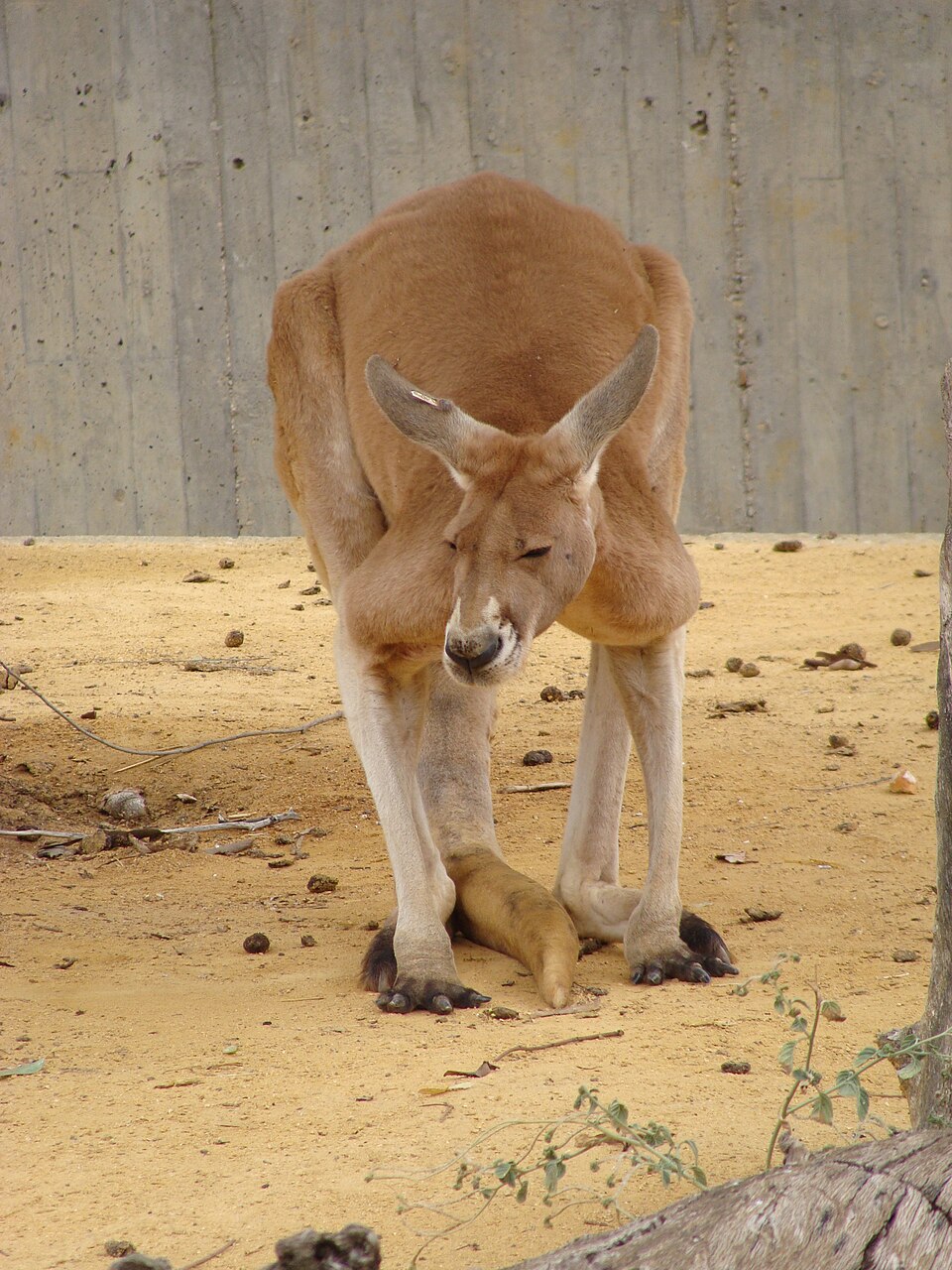
Reference photograph
Reference photograph of a red kangaroo. Compare the photographed individual's color and form with the identification information in the text.
Source: Fernando Losada Rodríguez · Original material · CC BY-SA 4.0
1. Classification, origins and habitat
Kangaroo names several species; this page uses the red kangaroo as its example. The current genus Osphranter and older name Macropus rufus occur in sources about the same species. It uses grasses and plant resources in arid and semiarid inland Australia. Local environmental changes, such as increased food after rain, affect movement and reproduction. Do not treat small wallabies as young kangaroos or apply tree-kangaroo life to every species. Distinguishing maximum male-size records from females and young avoids exaggerating the entire species' image.
2. Appearance and identification
Developed hindlegs, long feet and a thick long tail are characteristic, while forelegs are relatively short. Males are generally larger and often distinctly reddish, but sex and regional color differences mean coat color alone cannot identify every individual's sex. A female's pouch houses very small developing young. Hopping photographs reveal balance involving tail and hindlegs. During slow movement, forelegs and tail also support the body, so the tail is not merely decoration. Showing only large standing males can obscure differences in size and life between sexes; clarify what kind of individual is shown in the photograph.
3. Behavior and way of life
Red kangaroos graze and tend to rest in shade during heat, with activity varying by weather and resources. Loose groups change in composition and size. Male competition can involve forelegs and hindlegs; do not interpret it as boxing with the same purpose as human sport. Young develop in the pouch, later moving in and out while growing toward independence. Maternal reproduction and young development relate to food conditions but do not occur identically at every time. An outdoor animal approaching people may be accustomed to food lures.
4. Observation, conservation and care
Where kangaroos encounter people, do not lure them close with food or approach large males for photographs. They are wild animals with powerful hindlegs and claws; apparent familiarity differs from safe contact. Consider habitat water, grasses and movement space, while distinguishing population effects of introduced water supplies and human management. Near roads, nighttime movement and vehicle collisions can be concerns. Identify the red kangaroo as the representative species rather than giving all kangaroos one size or conservation figure. Comparing slow walking with fast hopping helps explain body functions.
Evidence and references
- Animal Diversity Web — Macropus rufus
Classification, distribution, appearance, diet and reproductive behavior
- Australian Museum — Red kangaroo
Red kangaroo classification, appearance, diet and reproduction