
Other Mammals
Llama
Llama
Classification and scientific name: Lama glama
Sources checked:
Andean livestock with a history of travel and carrying loads
The llama is a camelid domesticated in the South American Andes, historically connected with transport, fiber and varied everyday resources.
Origins and distribution
South American Andes
- Camelid
- Andes
- Livestock
- Group living
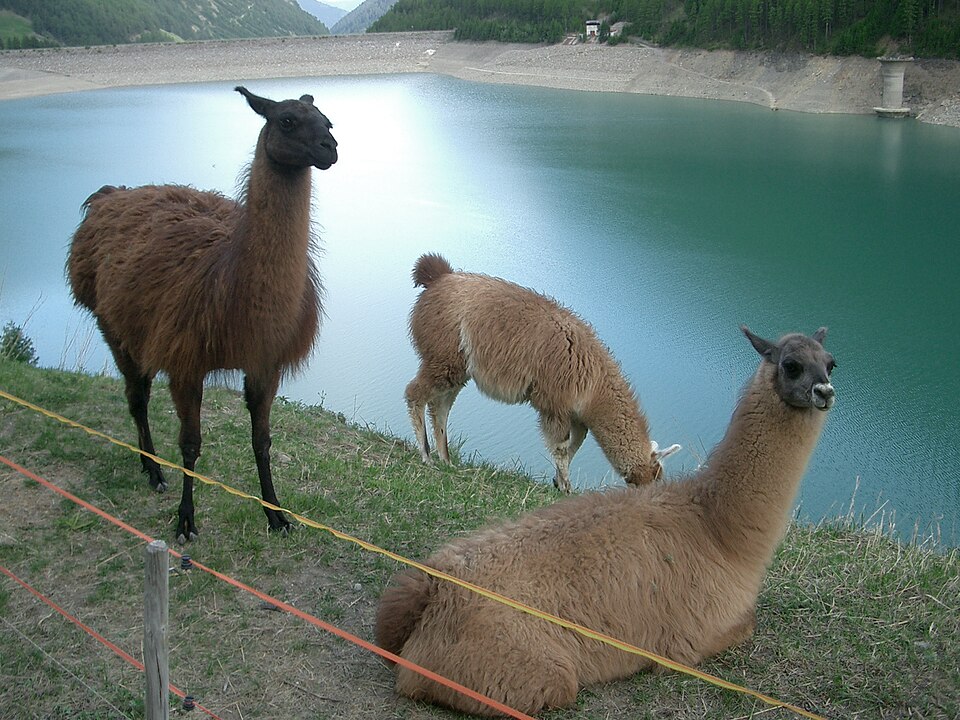
Reference photograph
Reference photograph of llamas. Compare the photographed individuals' color and form with the identification information in the text.
Source: Andrija12345678 · Original material · CC BY-SA 4.0
1. Classification, origins and habitat
The llama is a camelid domesticated in the South American Andes, historically connected with transport, fiber and varied everyday resources. Although related to the wild guanaco, distinguish domestic llama and wild-species distributions. Despite sharing a family with humped Asian and African camels, it is a humpless South American lineage. Modern farms and visitor facilities on other continents mean the photographed country does not establish origin. A highland-use history does not imply life in any climate without special care. When introducing it alongside alpacas, consider the different livestock roles and body structures.
2. Appearance and identification
A generally larger body than an alpaca, long neck and long inward-curving ears provide principal comparison features. Coat color and length vary, as do facial and leg hair. Ear shape alone cannot establish hybrid status or breed; consult reliable sources too. The mouth is used to pluck plants, and soft foot pads differ structurally from horse hooves. A humpless back does not indicate poor health. Pack loads can hide the body, so comparing an unloaded animal helps reveal its characteristic conformation.
3. Behavior and way of life
Llamas use grasses and plant foods and relate to others through sounds, ear postures and body movements. Spitting needs context such as competition or defense; it is not always directed at people. Following a familiar handler does not equal naturally following humans in the wild. Relationships among mothers, young, adult males and the group can vary over time. Accounts of load-carrying need to consider size, health, route and working conditions together. Describing unconditional tolerance of heavy loads overlooks welfare and individual differences.
4. Observation, conservation and care
Assess husbandry through grazing, water, dry resting places and appropriate group relationships. Foot and coat care, parasite management and health checks should suit the region and husbandry system. During visitor encounters, respect an individual's option to retreat, without chasing or forcibly holding the head. Traditional pack use does not justify excessive loads or work. Identify the animal as a llama in a domestic setting, rather than adding alpaca fiber traits incorrectly. Protection of wild relatives and welfare of farm llamas are related topics, but are not assessed by identical indicators.
Evidence and references
- Animal Diversity Web — Lama glama
Classification, distribution, appearance, diet and reproductive behavior
- Denver Zoo — Llama
Llama appearance, domestic uses, diet and group life