
Other Mammals
Plains zebra
Zebra
Classification and scientific name: Equus quagga
Sources checked:
The social life of plains zebras beyond their stripes
Zebras include separate species such as plains, mountain and Grevy's zebras.
Origins and distribution
Eastern and southern Africa
- Horse family
- Stripes
- Herbivory
- Plains zebra
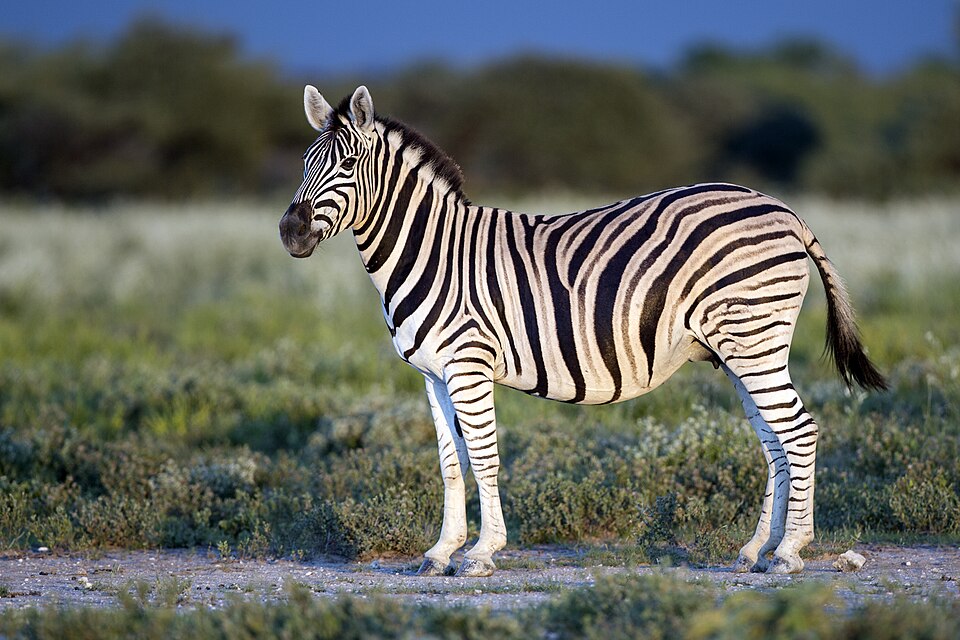
Reference photograph
Reference photograph of a plains zebra. Compare the photographed individual's color and form with the identification information in the text.
Source: Yathin S Krishnappa · Original material · CC BY-SA 3.0
1. Classification, origins and habitat
Zebras include separate species such as plains, mountain and Grevy's zebras. This account centers on the plains zebra, Equus quagga. Check classification scope when reading older sources using Equus burchellii or discussing the extinct quagga. The species uses grasslands and scattered-tree environments, with seasonal changes in water and food influencing movement. Do not assume identical movement scales or social structures for every zebra. Visible stripes alone do not justify attaching another species' ears, belly patterns or conservation information.
2. Appearance and identification
A broadly horse-like body carries black-and-white stripes, a short upright mane and a tail-tip tuft. Stripe arrangements differ individually, with regional plains-zebra populations also varying in stripe width and faint secondary stripes. Compare Grevy's very fine stripes and large ears and mountain-zebra traits separately. Hard hooves meet the ground, and long legs aid travel and escape. Research into stripe functions is varied; camouflage alone is not an established complete explanation. Lighting and dust affect photographic contrast, so a perfectly clean body should not be the only normal appearance presented.
3. Behavior and way of life
Plains zebras mainly eat grasses and move within family groups and other social groups. Although seen with other herbivores, food selection and group relationships differ. Movement responds to water and food, with individuals interacting through sounds and ear and body postures. Foals grow in relation to mothers, learning group movement and surrounding dangers. Kicking and biting need interpretation through defense and competition. Close relationship to horses does not imply suitability for riding and contact like domestic horses. A calm photograph cannot establish a safe distance.
4. Observation, conservation and care
Conservation involves maintaining grassland, water access and seasonal movement routes together. Fences and roads can divide movement, while water shared with livestock may create conflict. During observation, do not divide groups with vehicles or block watersides and escape routes. Recording individual stripes aids identification, but assigning an exact subspecies from one pattern needs further evidence. Identify the scope as plains zebra in photographs and text without transferring extinct quagga traits or other zebras' threat categories. Distinguishing regions and species underpins accurate ecology.
Evidence and references
- Animal Diversity Web — Equus burchellii
Classification, distribution, appearance, diet and reproductive behavior
- San Diego Zoo — Zebra
Differences among zebra species, stripes, groups and movement