
Mammals (Pigs)
American Yorkshire
American Yorkshire
Classification and scientific name: Sus scrofa domesticus
Sources checked:
A white body and upright ears are characteristic
The American Yorkshire is a registered breed developed in the United States from British Large White ancestry. Distinguish regional registration names from foundation lines. A white body and upright ears are characteristic. Compare it with the white-bodied Landrace, which has drooping ears.
Origins and distribution
Developed in the United States from British pig ancestry
- American Yorkshire
- Developed in the United States from British pig ancestry
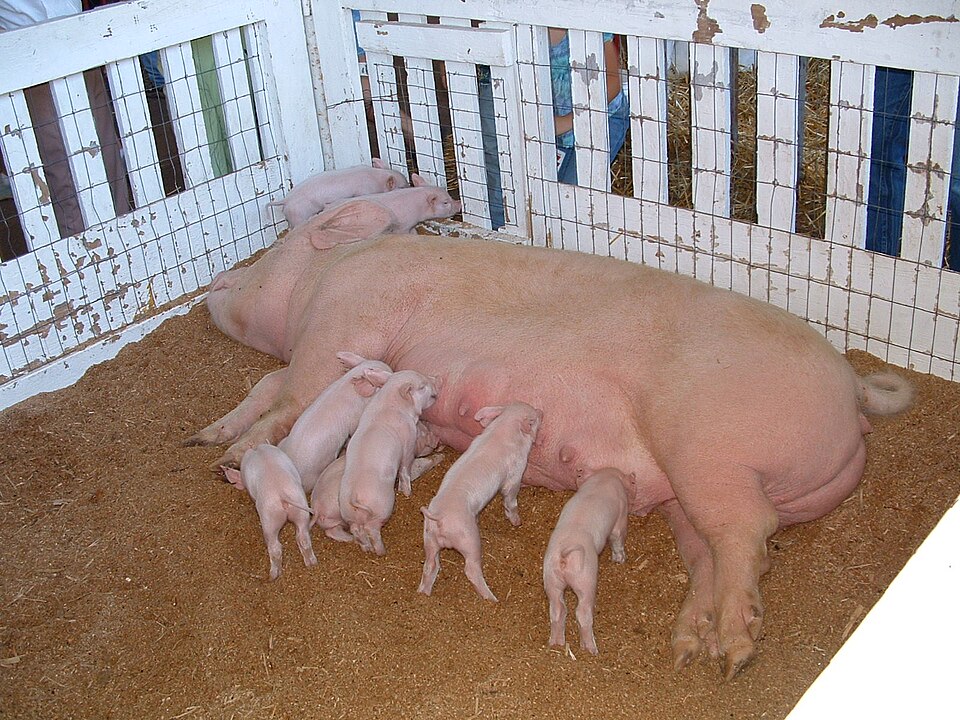
Reference photograph
Reference photograph of an American Yorkshire pig. Compare the photographed individual's color and form with the identification information in the text.
Source: Kevin Noone from Portland, USA · Original material · CC BY 2.0
1. Classification, origins and habitat
The American Yorkshire is a registered breed developed in the United States from British Large White ancestry. Distinguish regional registration names from foundation lines.
This illustrates British Large White lines continuing through separate registration and selection in the United States. Check country and organization when reading how Yorkshire and Large White are used in sources. A regional name alone does not establish an individual's birthplace or where it is currently kept.
2. Appearance and identification
A white body and upright ears are characteristic. Compare it with the white-bodied Landrace, which has drooping ears.
Upright ears, a long white body and a relatively straight snout outline can be considered together. The forward-drooping ears of the Landrace provide a comparison, but white color alone makes distinguishing purebreds from crosses difficult. Pink-looking skin may reflect white hair, light skin and lighting.
3. Behavior and way of life
The breed is used for maternal reproductive traits and meat-production crosses. Domestic pigs with the same color do not all belong to the same registered population.
It is described through reproduction, rearing and meat-production crossbreeding. Maternal traits concern records for mothers and young together, without guaranteeing prolificacy as a fixed number. Distinguish purebred and crossbred results and production records for past and present populations.
4. Observation, conservation and care
Check national registration criteria and actual individual records. A single population's litter-size or growth records should not become averages for every Yorkshire.
Large adults, growing pigs and pregnant or nursing sows have different nutritional and environmental needs. Observe access to feed and water, comfortable rest, gait and hooves alongside size and production numbers. Outdoors, light-skinned pigs also need shade and opportunities to cool.
Evidence and references
- Oklahoma State University — American Yorkshire
Classification, origins, appearance, ecology or breed uses
- Defra — Pig behavior and environmental welfare guidance
Domestic pigs' exploratory behavior, feed, shade and resting space. This is UK material, not guidance on Korean legislation.