
Mammals (Pigs)
Landrace pig
Landrace
Classification and scientific name: Sus scrofa domesticus
Sources checked:
Light skin, white hair, a long body and forward-drooping ears are characteristic
Landrace is a domestic pig lineage with registered, selectively bred populations in several countries. Light skin, white hair, a long body and forward-drooping ears are characteristic.
Origins and distribution
Registered populations in several countries developed from Danish ancestry
- Landrace pig
- Registered populations in several countries developed from Danish ancestry
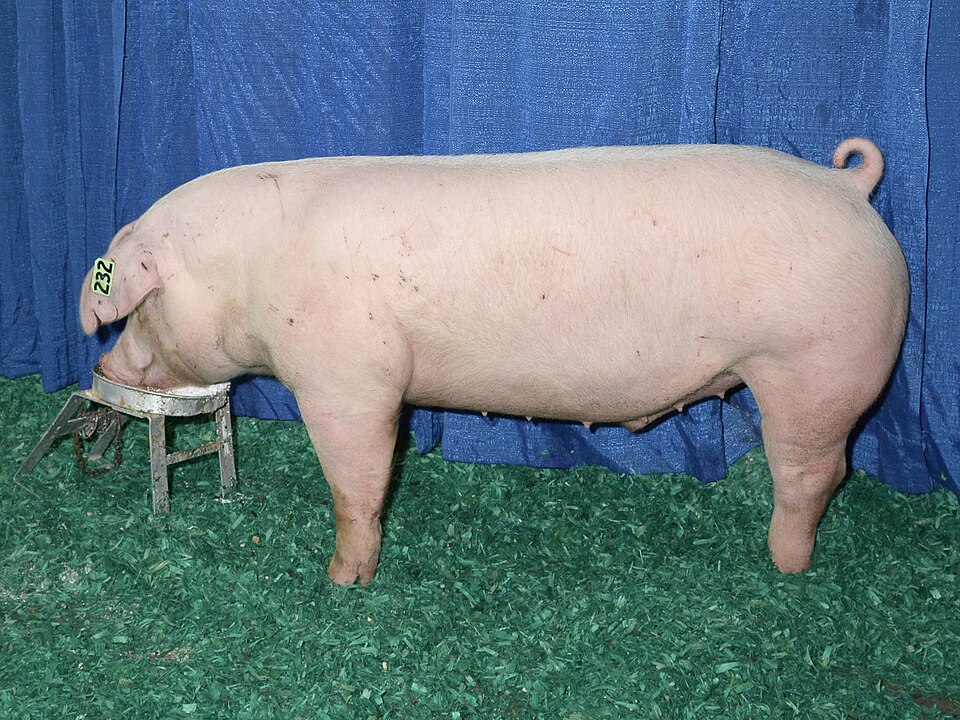
Reference photograph
Reference photograph of a Landrace pig. Compare the photographed individual's color and form with the identification information in the text.
Source: Keystone International · Original material · CC BY 2.0
1. Classification, origins and habitat
Landrace is a domestic pig lineage with registered, selectively bred populations in several countries. Danish breeding history also influenced the formation of Landrace populations elsewhere. This entry describes Landrace-type pigs characterized by long white bodies and drooping ears; distinguish the national line in the representative photograph from the scope of the wider group.
Danish origins and registered Landrace populations in the United States and European countries illustrate breeding developments branching from a shared history. This page's general account differs in scope from a separate Danish Landrace account. A shared name does not mean identical standards and performance in every country.
2. Appearance and identification
Light skin, white hair, a long body and forward-drooping ears are characteristic. The also-white Yorkshire offers a comparison through its upright ears, but conformation and ear angle vary with age and individual. Posture and photographic angle can make a body appear longer, so do not infer a fixed length.
Drooping ears may partly cover the eyes, and the long body shows clearly in side view. Adult proportions differ from a young pig's body, so do not present a fixed weight from one photograph. Where the representative photograph identifies a national line, read it together with its caption.
3. Behavior and way of life
The group is used in pig production and crossbreeding for maternal traits including reproduction and rearing young. A photograph showing a large belly or many piglets cannot guarantee prolificacy or productivity for every individual. Actual reproductive and growth records depend on the sow's age and body condition, feeding and husbandry environment; registration standards can also differ by country.
Use of maternal traits means reproductive records need consideration; it does not guarantee that every mother raises many healthy young. The surroundings, nutrition, rest and individual health of mothers and piglets affect actual outcomes.
4. Observation, conservation and care
Nutrition and use of space change through growth, pregnancy and lactation. Descriptions of reproductive traits should consider room for mothers to lie and rise comfortably, gait and body condition alongside production numbers. With light-skinned pigs kept outdoors, consider sunlight, shade and temperature management, and maintain regular care records.
A long body neither establishes weak legs nor guarantees robustness from appearance alone. Prepare feed and space separately for growing, pregnant and lactating individuals, and regularly assess individual condition, including skin and hooves.
Evidence and references
- Oklahoma State University — Landrace pig
Species-specific information on origins, appearance, uses or ecology
- Defra — Pig behavior and environmental welfare guidance
Domestic pigs' exploratory behavior, feed, shade and resting space. This is UK material, not guidance on Korean legislation.