
Mammals (Pigs)
Hampshire
Hampshire
Classification and scientific name: Sus scrofa domesticus
Sources checked:
A white belt across the shoulders and forelegs of a black body, with upright ears, is characteristic
The Hampshire is a domestic pig breed registered and developed in the United States from lines introduced from Britain. A white belt across the shoulders and forelegs of a black body, with upright ears, is characteristic.
Origins and distribution
Developed in the United States from British pig ancestry
- Hampshire pig
- Developed in the United States from British pig ancestry
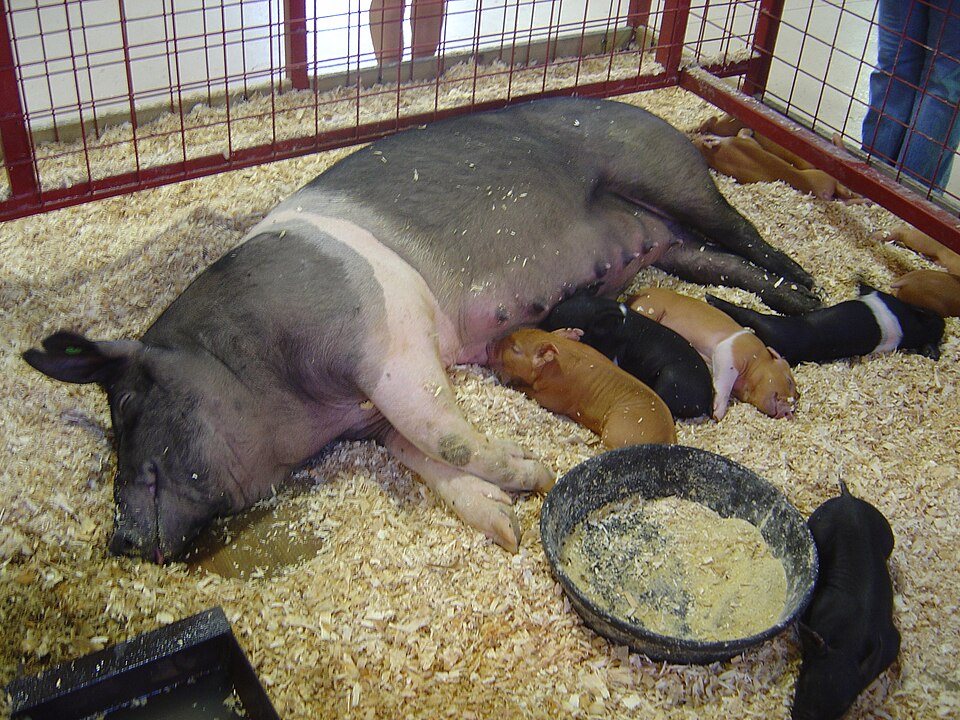
Reference photograph
Reference photograph of a Hampshire pig. Compare the photographed individual's color and form with the identification information in the text.
Source: Joy Schoenberger. Original uploader was MamaGeek at en.wikipedia · Original material · CC BY 3.0
1. Classification, origins and habitat
The Hampshire is a domestic pig breed registered and developed in the United States from lines introduced from Britain. It is known in modern pig production for meat traits and crossbreeding. Although named after a British place, formation of the current registered population needs to be examined by country and period. It has a separate pedigree from other pigs with similar white belts.
A white belt on a black body is memorable, but breed formation involves ancestry and selection. Distinguishing British origins from development in the United States reduces the misconception that a place name explains the entire origin. Check the country of sources about modern registered populations as well.
2. Appearance and identification
A white belt across the shoulders and forelegs of a black body, with upright ears, is characteristic. Belt width and white leg areas vary individually. British Saddlebacks show a similar pattern but can be compared through their drooping ears. A partial photograph showing only a white belt cannot establish purebred status.
Consider the belt's position across the shoulders and forelegs together with upright ears and the snout. Saddlebacks with a similar white belt are a different registered breed and have a different ear appearance. When ears are hidden, do not identify the breed solely by pattern; check the source's breed information too.
3. Behavior and way of life
Hampshires are used for meat production and crossbreeding, but muscle and growth traits vary individually and with husbandry. A role in one program differs from the performance of every individual. As domestic pigs, they forage, explore and interact with others; color patterns do not predict friendliness to people or ease of handling.
Selection for meat traits does not remove the pig's basic behavioral needs. Growing pigs still need opportunities to smell, touch and form relationships with other individuals. Descriptions of high productivity do not justify cramped space or inadequate exploratory surroundings.
4. Observation, conservation and care
Inspect body condition across both white-belt skin and black areas, and provide shade, water and appropriate flooring. Consider gait, hooves and comfortable rest alongside a rapidly grown body. With groups, check opportunities to access feed and water and exploratory space; introducing pigs to new groups requires management experience.
An exhibition photograph clearly displaying the belt documents appearance, not suitability of the environment. In husbandry, assess flooring, water, shade, individual intake and rest together, including whether less competitive group members can reach feeders.
Evidence and references
- Oklahoma State University — Hampshire pig
Species-specific information on origins, appearance, uses or ecology
- Defra — Pig behavior and environmental welfare guidance
Domestic pigs' exploratory behavior, feed, shade and resting space. This is UK material, not guidance on Korean legislation.