
Mammals (Pigs)
Duroc
Duroc
Classification and scientific name: Sus scrofa domesticus
Sources checked:
Coats range from light reddish brown to deep red-brown, and forward-drooping ears are characteristic
The Duroc is a domestic pig breed developed from red pig lines in the United States. Coats range from light reddish brown to deep red-brown, and forward-drooping ears are characteristic.
Origins and distribution
United States
- Duroc pig
- United States
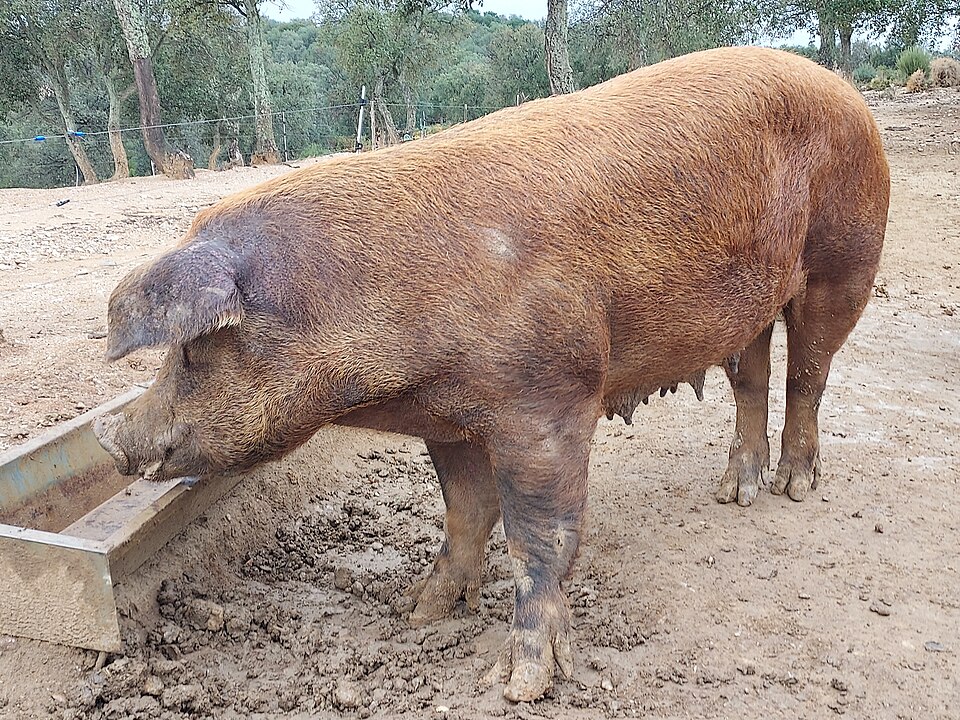
Reference photograph
Reference photograph of a Duroc pig. Compare the photographed individual's color and form with the identification information in the text.
Source: Fabricio Cardenas · Original material · CC BY-SA 4.0
1. Classification, origins and habitat
The Duroc is a domestic pig breed developed from red pig lines in the United States. It was selected for meat-production traits and is also used in modern pig crossbreeding programs. A shared red coat does not make it the same breed as Britain's Tamworth. Foundation bloodline history differs from information about national registered and selectively bred populations.
Development from several red lines illustrates the difference between a simple color name and a registered breed. Duroc is not a synonym for all red pigs. Modern meat breeding and the forms of historical regional pigs are not necessarily identical.
2. Appearance and identification
Coats range from light reddish brown to deep red-brown, and forward-drooping ears are characteristic. The body is substantial and muscular, but proportions differ among piglets, sows and boars. Lighting or mud can alter apparent color, so do not identify the breed from color alone. Compare the upright ears of the also-red Tamworth.
Considering forward-drooping ear tips together with the outlines of the snout and body reveals more than looking only at red hair. Individuals have lighter and darker shades, which soil or lighting can alter in photographs. Differences related to sex and growth also matter.
3. Behavior and way of life
Durocs are selected for growth and meat production and used in crossbreeding. Widespread use as a sire line does not guarantee identical ability in every Duroc boar or identical outcomes from every mating. When comparing production records, check age, sex and feeding conditions, and distinguish purebred from crossbred data. Do not infer temperament from a bloodline name alone.
When explaining meat traits and roles in crossbreeding programs, check the actual population and conditions of the records. Muscular development does not predict temperament or friendliness to people. Husbandry experience and feed and space conditions influence individual behavior.
4. Observation, conservation and care
Regardless of growth targets, pigs need surroundings for rest, exploration and cooling. Check competition for feed within the group, flooring, gait and skin, and match feeding to growth stage. Red, thick-looking hair does not remove the need for temperature management. At exhibitions or farm visits, observe normal behavior rather than provoking pigs into running.
Concentrating only on a large body and rapid growth can overlook legs, hooves and movement. Provide flooring and resting areas where adults can turn and lie down. Safe materials to touch and root through with the snout support normal domestic pig behavior.
Evidence and references
- Oklahoma State University — Duroc pig
Species-specific information on origins, appearance, uses or ecology
- Defra — Pig behavior and environmental welfare guidance
Domestic pigs' exploratory behavior, feed, shade and resting space. This is UK material, not guidance on Korean legislation.