
Mammals (Pigs)
Chester White
Chester White
Classification and scientific name: Sus scrofa domesticus
Sources checked:
White hair and drooping ears are characteristic
The Chester White is a domestic pig breed developed in Pennsylvania, United States. It was selectively bred using several white pig lines. White hair and drooping ears are characteristic. Comparison with upright-eared Yorkshire lines helps reveal distinguishing features.
Origins and distribution
Pennsylvania, United States
- Chester White
- Pennsylvania, United States
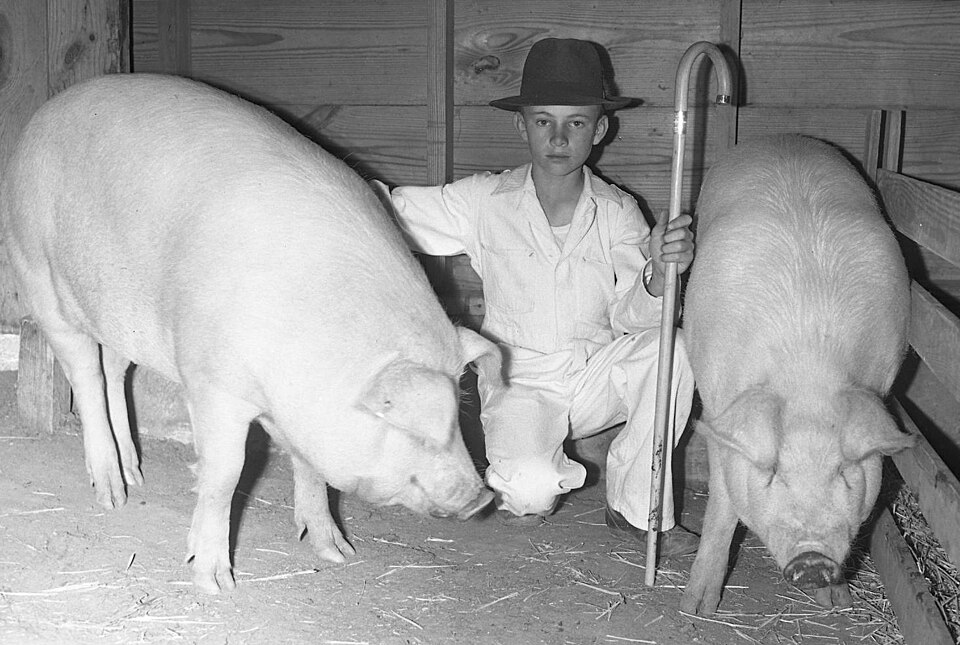
Reference photograph
Reference photograph of a Chester White pig. Compare the photographed individual's color and form with the identification information in the text.
Source: Cushing Memorial Library and Archives, Texas A&M · Original material · CC BY 2.0
1. Classification, origins and habitat
The Chester White is a domestic pig breed developed in Pennsylvania, United States. It was selectively bred using several white pig lines.
Its formation drew on Pennsylvania's regional pig-farming history and crosses among white lines. A shared white color does not make its ancestry identical to the Landrace. Distinguishing modern reproductive and rearing records from stories of historical breed formation clarifies the intended uses.
2. Appearance and identification
White hair and drooping ears are characteristic. Comparison with upright-eared Yorkshire lines helps reveal distinguishing features.
Drooping ears combined with a white body provide important clues when comparing white pigs. Conformation and the angle at which ears hang can look different with growth stage and posture. If light skin looks yellowish or pink in a photograph, distinguish lighting from skin condition.
Comparing drooping versus upright ears helps reveal differences between white Chester White and Yorkshire pigs. However, posture and growth also matter, so check the exact name alongside registration information in the source.
3. Behavior and way of life
The breed is used in pig production for maternal traits including reproduction and rearing. Read breed descriptions separately from an individual sow's reproductive record.
Maternal traits concern the assessment of reproduction and care of young. The litter size of one individual must not be used as an average or guarantee for the whole breed. Actual husbandry conditions and individual records are needed, and temperament toward people is not determined by a breed name alone.
4. Observation, conservation and care
Provide feed and clean space appropriate to growth stage. Even with the same coat color, ears, ancestry and registered names need checking together to distinguish breeds.
When white-skinned pigs live outdoors, provide shade and opportunities to cool. Match space and nutrition to growth and lactation stages, and check flooring for comfortable lying and rising. Exploratory materials and access to feed within the group are also basic management factors.
Evidence and references
- Oklahoma State University — Chester White
Classification, origins, appearance, ecology or breed uses
- Defra — Pig behavior and environmental welfare guidance
Domestic pigs' exploratory behavior, feed, shade and resting space. This is UK material, not guidance on Korean legislation.