
Mammals (Pigs)
Poland China
Poland China
Classification and scientific name: Sus scrofa domesticus
Sources checked:
A black body with white on the face, feet and tail tip, and drooping ears, is characteristic
The Poland China is a pig breed developed in Ohio, United States. Its name should not be taken to describe a single breed originating directly in Poland or China. A black body with white on the face, feet and tail tip, and drooping ears, is characteristic.
Origins and distribution
Ohio, United States
- Poland China
- Ohio, United States
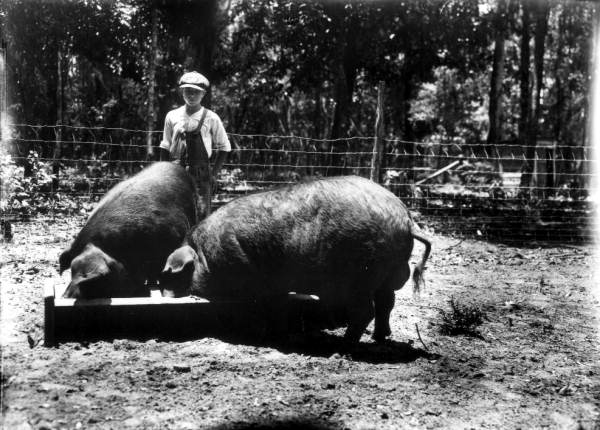
Reference photograph
Reference photograph of a Poland China pig. Compare the photographed individual's color and form with the identification information in the text.
Source: State Library and Archives of Florida · Original material · Public domain
1. Classification, origins and habitat
The Poland China is a pig breed developed in Ohio, United States. Its name should not be taken to describe a single breed originating directly in Poland or China.
An interesting distinction is that two countries appear in its name, while its formation took place in Ohio. Interpreting a breed name literally as geographic origin causes errors. This is a domestic breed developed through regional crosses and subsequent registration.
2. Appearance and identification
A black body with white on the face, feet and tail tip, and drooping ears, is characteristic.
White feet and facial markings on a black body may suggest a Berkshire, but compare the drooping ears as well. The extent of white markings and body type vary individually. Do not describe large, muscular adults and young animals using one fixed set of proportions.
Although black bodies, white feet and white facial markings overlap with Berkshire appearance, forward-drooping ears provide a comparison clue. Do not turn Poland and China in the name into current breeding countries or established ancestry origins.
3. Behavior and way of life
The breed was selected for meat production. Compare large size and growth tendencies through records specifying age and feeding conditions.
Read the history of selection for meat separately from modern growth records. Body size is affected by sex, age and feed; a giant boar's record is not the average for sows and young pigs. Black color or white markings cannot predict behavior or friendliness.
4. Observation, conservation and care
Even where black-and-white colors resemble a Berkshire, check ear shape and registration information together. Do not use weight tables that fail to distinguish sex and growth stage.
Large adults need space to turn and lie comfortably, with nonslip flooring. Confirm registered names to avoid confusing similarly colored breeds, and provide feed, water, shade and exploratory materials according to actual individual use.
Evidence and references
- Oklahoma State University — Poland China
Classification, origins, appearance, ecology or breed uses
- Defra — Pig behavior and environmental welfare guidance
Domestic pigs' exploratory behavior, feed, shade and resting space. This is UK material, not guidance on Korean legislation.