
Mammals (Pigs)
Large Black
Large Black
Classification and scientific name: Sus scrofa domesticus
Sources checked:
The body and skin are black, and large drooping ears sometimes partly cover the eyes
The Large Black is a black domestic pig breed developed in Britain. It is conserved as traditional livestock and has a history connected to outdoor pig husbandry. The body and skin are black, and large drooping ears sometimes partly cover the eyes.
Origins and distribution
Britain
- Large Black
- Britain
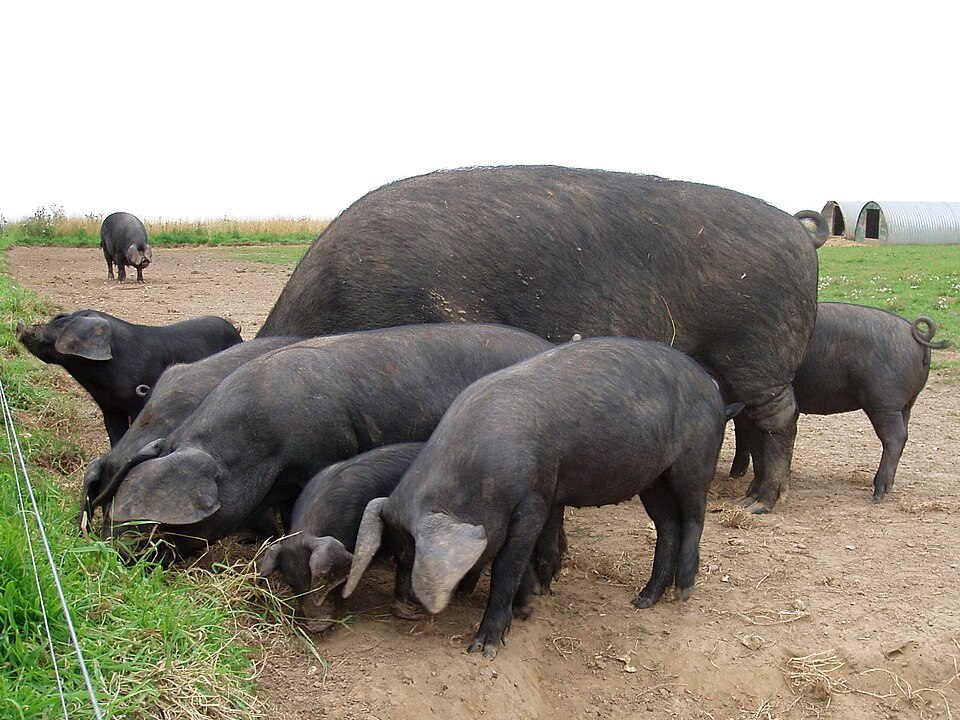
Reference photograph
Reference photograph of a Large Black pig. Compare the photographed individual's color and form with the identification information in the text.
Source: Amanda Slater from Coventry, England · Original material · CC BY-SA 2.0
1. Classification, origins and habitat
The Large Black is a black domestic pig breed developed in Britain. It is conserved as traditional livestock and has a history connected to outdoor pig husbandry.
It developed from pigs in several British regions and was used outdoors. Distinguish a description of black color from the registered Large Black breed. Changes in commercial pig farming provide context for both conserving traditional bloodlines and current production purposes.
2. Appearance and identification
The body and skin are black, and large drooping ears sometimes partly cover the eyes.
The black body and large drooping ears are principal distinguishing features, with ears sometimes concealing part of the face. Comparing breeds characterized by white feet and upright ears, such as the Berkshire, clarifies the differences. The extent of coverage varies with age and posture.
Considering a side view of large ears covering the eyes together with the long body reveals more than black color alone. When comparing other black traditional pigs, consider ears, white markings and pedigree together.
3. Behavior and way of life
This pig has been used in outdoor husbandry. Black skin does not mean freedom from heat or every skin problem.
It has been used as a domestic pig foraging outdoors. An outdoor husbandry history does not mean adaptation to every plant and environment, and black color does not imply immunity to heat or skin problems. Responses vary with the actual group and familiarity with people.
4. Observation, conservation and care
Observe large-ear form, gait and use of space. A reliable supply of water, shade and feed matters alongside breed selection.
Check beneath the large ears, the skin and gait, and prepare surroundings for comfortable lying and movement. Also check the safety of routes to food and water. Traditional breeds still require shade, water, exploratory materials and nutrition matched to individual growth stage.
Evidence and references
- Oklahoma State University — Large Black
Classification, origins, appearance, ecology or breed uses
- Defra — Pig behavior and environmental welfare guidance
Domestic pigs' exploratory behavior, feed, shade and resting space. This is UK material, not guidance on Korean legislation.