
Mammals (Pigs)
Berkshire
Berkshire
Classification and scientific name: Sus scrofa domesticus
Sources checked:
A black body with white on the face, feet and tail tip, together with upright ears, is characteristic
The Berkshire is a domestic pig breed developed in England's Berkshire region. A black body with white on the face, feet and tail tip, together with upright ears, is characteristic.
Origins and distribution
Berkshire, England
- Berkshire pig
- Berkshire, England
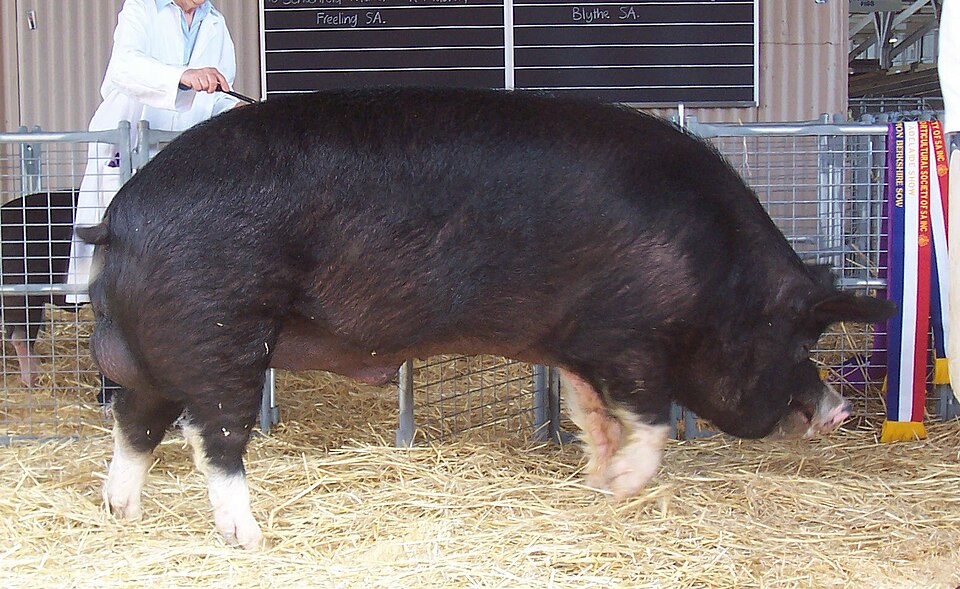
Reference photograph
Reference photograph of a Berkshire pig. Compare the photographed individual's color and form with the identification information in the text.
Source: Scott Davis · Original material · CC BY-SA 3.0
1. Classification, origins and habitat
The Berkshire is a domestic pig breed developed in England's Berkshire region. It spread to several countries for registration and selective breeding and became known in connection with meat production. Distinguish commercial expressions such as Japan's kurobuta from pedigree breed registration. Broad color names such as black pig do not all mean Berkshire.
The breed's worldwide spread became associated with names for meat products, but pedigree and production region are different information. Reading meat-quality promotion separately from an animal's origins and appearance reduces the misconception that all black pigs belong to the same breed.
2. Appearance and identification
A black body with white on the face, feet and tail tip, together with upright ears, is characteristic. The extent and shape of white markings vary individually. Poland China pigs have similar black-and-white colors but often show drooping ears, offering a comparison. However, ears and color alone cannot establish pedigree; registration information is needed.
Consider white facial and foot markings together with upright ears on the black body. In comparisons with Poland China pigs, ear shape and pedigree matter more than similar colors. If mud hides white areas in a photograph, do not invent markings that cannot be seen.
3. Behavior and way of life
The breed has been selected for meat production and is also used in crosses with other breeds. Meat-quality assessments are affected by genetics, growth, feeding and production conditions, so results from one individual or product do not guarantee outcomes for the whole breed. During husbandry, the usual domestic pig behaviors of interacting with others and using smell to find food occur.
Use in crossbreeding and registration as a purebred are different information. Do not transfer descriptions of purebred traits into guarantees for crossbred offspring; check parental lines and husbandry conditions. Exploratory and social behaviors occur independently of production goals.
4. Observation, conservation and care
Black skin does not eliminate every effect of sunlight and heat. Provide cooling shade and water, comfortable lying space and exploratory materials. Assess rapid eating or pushing other pigs at feeders in the actual group and feeding conditions. Individual checks of body condition, gait and intake matter more than breed reputation.
Inspect both black and white body areas and provide resting space and exploratory materials. Dark skin does not remove all temperature and sunlight effects; observe the group and feeding environment to check whether individuals can eat and rest comfortably.
Evidence and references
- Oklahoma State University — Berkshire pig
Species-specific information on origins, appearance, uses or ecology
- Defra — Pig behavior and environmental welfare guidance
Domestic pigs' exploratory behavior, feed, shade and resting space. This is UK material, not guidance on Korean legislation.