
Mammals (Pigs)
Mulefoot
Mulefoot
Classification and scientific name: Sus scrofa domesticus
Sources checked:
An undivided, fused-looking hoof is the principal distinguishing feature
The Mulefoot is a domestic pig breed conserved in the United States. Modern registration and pig-farming records are better known than its precise early origins. An undivided, fused-looking hoof is the principal distinguishing feature. Most have black coats and drooping ears.
Origins and distribution
United States
- Mulefoot
- United States
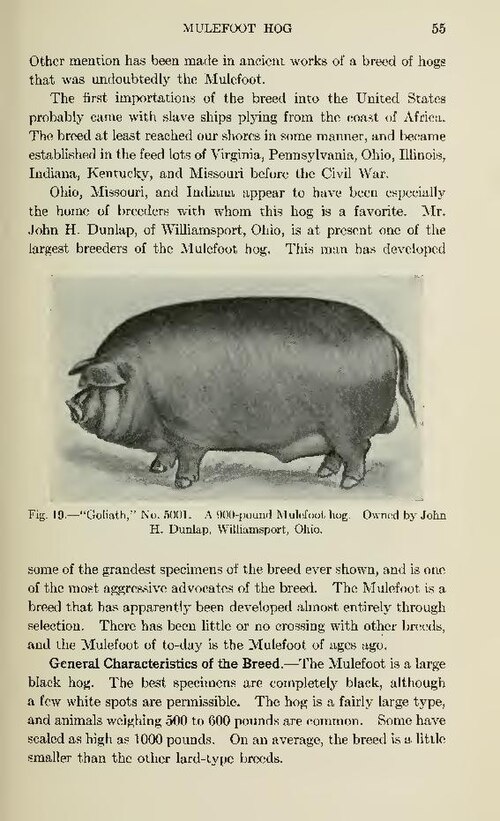
Illustration or historical material
Historical plate labeled as a Mulefoot breeding boar in figure 19 on page 55 of a 1914 publication. This is printed material from that period, not a photograph of a modern individual or current guidance on health or productivity.
Source: Lynch, Charles Frederick, 1868- White, George Ransom, 1874- · Original material · Public domain
1. Classification, origins and habitat
The Mulefoot is a domestic pig breed conserved in the United States. Modern registration and pig-farming records are better known than its precise early origins.
This traditional livestock breed was recorded and conserved in the United States; its name comes from a mule-like, undivided hoof. It is not a pig crossed with a mule or horse. Historical claims of disease immunity must not be repeated as breed advantages without modern verification.
2. Appearance and identification
An undivided, fused-looking hoof is the principal distinguishing feature. Most have black coats and drooping ears.
Because the undivided hoof is central to identification, consider photographs showing the feet together with the black body and drooping ears. A photograph with feet hidden in soil does not allow direct confirmation of that feature. Color alone can resemble other black pigs, so breed information in the source matters.
Resemblance to a mule in the name describes hoof shape. It does not mean a pig–mule cross; this is a breed within domestic pigs. Where feet are hidden, do not invent unseen hoof structures.
3. Behavior and way of life
Mulefoots were traditionally used for meat production. Historical claims of hog-cholera immunity should not be presented as established breed characteristics.
Distinguish the history of traditional meat husbandry from the purposes of current conservation populations. Distinctive hooves do not guarantee comfortable walking on every surface or resistance to disease. Exploration, foraging and interaction with other individuals remain basic parts of pig life.
4. Observation, conservation and care
Different hoof structure does not remove the need to check gait and flooring. Pedigree and breeding populations are important considerations in conservation sources.
Even with the undivided-looking hoof, regularly assess gait and ground conditions. Do not confuse a naturally different structure with movement impaired by injury. Conservation concerns actual registration and breeding records and the continuation of healthy individuals, ahead of a rare name.
Evidence and references
- Oklahoma State University — Mulefoot
Classification, origins, appearance, ecology or breed uses
- Defra — Pig behavior and environmental welfare guidance
Domestic pigs' exploratory behavior, feed, shade and resting space. This is UK material, not guidance on Korean legislation.