
Mammals (Pigs)
Meishan
Meishan
Classification and scientific name: Sus scrofa domesticus
Sources checked:
Skin folds, large drooping ears and dark skin are conspicuous
The Meishan is a domestic pig breed associated with China's Taihu group. Its reproductive traits have led to research and use in other pig populations. Skin folds, large drooping ears and dark skin are conspicuous.
Origins and distribution
China
- Meishan
- China
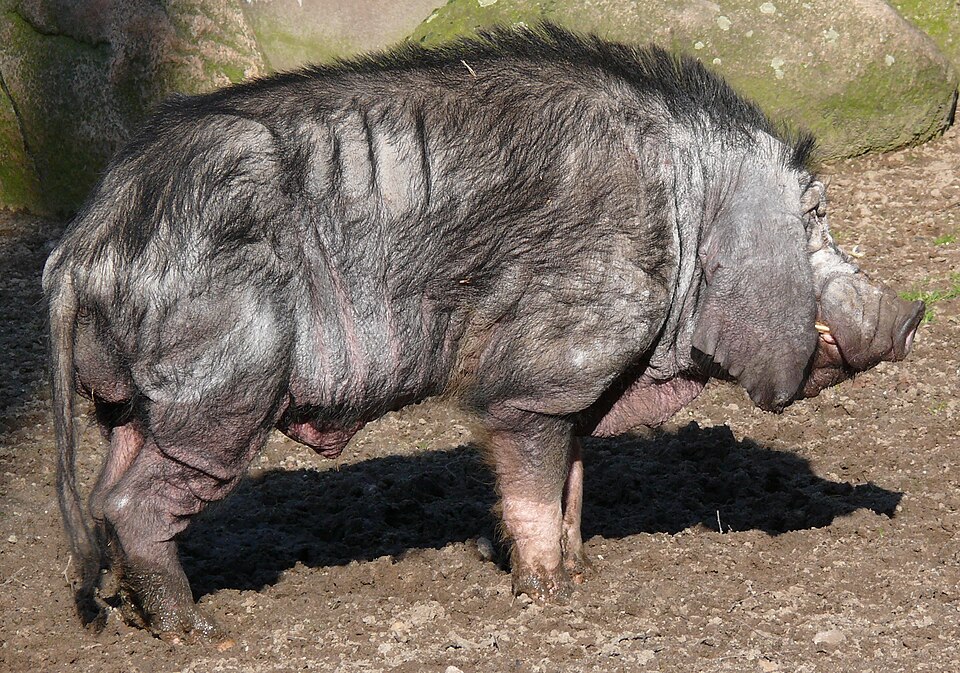
Reference photograph
Reference photograph of a Meishan pig. Compare the photographed individual's color and form with the identification information in the text.
Source: Gunnar Ries · Original material · CC BY-SA 2.5
1. Classification, origins and habitat
The Meishan is a domestic pig breed associated with China's Taihu group. Its reproductive traits have led to research and use in other pig populations.
Associated with regional pigs in China's Taihu group, the breed became known through reproductive research and selective breeding. Descriptions of prolificacy concern tendencies within particular study populations, ages and husbandry conditions. Historical records should not become fixed numbers that every mother always produces.
2. Appearance and identification
Skin folds, large drooping ears and dark skin are conspicuous.
Black or dark skin with many folds and large downward-hanging ears is characteristic. The extent to which folds and ears obscure the eyes varies individually and with growth stage. Treat these features as information about head and skin structure, rather than describing the appearance as comical.
When large ears cover the eyes, the face can look shorter and more wrinkled. Do not infer precise age or reproductive ability from the number or extent of folds; consult actual growth records.
3. Behavior and way of life
The breed is described through reproductive traits such as prolificacy. Litter size varies with surroundings and the mother's condition; it is not a fixed number for every individual.
Although illustrating livestock breeding for reproductive ability, reproductive numbers alone do not explain an animal's condition. A photograph of many young documents one individual at one time. Consider the mother's body condition, nursing and rest together with the young animals' living environment.
4. Observation, conservation and care
Check the actual population and date of records when describing reproductive characteristics. Skin folds and ear appearance do not have the same meaning as health or ease of management.
Skin folds and large ears require attention to the skin beneath and the surrounding environment. Observe comfortable movement and rest, and distinguish nutritional needs during pregnancy, lactation and growth. A reproductive reputation must not reduce attention to the mother's recovery and health.
Evidence and references
- Oklahoma State University — Meishan
Classification, origins, appearance, ecology or breed uses
- Defra — Pig behavior and environmental welfare guidance
Domestic pigs' exploratory behavior, feed, shade and resting space. This is UK material, not guidance on Korean legislation.