
Mammals (Pigs)
Mangalica
Mangalica
Classification and scientific name: Sus scrofa domesticus
Sources checked:
Curly hair is characteristic, with lines of different coat colors and patterns.
The Mangalica is a traditional domestic pig breed developed in Hungary. Its selection history differs from that of modern lean-meat breeds. Curly hair is characteristic, with lines of different coat colors and patterns. Despite a sheep-like appearance, it is a pig.
Origins and distribution
Hungary
- Mangalica
- Hungary
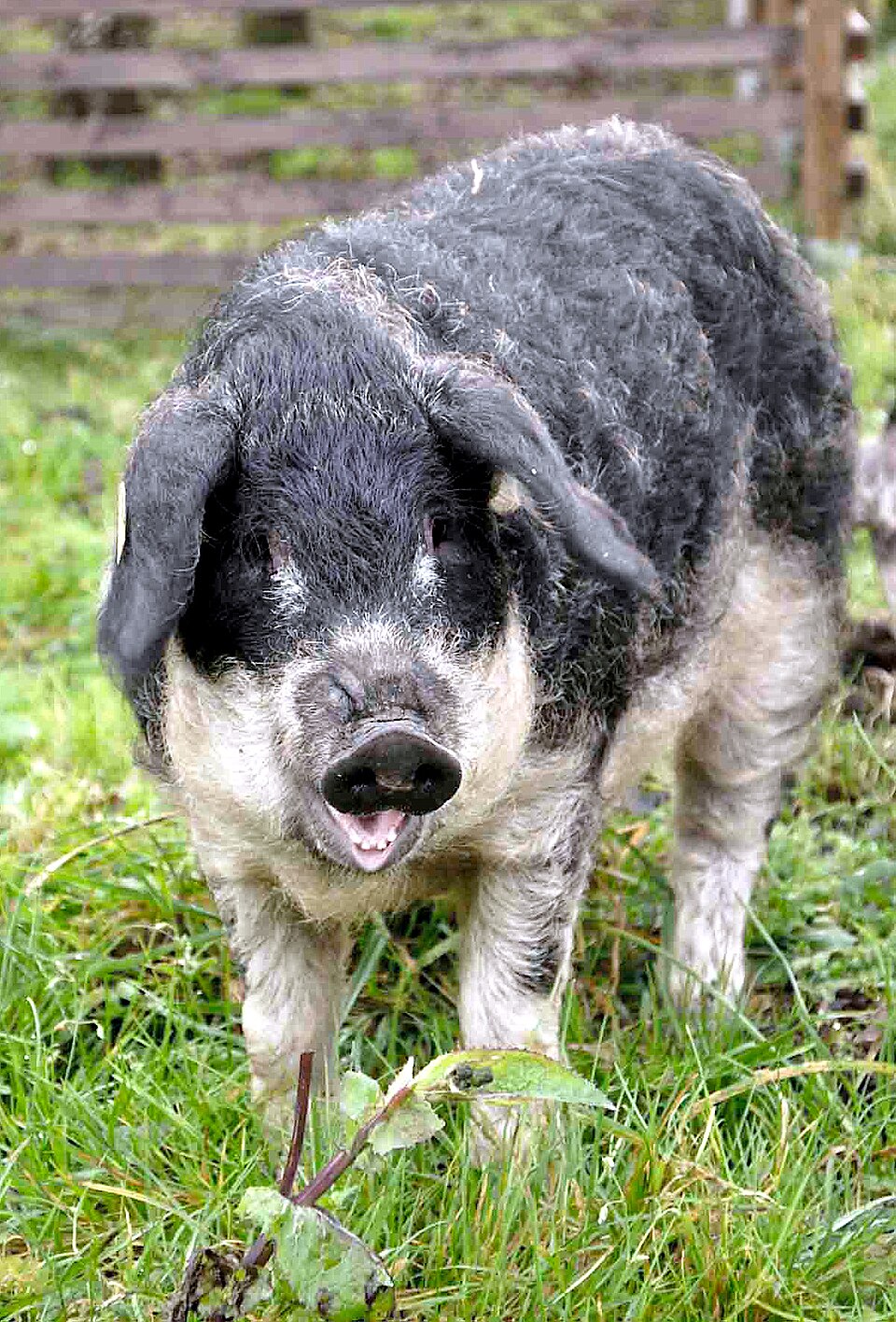
Reference photograph
Reference photograph of Mangalica. Compare the color and form of the individual shown with the identification notes in the text.
Source: Nienetwiler · Original material · CC BY-SA 3.0
1. Classification, origins and habitat
The Mangalica is a traditional domestic pig breed developed in Hungary. Its selection history differs from that of modern lean-meat breeds.
Associated with traditional pig breeding in Hungary and neighboring regions, it is known for a history of use emphasizing fat production. Modern food promotion and conservation of a living breed are different kinds of information. A long coat alone does not make it a wild species or a cross with sheep.
2. Appearance and identification
Curly hair is characteristic, with lines of different coat colors and patterns. Despite a sheep-like appearance, it is a pig.
Long curly hair is the most conspicuous feature, and groups may also be distinguished by color. The coat can look fuller in cold seasons, giving a different impression from summer photographs. Examining the actual body outline, ears and snout beneath the fur reveals the pig’s structure.
3. Behavior and way of life
It is known for fat accumulation and traditional production methods. Describing a breed as fatty does not guarantee the health benefits of a particular food.
Traditional grazing and meat production have been uses, but long hair and fat do not automatically guarantee health or good nutritional condition. Distinguish historical husbandry methods from present-day balanced nutrition and welfare. An unusual appearance does not change domestic pigs’ needs for exploration and group life.
4. Observation, conservation and care
Observe seasonal changes in the curly coat together with body condition. Outdoor husbandry still requires water, shade and appropriate nutrition; do not determine feed quantities from build alone.
Because a full coat can hide body condition, do not judge nutrition solely by appearance. In hot weather check shade, water and ways to cool the body, as well as flooring and hooves. Livestock conservation considers genetic diversity and individual health, not simply reproducing a color.
Evidence and references
- Oklahoma State University — Mangalica
Classification, origins, appearance, ecology or uses of the breed
- Defra — Pig behavior and environmental welfare guidance
Domestic pigs’ exploratory behavior, food, shade and resting space. This is UK material, not guidance on Korean law.