
Mammals (Pigs)
Red Wattle
Red Wattle
Classification and scientific name: Sus scrofa domesticus
Sources checked:
A red coat and a pair of hanging projections beneath the neck are characteristic
The Red Wattle is a traditional domestic pig breed conserved in the United States. Its early origins are uncertain, so a single ancient origin should not be asserted. A red coat and a pair of hanging projections beneath the neck are characteristic. Wattle in the name refers to these projections.
Origins and distribution
United States
- Red Wattle
- United States
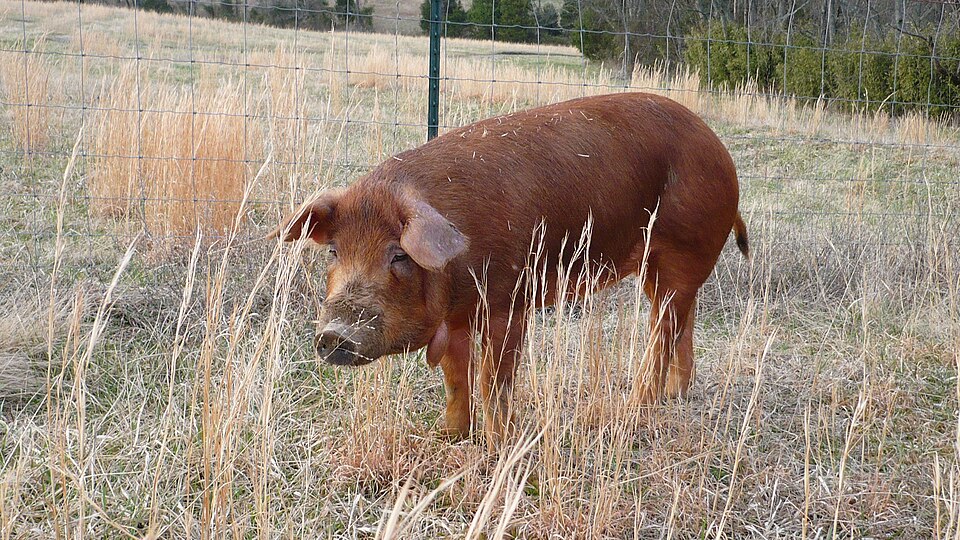
Reference photograph
Reference photograph of a Red Wattle pig. Compare the photographed individual's color and form with the identification information in the text.
Source: Mark Whitby from USA · Original material · CC BY 2.0
1. Classification, origins and habitat
The Red Wattle is a traditional domestic pig breed conserved in the United States. Its early origins are uncertain, so a single ancient origin should not be asserted.
This example of American traditional pig conservation is best described while acknowledging uncertainty about early origins. The red color and neck projections in its name are visual clues, not proof of its entire history. Check the country and date of surveys alongside conservation figures.
2. Appearance and identification
A red coat and a pair of hanging projections beneath the neck are characteristic. Wattle in the name refers to these projections.
Observe the paired projections under the neck together with the red coat. Their size and skin shape differ individually, and red shades can look lighter or darker. When comparing similarly colored Duroc and Tamworth pigs, consider ears, features beneath the neck and registration information together.
3. Behavior and way of life
The breed is discussed in the context of meat production and traditional livestock conservation. The projections are breed features, not signs of special abilities or disease immunity.
This domestic pig can be understood through meat production and conservation of traditional bloodlines. Do not interpret neck projections as signs of exceptional resistance or survival ability. Behavior varies with husbandry experience, feed and space; appearance alone cannot establish friendliness or management difficulty.
4. Observation, conservation and care
Managing pedigree records and breeding populations matters for conservation. Rarity rankings vary by country and survey date, so they should not be presented as fixed numbers.
Maintaining bloodlines requires considering individual health and genetic diversity together. Neck projections should not be pulled or handled casually. Provide space for large adults, exploratory materials, water and shade, and do not alter basic welfare needs because a breed is rare.
Evidence and references
- Oklahoma State University — Red Wattle
Classification, origins, appearance, ecology or breed uses
- Defra — Pig behavior and environmental welfare guidance
Domestic pigs' exploratory behavior, feed, shade and resting space. This is UK material, not guidance on Korean legislation.