
Mammals (Pigs)
Danish Landrace
Danish Landrace
Classification and scientific name: Sus scrofa domesticus
Sources checked:
A white body, long trunk and forward-drooping ears are characteristic
The Danish Landrace is a domestic pig line developed in Denmark. Do not group every country's registered Landrace population under identical standards. A white body, long trunk and forward-drooping ears are characteristic. Conformation varies with sex and growth stage.
Origins and distribution
Denmark
- Danish Landrace
- Denmark
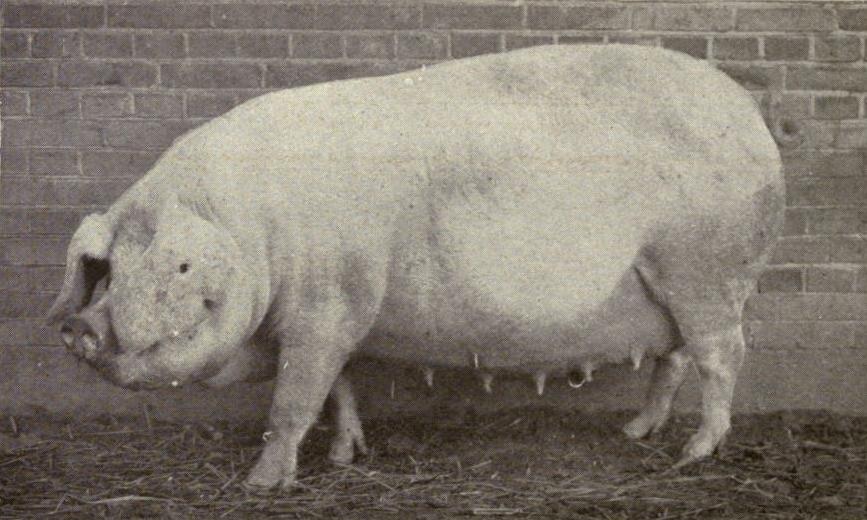
Illustration or historical material
Historical plate presented as a Danish Landrace pig in a 1909 Canadian survey report. It documents the breed at that time and does not represent every appearance or production trait of modern lines.
Source: Unknown author Unknown author · Original material · Public domain
1. Classification, origins and habitat
The Danish Landrace is a domestic pig line developed in Denmark. Do not group every country's registered Landrace population under identical standards.
Danish white-pig breeding influenced the formation of Landrace populations in several countries. This entry concerns the Danish registered line, so current records from the United States or elsewhere cannot directly become averages for the same population. Distinguish common origins from differences in modern breeding.
2. Appearance and identification
A white body, long trunk and forward-drooping ears are characteristic. Conformation varies with sex and growth stage.
A long body and forward-drooping ears are characteristic, but white does not mean the skin itself is pure white. Head and body proportions differ among piglets, boars and sows. Compare ears and conformation with other white pigs, while confirming the breed through reliable registration information.
Even Landrace-type pigs sharing a long white body and drooping ears need distinguishing by national registration and selection populations. Photographic appearance cannot guarantee Danish birth or registration; read the source information too.
3. Behavior and way of life
The line is used in reproduction and pig breeding and has influenced the development of Landrace pigs elsewhere.
It is used for maternal reproduction and crossbreeding in modern pig production. Litter sizes and growth records concern particular populations, dates and feeding conditions; they are not promises for every individual. Even where breeding is a principal purpose, consider the mother's rest, recovery and social needs.
4. Observation, conservation and care
When reading Landrace, check which country's registered population is meant. Consider reproductive records and ancestry alongside ear shape and body length.
Distinguish general Landrace accounts from national registration sources. Prepare feed and space for pregnancy, lactation and growth stages, and assess body condition and gait. Ensure room for a long-bodied animal to lie and rise, and manage the environment for sunlight and heat too.
Evidence and references
- Oklahoma State University — Danish Landrace
Classification, origins, appearance, ecology or breed uses
- Defra — Pig behavior and environmental welfare guidance
Domestic pigs' exploratory behavior, feed, shade and resting space. This is UK material, not guidance on Korean legislation.