
Mammals (Pigs)
Gloucestershire Old Spots
Gloucestershire Old Spots
Classification and scientific name: Sus scrofa domesticus
Sources checked:
Black spots on a white body and large drooping ears are characteristic
The Gloucestershire Old Spots is a traditional British domestic pig breed. Its husbandry history is associated with farm environments such as orchards. Black spots on a white body and large drooping ears are characteristic. Spot positions differ individually.
Origins and distribution
Gloucestershire, England
- Gloucestershire Old Spots
- Gloucestershire, England
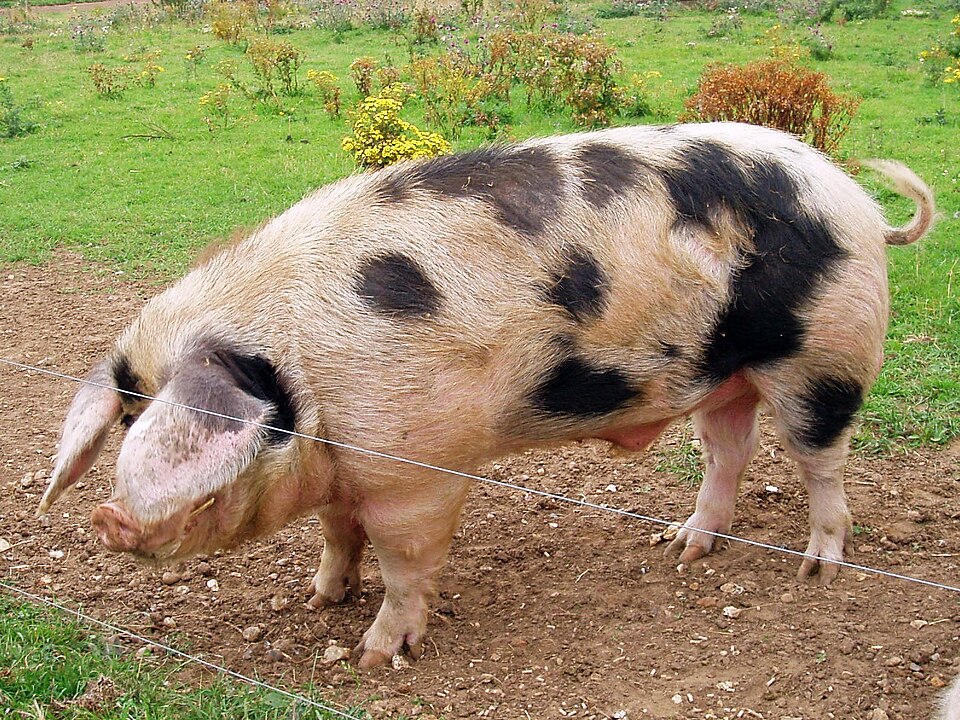
Reference photograph
Reference photograph of a Gloucestershire Old Spots pig. Compare the photographed individual's color and form with the identification information in the text.
Source: Amanda Slater from Coventry, England · Original material · CC BY-SA 2.0
1. Classification, origins and habitat
The Gloucestershire Old Spots is a traditional British domestic pig breed. Its husbandry history is associated with farm environments such as orchards.
It is known in the context of traditional British farming, including orchards and the use of dairy by-products. Historical farm uses should not be treated as complete modern feeding instructions. Folk stories about black spots on white pigs can be read separately from scientific origin accounts.
2. Appearance and identification
Black spots on a white body and large drooping ears are characteristic. Spot positions differ individually.
Large drooping ears and black spots on a light body stand out. Spot positions and extent are not uniform, so one photograph should not establish a fixed pattern. Compare ears, conformation and pedigree information together with other spotted breeds to determine the correct scope.
Black spot arrangements vary individually, so photographs of the same breed can look different. Old Spots in the name does not mean every spot is an old wound or skin disease; these are actual hair and skin color patterns.
3. Behavior and way of life
The breed was used in pasture-based and traditional pig husbandry. Distinguish its orchard history from current provision of balanced nutrition.
Historical outdoor husbandry and scenes of eating fruit illustrate the use of environmental and food resources. They do not mean fallen fruit supplies every nutrient, and tradition does not guarantee easy management or animal health. Social behavior and opportunities to explore also matter.
4. Observation, conservation and care
Fallen fruit alone should not be assumed to meet an adult pig's nutritional needs. Consider sunlight and shade in outdoor environments for light-skinned individuals.
For individuals with exposed white skin, consider outdoor sunlight and shade. In orchards, assess food types, safe fencing and resting areas together. Traditional breed conservation involves recording pedigree and individual health as well as maintaining spot patterns.
Evidence and references
- Oklahoma State University — Gloucestershire Old Spots
Classification, origins, appearance, ecology or breed uses
- Defra — Pig behavior and environmental welfare guidance
Domestic pigs' exploratory behavior, feed, shade and resting space. This is UK material, not guidance on Korean legislation.