
Mammals (Pigs)
Jeju black pig
Jeju Black Pig
Classification and scientific name: Sus scrofa domesticus
Sources checked:
Black skin and hair are characteristic, with size and form differing from modern selectively bred pigs
The Jeju native pig is a local genetic resource of domestic pigs conserved on Jeju. Do not equate its native bloodlines with every black-haired commercial crossbred pig. Black skin and hair are characteristic, with size and form differing from modern selectively bred pigs.
Origins and distribution
Jeju, Republic of Korea
- Jeju native pig
- Jeju, Republic of Korea
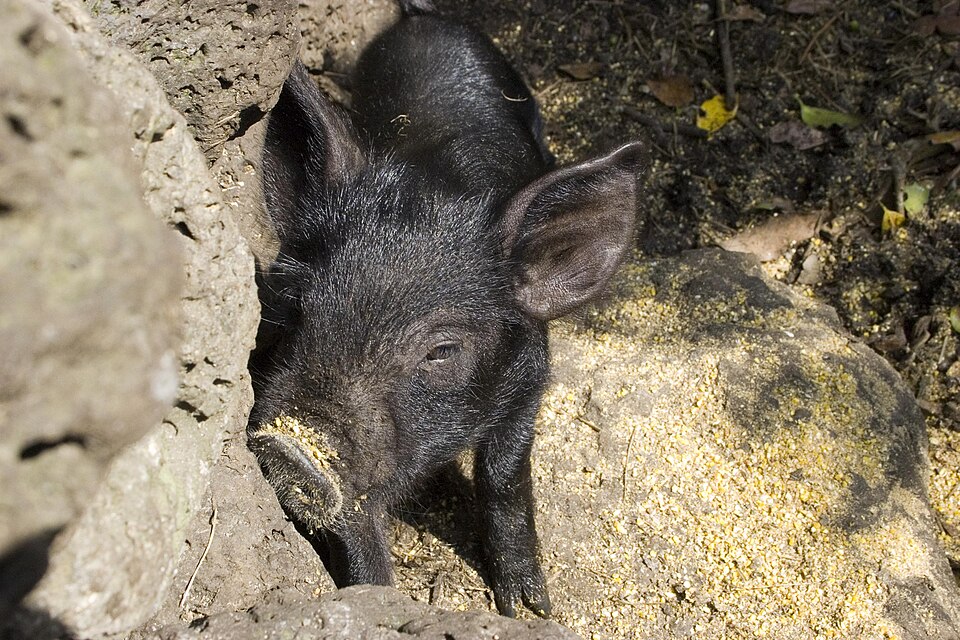
Reference photograph
Reference photograph of a Jeju black pig. Compare the photographed individual's color and form with the identification information in the text.
Source: A____ R__ · Original material · CC BY-SA 2.0
1. Classification, origins and habitat
The Jeju native pig is a local genetic resource of domestic pigs conserved on Jeju. Do not equate its native bloodlines with every black-haired commercial crossbred pig.
Distinguish native lines conserved on Jeju from commercial crossbred pigs with black coats. A restaurant's black-pork label, production on Jeju and registration as a native genetic resource each provide different information. For accounts of living livestock, prioritize pedigree and conservation sources from institutions such as the National Institute of Animal Science.
2. Appearance and identification
Black skin and hair are characteristic, with size and form differing from modern selectively bred pigs.
Observe ears, snout and the proportions of body and legs alongside black skin and hair. Even where size differs from modern meat pigs, do not treat a young individual's small size as adult size. Black color in a photograph alone cannot establish pure native ancestry or that the photograph was taken on Jeju.
3. Behavior and way of life
It is part of regional agriculture and livestock genetic-resource conservation. Restaurant black-pork labeling and an individual's pedigree registration are different information.
Its role in regional agriculture, culture and livestock genetic-resource conservation is central. Traditional husbandry accounts need distinguishing from currently permitted feeding and hygiene management. Do not connect product fame with an animal's temperament or health; exploration and group behavior are basic domestic pig activities.
4. Observation, conservation and care
When introducing native breeds, consult genetic-resource sources such as the National Institute of Animal Science. Color alone cannot establish Jeju origin or native ancestry.
Conservation records include pedigree, genetic diversity and actual individual health, alongside maintaining an unusual color. Provide safe exploratory space, water, shade and resting areas, with nutrition matched to growth stage. Visitors should follow feeding and contact instructions at the site.
Evidence and references
- National Institute of Animal Science — Jeju native pig
Classification, origins, appearance, ecology or breed uses
- Defra — Pig behavior and environmental welfare guidance
Domestic pigs' exploratory behavior, feed, shade and resting space. This is UK material, not guidance on Korean legislation.