
Mammals (Pigs)
Ossabaw Island pig
Ossabaw Island
Classification and scientific name: Sus scrofa domesticus
Sources checked:
Size and coat color vary, with a selection history different from commercial meat pigs
Ossabaw Island pigs developed from domestic pig lines remaining on the island. They are known through research into adaptation to a limited island environment and livestock conservation. Size and coat color vary, with a selection history different from commercial meat pigs. Black and spotted appearances occur.
Origins and distribution
Ossabaw Island, Georgia, United States
- Ossabaw Island
- Ossabaw Island, Georgia, United States
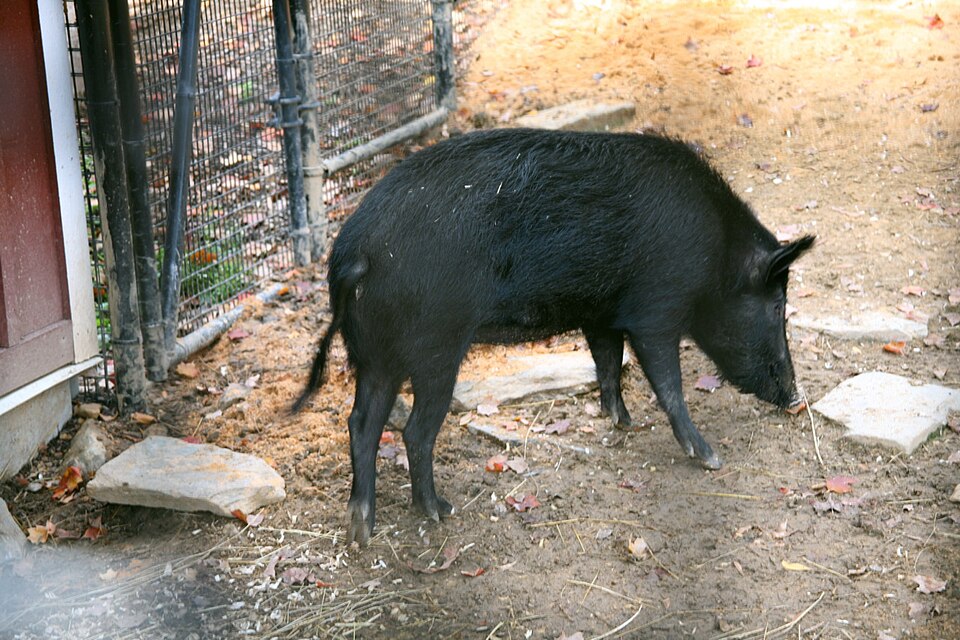
Reference photograph
Reference photograph of an Ossabaw Island pig. Compare the photographed individual's color and form with the identification information in the text.
Source: Cliff from I now live in Arlington, VA (Outside Washington DC), USA · Original material · CC BY 2.0
1. Classification, origins and habitat
Ossabaw Island pigs developed from domestic pig lines remaining on the island. They are known through research into adaptation to a limited island environment and livestock conservation.
This population combines domestic pig ancestry left on an island with limited resources. A long history of outdoor living does not make it a separate primitive wild species. Explain genetic-resource conservation, island ecosystem management and experimental populations with their different purposes and conditions distinguished.
2. Appearance and identification
Size and coat color vary, with a selection history different from commercial meat pigs. Black and spotted appearances occur.
Coats include black and spotted patterns, and bodies may be smaller and differently proportioned than commercial meat pigs. Appearance alone cannot establish metabolic traits. Knowing whether a photographed individual belongs to an outdoor group or a professionally managed population helps explain its condition and setting.
3. Behavior and way of life
Metabolic traits associated with changing food abundance have been studied. Do not interpret these as healthy obesity or resistance to disease.
Research has examined traits adapted to differences between periods of abundant and scarce food. Do not combine fat-storage ability and disease risk into a positive description of healthy obesity. Research findings have a scope defined by experimental conditions and the individual populations studied.
4. Observation, conservation and care
Distinguish island ecosystem management from breed conservation. Releasing pigs elsewhere is not appropriate management for recreating the island's history or outdoor adaptations.
Do not release them elsewhere under the pretext of recreating island history. In husbandry, assess actual body condition and nutrition, and provide outdoor exploration and safe resting conditions. Avoid assuming that conservation of individuals and natural ecosystems always requires identical management.
Evidence and references
- Oklahoma State University — Ossabaw Island
Classification, origins, appearance, ecology or breed uses
- Defra — Pig behavior and environmental welfare guidance
Domestic pigs' exploratory behavior, feed, shade and resting space. This is UK material, not guidance on Korean legislation.