
Mammals (Pigs)
Tamworth pig
Tamworth Pig
Classification and scientific name: Sus scrofa domesticus
Sources checked:
A reddish-brown coat, long snout and upright ears are characteristic
Tamworth Pig is another rendering of Tamworth, not a separate pig species. It is a traditional domestic pig breed developed in Britain. A reddish-brown coat, long snout and upright ears are characteristic. Ear shape allows comparison with the also-red Duroc.
Origins and distribution
Britain
- Tamworth
- Britain
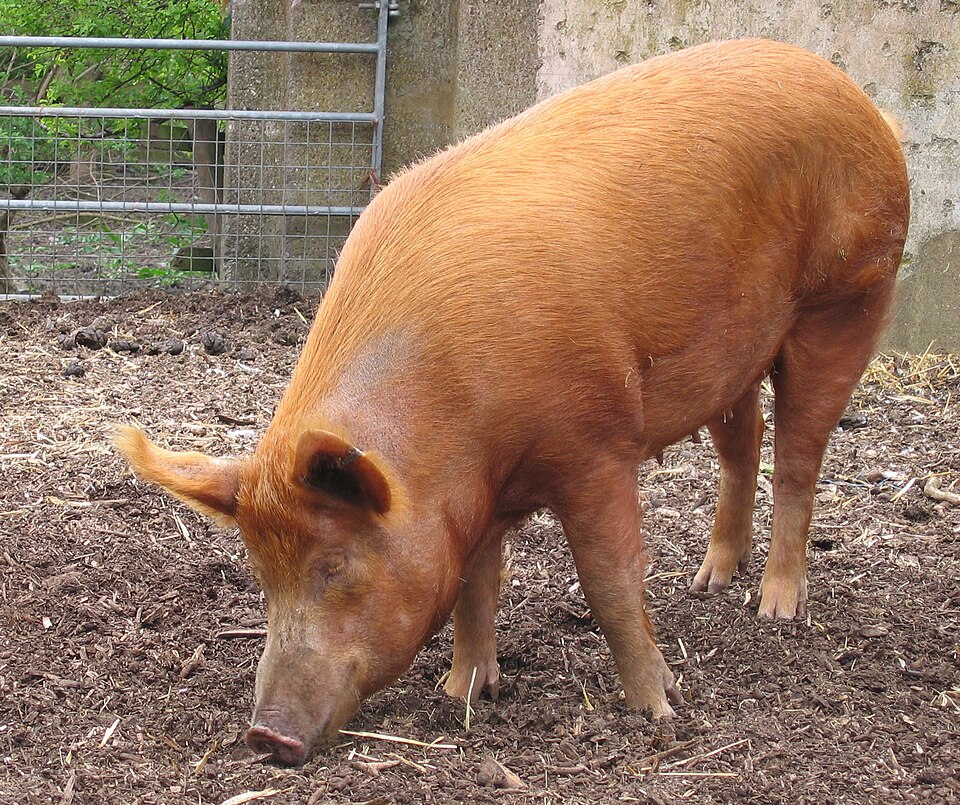
Reference photograph
Reference photograph of a Tamworth pig. Compare the photographed individual's color and form with the identification information in the text.
Source: Caroline Ford · Original material · CC BY-SA 3.0
1. Classification, origins and habitat
Tamworth Pig is another rendering of Tamworth, not a separate pig species. It is a traditional domestic pig breed developed in Britain.
The Korean names rendered as Tamworth and Tamworth Pig refer to the same Tamworth breed. Different names on two pages do not establish separate species and origins. This breed has a history of traditional British pig farming and outdoor husbandry and is a separate registered population from the Duroc.
2. Appearance and identification
A reddish-brown coat, long snout and upright ears are characteristic. Ear shape allows comparison with the also-red Duroc.
Observe the reddish-brown hair, long snout and upright ears together. Comparison with the red Duroc's drooping ears reveals differences overlooked when considering color alone. Coat shade and adult size vary individually, so do not present a single fixed shade or weight.
The English name Tamworth on this page identifies the same breed as the other Korean rendering of Tamworth. Do not count the records twice as separate species; check the red hair and upright ears alongside breed information in the source.
3. Behavior and way of life
The breed was used in outdoor pig farming and meat production. Foraging and rooting are aspects of pig life.
Its outdoor history includes exploring the ground with the snout and finding food. Traditional outdoor foraging ability does not automatically provide balanced nutrition in every environment. Responses can differ with the group, feeding conditions and experience with people.
4. Observation, conservation and care
Check appearance and ancestry together. Different Korean renderings of the same English breed name must not be counted as separate breeds in reproductive or population records.
Check appearance alongside the registered name and provide room for adults to move, with shade, water and resting places. Different Korean renderings of the same English name help connect breeding records and photographic sources. Base care on actual body condition, hooves and feeding access rather than color.
Evidence and references
- Oklahoma State University — Tamworth
Classification, origins, appearance, ecology or breed uses
- Defra — Pig behavior and environmental welfare guidance
Domestic pigs' exploratory behavior, feed, shade and resting space. This is UK material, not guidance on Korean legislation.