
Mammals (Pigs)
Turopolje
Turopolje
Classification and scientific name: Sus scrofa domesticus
Sources checked:
Dark spots on a light background and drooping ears are characteristic
The Turopolje is a traditional Croatian domestic pig breed. Its history relates to husbandry in regional forests and damp environments. Dark spots on a light background and drooping ears are characteristic. Its conformation and breeding history differ from those of modern commercial pigs.
Origins and distribution
Croatia
- Turopolje
- Croatia
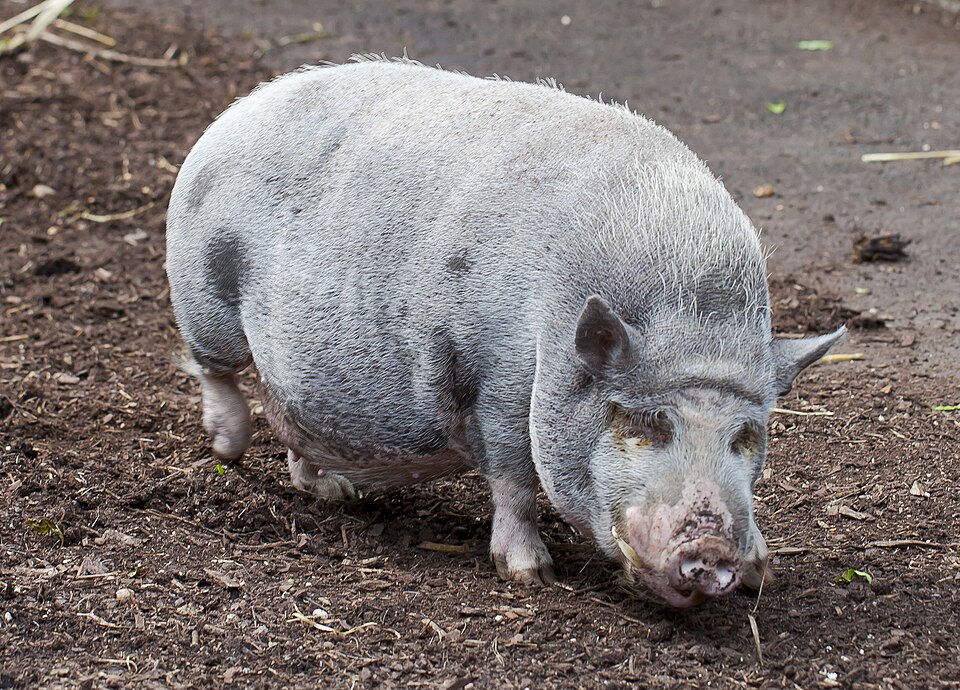
Reference photograph
Reference photograph of a Turopolje pig. Compare the photographed individual's color and form with the identification information in the text.
Source: Diego Delso · Original material · CC BY-SA 3.0
1. Classification, origins and habitat
The Turopolje is a traditional Croatian domestic pig breed. Its history relates to husbandry in regional forests and damp environments.
This regional pig is associated with Croatian forest and wetland farming. Its husbandry and selection history differs from modern commercial breeds, illustrating conservation of traditional genetic resources. Descriptions of rarity need checking against the country, survey date and scope of registered breeding populations.
2. Appearance and identification
Dark spots on a light background and drooping ears are characteristic. Its conformation and breeding history differ from those of modern commercial pigs.
A light body with irregular dark spots, long drooping ears and a relatively long body occurs. Many pigs have spots, so color alone makes identification difficult. A forest background is also not conclusive evidence of region or breed; source information is necessary.
Observe drooping ears together with black spots on the light body. Other breeds are spotted too, so pattern alone cannot establish an exact birth region. Croatian pedigree and conservation sources complement visual observations.
3. Behavior and way of life
The breed features in regional outdoor pig farming and conservation. Check rare-breed status through survey dates and registered breeding populations.
It connects with traditional outdoor husbandry using forest food resources. Earlier practices do not justify releasing animals anywhere today. Pig exploration also affects soil and vegetation, so consider both the animals and their surroundings.
4. Observation, conservation and care
Do not confuse historical forest husbandry with unmanaged release today. Consider habitat together with the genetic diversity of traditional livestock.
Conservation and husbandry require reliable feed, water, shade and resting places alongside pedigree and breeding management. A history in damp surroundings differs from assessing present flooring and hooves. Conserving a traditional breed together with regional habitats requires a management plan.
Evidence and references
- Oklahoma State University — Turopolje
Classification, origins, appearance, ecology or breed uses
- Defra — Pig behavior and environmental welfare guidance
Domestic pigs' exploratory behavior, feed, shade and resting space. This is UK material, not guidance on Korean legislation.