
Mammals (Pigs)
Babirusa
Babirusa
Classification and scientific name: Babyrousa celebensis
Sources checked:
Males have striking upper canine teeth that grow through the snout's skin, extend upward and curve backward
Babirusa refers to wild pigs of the genus Babyrousa on several Indonesian islands, with several species distinguished. Males have striking upper canine teeth that grow through the snout's skin, extend upward and curve backward.
Origins and distribution
Sulawesi, Indonesia
- North Sulawesi babirusa
- Sulawesi, Indonesia
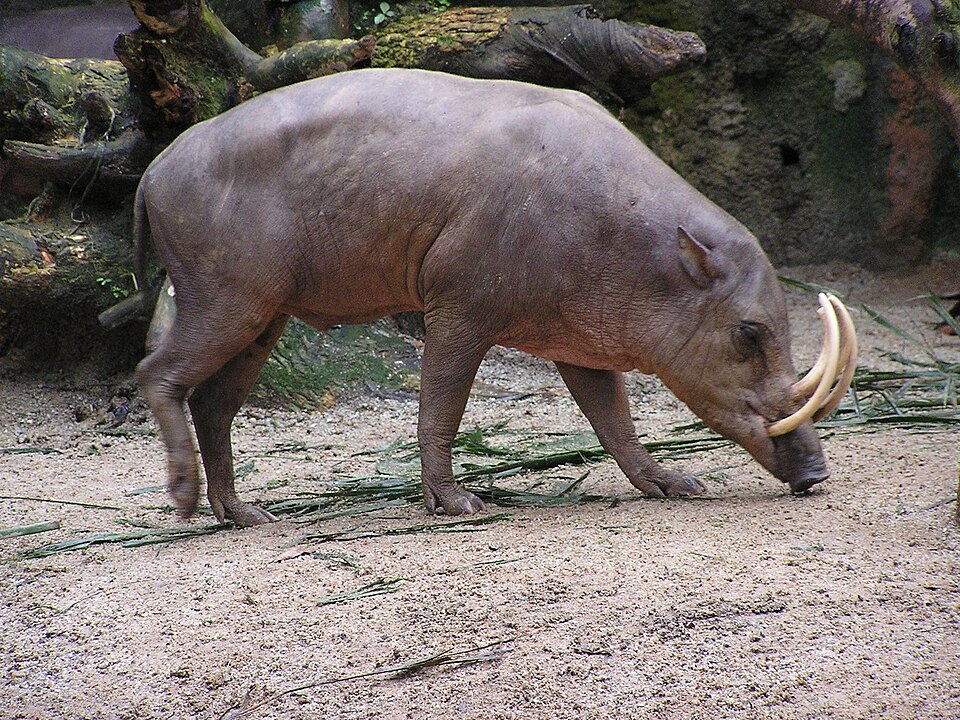
Reference photograph
Reference photograph of a babirusa. Compare the photographed individual's color and form with the identification information in the text.
Source: Masteraah at German Wikipedia · Original material · CC BY-SA 2.0 de
1. Classification, origins and habitat
Babirusa refers to wild pigs of the genus Babyrousa on several Indonesian islands, with several species distinguished. This entry aligns its representative photograph and account with the North Sulawesi babirusa, Babyrousa celebensis. It is not a domestic pig breed, and must be distinguished from historical sources grouping other babirusas under one scientific name.
Distinguish the broad name babirusa from the representative species, North Sulawesi babirusa. Where a photograph depicts Babyrousa celebensis, transferring long-hair traits or distributions from other islands' species would be inaccurate. Region and scientific name are important clues connecting species-specific accounts.
2. Appearance and identification
Males have striking upper canine teeth that grow through the snout's skin, extend upward and curve backward. Females do not have the same upper-canine form as males, and upper canines must also be distinguished from lower ones. Sparse-haired gray skin and relatively long legs are visible. Although the name means deer-pig, these are elongated teeth, not antlers.
Knowing male–female canine differences helps avoid mistaking an individual without prominent teeth for another animal. Upper canines are teeth growing through the snout, not horns. An individual's precise age cannot be calculated from their photographed direction and length alone.
3. Behavior and way of life
Babirusas forage in forests and near water, using plants and varied foods. Females, young and adult males can differ in social behavior. Water and mud use may be seen, but the animal does not live permanently in water like an aquatic animal. Distinctive canines are anatomical features, not decorations for displaying to people.
Observe forest and waterside exploration, mud use and interactions within the context of the species' life. Do not imagine exaggerated aggression around the distinctive teeth or describe them as amusing decorations for people. Feeding and resting scenes also help explain its way of life.
4. Observation, conservation and care
Wild populations depend on conservation of habitat and forests through which they move. Zoo photographs document professionally managed animals; they are not instructions for keeping one at home. Do not touch the teeth or lure animals close with food. Check the relevant scientific name separately when describing the ecology or coat of other babirusa species.
Conservation centers on maintaining forests and movement space in the wild, ahead of introducing husbandry techniques. Do not confuse professional-institution photographs with private pet guidance. When viewing, keep a safe distance from the tusked head and do not offer food without authorization.
Evidence and references
- San Diego Zoo Wildlife Alliance — North Sulawesi babirusa
Species-specific information on origins, appearance, uses or ecology
- EAZA — Babirusa husbandry and classification guidelines
Classification, ecology and professional management principles for the genus Babyrousa