
Mammals (Pigs)
Bushpig
Bushpig
Classification and scientific name: Potamochoerus larvatus
Sources checked:
Coarse hair, a long snout and pale facial areas; coat color varies with age and region
The bushpig is an African wild member of the pig family. It is related to the red river hog but recognized as a separate species. Coarse hair, a long snout and pale facial areas occur; coat color varies with age and region.
Origins and distribution
Africa
- Potamochoerus larvatus
- Africa
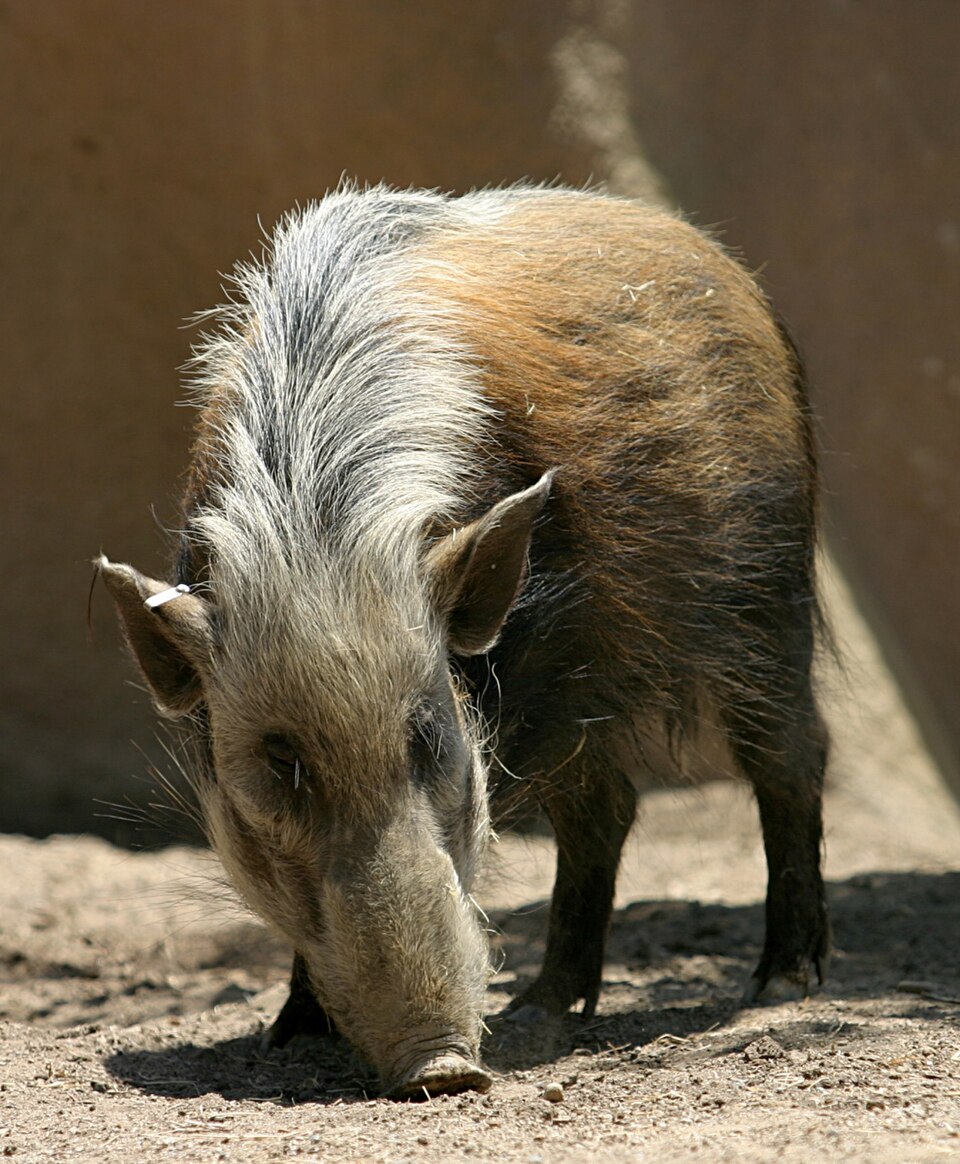
Reference photograph
Reference photograph of a bushpig. Examine this individual's color and form alongside the identification descriptions in the text.
Source: en:User:Cburnett · Original material · CC BY-SA 3.0
1. Classification, origins and habitat
The bushpig is an African wild member of the pig family. It is related to the red river hog but recognized as a separate species.
The bushpig Potamochoerus larvatus and red river hog Potamochoerus porcus are closely related but distinct species. Some material may call both bushpigs, making it necessary to check scientific names. This entry focuses on bushpig distribution, form and life.
2. Appearance and identification
Coarse hair, a long snout and pale facial areas occur; coat color varies with age and region.
Coarse long hair, longer hair on the shoulders and back, and pale facial areas stand out. Coat contrast differs by age, region and individual. Applying the red river hog's vivid red color and white facial pattern to every individual of this species can produce a mismatch between photograph and description.
Do not mix the red river hog's vivid red hair and white facial markings into this species' representative features. Where material uses similar English common names for the two, checking the scientific name Potamochoerus larvatus is the starting point for matching photograph and description.
3. Behavior and way of life
Bushpigs use diverse foods, including plants and small animals, and root up the ground. They may also be active at forest and farmland boundaries.
They dig for plants and other food and use cover in forests and thickets. Near human settlements, they can access food resources such as crops and rubbish, creating conflict. A nighttime photograph alone does not establish that they are always exclusively nocturnal.
4. Observation, conservation and care
Cover such as forests and thickets relates to their life. When explaining crop damage, consider wildlife ecology and human land use together.
Examine habitat shelter, food and human land use together. Crop damage does not justify explaining every behavior as aggression. During wildlife observation, avoid feeding, do not approach thickets or movement routes, and follow local management guidance.
Evidence and references
- Animal Diversity Web — University of Michigan — Potamochoerus larvatus
Classification, origin, appearance, ecology or breed uses
- IUCN SSC Wild Pig Specialist Group — Bushpig
Classification, distribution, form and conservation of Potamochoerus larvatus