
Mammals (Pigs)
Wild boar
Wild Boar
Classification and scientific name: Sus scrofa
Sources checked:
A long snout, coarse hair and a substantial neck and forequarters are characteristic
The wild boar is a wild species in the pig family, linked to the history of pig domestication. A long snout, coarse hair and a substantial neck and forequarters are characteristic.
Origins and distribution
Native to Eurasia; introduced to several regions
- Sus scrofa
- Native to Eurasia; introduced to several regions
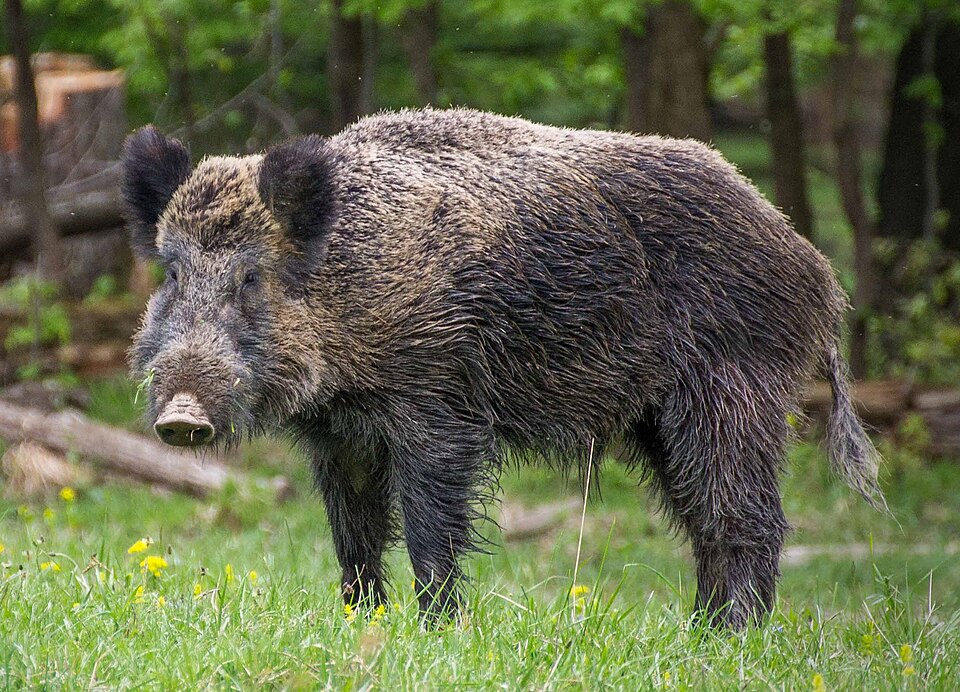
Reference photograph
Reference photograph of a wild boar. Compare the photographed individual's color and form with the identification information in the text.
Source: Valentin Panzirsch · Original material · CC BY-SA 3.0 at
1. Classification, origins and habitat
The wild boar is a wild species in the pig family, linked to the history of pig domestication. It occurs widely across Eurasia, and people have also moved populations elsewhere. Some sources use the same terms for wild boar, domestic pigs established outside husbandry and crosses between them, so check the actual region and population.
Distinguishing native distribution from human introductions helps explain why the same species raises different conservation and management issues. Do not automatically compare observations of wild boar in Korean forests with records of feral pigs on other continents under identical conditions.
2. Appearance and identification
A long snout, coarse hair and a substantial neck and forequarters are characteristic. Male tusks can be conspicuous, and young animals may show stripes. Size, coat color and thickness differ with region, season, sex and age. Do not generalize records of large adult males into average weight or aggression for every wild boar.
Stripes in young animals are a juvenile feature and do not remain at every age. Considering the large snout, coarse back hair and forequarters together reveals an appearance different from typical domestic pigs. Do not convert photographed tusk size into a precise age.
3. Behavior and way of life
Wild boar are omnivores that root for varied foods, including plants and small animals. Females and young often form groups, while adult males may show different social patterns. Occurrence near farms and cities involves the meeting of habitat, food, cover and human land use; it should not be explained simply as a violent temperament.
Rooting obtains food while also affecting soil and vegetation. Crop damage needs to be considered alongside environments providing food and shelter. Wildlife becoming accustomed to human food can alter normal distance-keeping.
4. Observation, conservation and care
During encounters in the wild, do not approach, feed or block the animal's route. Approaching to photograph young can reduce the distance from nearby adults. Rubbish and food supplied by people affect wildlife behavior and need management. Follow local authorities' guidance in the field, and do not handle wild boar using domestic pig husbandry methods.
A still photograph cannot capture every aspect of tension, distance and the group's direction of travel. Do not follow or block animals for photographs, and avoid feeding wild individuals directly. Prioritizing observation conditions and local authorities' guidance is a responsible approach.
Evidence and references
- Animal Diversity Web — Sus scrofa
Species-specific information on origins, appearance, uses or ecology
- National Park Service — Ecological effects of feral pigs
Relationships between feral pigs and wild boar ancestry, and impacts on soil and ecosystems