
Mammals (Pigs)
Pygmy hog
Pygmy Hog
Classification and scientific name: Porcula salvania
Sources checked:
A small body and dark hair make it inconspicuous among tall grasses
The pygmy hog is a small wild pig surviving in grasslands in Assam, India. Do not confuse a name such as pygmy black pig with a small domestic pig breed. A small body and dark hair make it inconspicuous among tall grasses. Its classification and ecology differ from those of a young domestic pig.
Origins and distribution
Grasslands of Assam, India
- Porcula salvania
- Grasslands of Assam, India
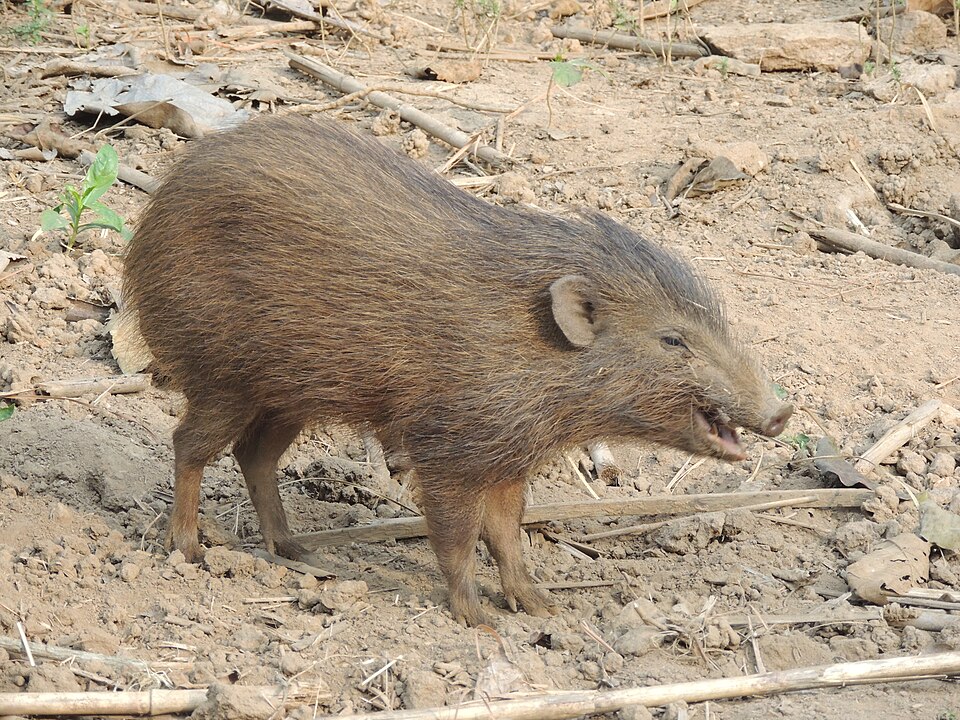
Reference photograph
Reference photograph of a pygmy hog. Compare the photographed individual's color and form with the identification information in the text.
Source: A. J. T. Johnsingh, WWF-India and NCF · Original material · CC BY-SA 3.0
1. Classification, origins and habitat
The pygmy hog is a small wild pig surviving in grasslands in Assam, India. Do not confuse a name such as pygmy black pig with a small domestic pig breed.
The pygmy hog is a separate wild species, Porcula salvania, distinct from small domestic pigs. It relates to Assam's tall-grass habitats and conservation programs; its small body does not mean suitability as an indoor pet. Distinguish its former wider distribution from the extent of remaining populations.
2. Appearance and identification
A small body and dark hair make it inconspicuous among tall grasses. Its classification and ecology differ from those of a young domestic pig.
Even adults are small, but their dark, coarse hair, snout and body proportions differ from domestic piglets. Tall grass can hide much of the body, making size difficult to judge. Without a scale or comparison object in a photograph, consult source records rather than estimating precise body length.
3. Behavior and way of life
Pygmy hogs make shelters with grass and forage within grassland. Conservation programs combine breeding with habitat restoration.
Grass shelters and food searching within grassland are important aspects of their lives. Do not describe breeding in conservation facilities and life after wild release as identical conditions. Increasing the number of small individuals alone does not establish a stable wild population.
4. Observation, conservation and care
Burning and land-use changes affect grassland habitat. Sustained conservation of wild populations and grasslands is central, ahead of keeping individuals.
The manner and timing of grassland burning and the expansion of farmland influence habitat. Breeding and release programs need to accompany conservation of habitat providing grass and cover. Prioritize professional conservation management and responsible wild observation over guidance for private capture or husbandry.
Evidence and references
- Durrell Wildlife Conservation Trust — Porcula salvania
Classification, origins, appearance, ecology or breed uses
- IUCN SSC Wild Pig Specialist Group — Pygmy Hog
Species-specific ecology and conservation of the pygmy hog