
Reptiles
Milk snake
Milk Snake
Classification and scientific name: Lampropeltis triangulum
Sources checked:
North American milk snake markings and a misleading name
Milk snake covers several related kingsnake groups; the former broad Lampropeltis triangulum has been subdivided, making locality and scientific name important.
Origins and distribution
The Americas
- Lampropeltis triangulum
- The Americas
- Observing species-specific ecology
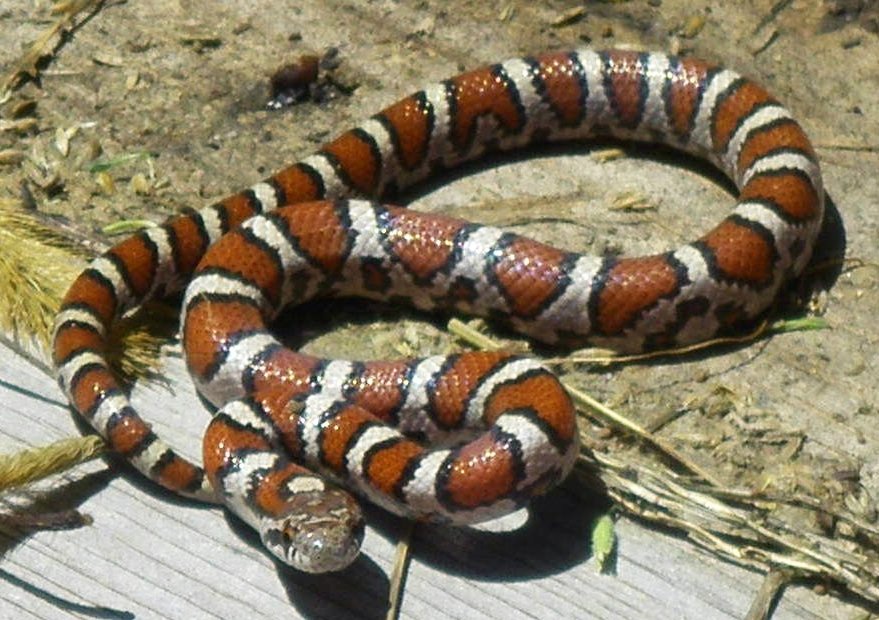
Reference photograph
Reference photograph of a milk snake. Compare its colours and form with the identification details in the text.
Source: Trista Rada · Original material: Tennessee_milksnake.jpg · CC BY 2.0
Modification notice from the source: levels — Kaldari, 2010-03-10
1. Classification, origins and habitat
Milk snake is used for several related kingsnake groups. The former broad scope of Lampropeltis triangulum has been subdivided, so check source locality and scientific name.
This page focuses on eastern milk snakes rather than combining every trait of the formerly broad milk snake group. Species splits mean that vivid tropical banded photographs can differ from the representative appearance of current Lampropeltis triangulum. Checking name and locality helps distinguish older colour-line names from present classification.
2. Appearance and identification
Red, black and pale bands or blotches occur, with patterns varying among lineages.
Eastern populations show red or brown dorsal blotches on grey or brown backgrounds and markings on the underside. Do not make the red, black and pale bands of tropical milk snakes universal traits. Short rhymes distinguishing venomous from nonvenomous snakes by colour arrangement may fail by region and species. Do not recommend approaching closely to test them.
3. Behavior and way of life
Milk snakes use small animals and other reptiles. Despite the name, they do not drink cows' milk.
They use small mammals, bird eggs, reptiles and other foods and subdue prey by constriction. Finding a snake near barns or farms does not support milk-sucking behaviour. Hiding in crevices and beneath stones helps explain difficulty observing them by day. Do not replace foraging and defence with claims of an affectionate relationship with people.
4. Observation, conservation and care
Milk snakes use forests, grasslands and other environments. Similarity to venomous patterns should not become advice to judge safety from colour order alone.
Forests, farmland and cover beneath stones and logs matter. Excessively turning stones and wood to find hidden animals can damage microhabitats. Record photographic context and exact species information together. Read natural distribution and current species scope consistently with the text rather than prioritising colourful captive lines.
Evidence and references
- Animal Diversity Web — University of Michigan — Lampropeltis triangulum
Classification, origin, appearance and ecology
- The Reptile Database — Lampropeltis triangulum
Scientific names, synonyms, distribution and related taxonomic research