
One instance of a child being distracted cannot establish ADHD. ADHD is a developmental disorder in which persistent inattention, hyperactivity or impulsivity affects functioning. Sleep problems and other conditions can look similar.
Start with one recurring difficulty in daily life. A broad goal of changing the child’s personality gives you less to act on. For example, if a child always forgets the last thing they need in the morning, first look at how many instructions they hear and where their belongings are kept. Finding an adjustment that helps and making a diagnosis about the cause answer different questions. You can pursue any needed assessment or consultation while trying out support.
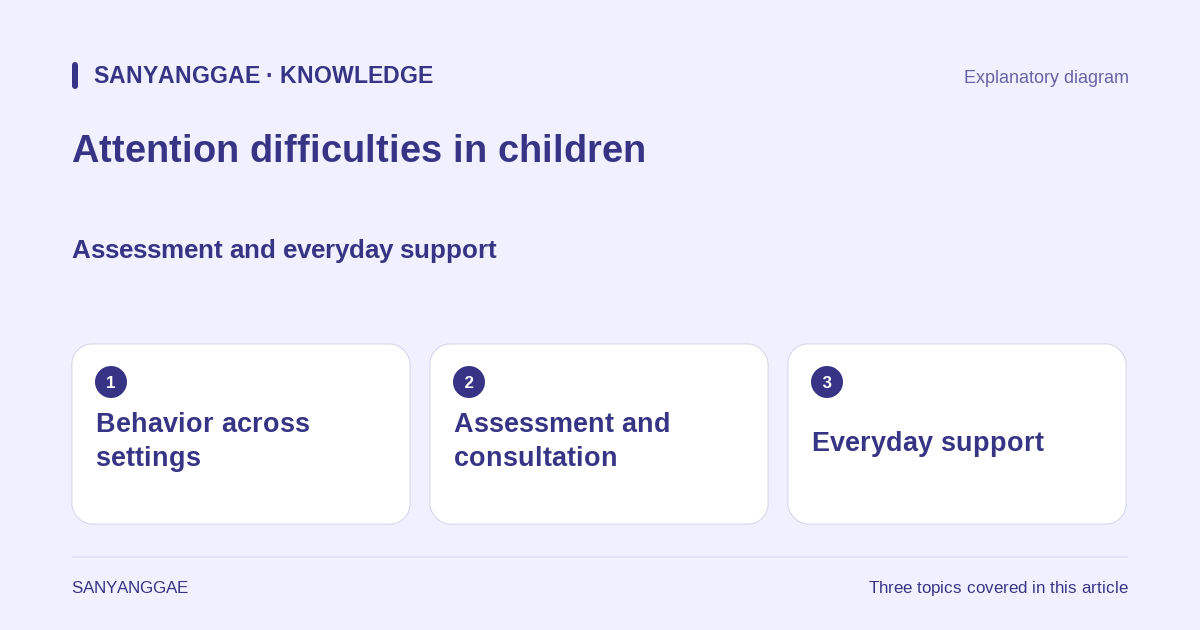
1. Observations that help during a consultation
Write down which tasks are difficult at home and at school, how often the difficulty appears, and how it affects daily life. Include situations in which the child participated well. Share observations from caregivers and teachers with a healthcare professional. Establishing the cause takes more than a brief online test or a single observation.
Use specific descriptions. Move from “They never listen” to an account of what happened. If you write, “When I give three instructions at once in the evening, they stop after the first task,” you can see what part of the request might need adjusting. Ask the child what they found difficult. A child who missed an instruction, did not understand it or got distracted after starting may look much the same from the outside. Concrete examples help the evaluator decide what to ask before drawing conclusions about the cause.
2. Adjusting everyday tasks
Try giving instructions one step at a time and keeping needed items visible. For example, turn “Get ready” into packing the bag and putting on shoes, and check each step. Make it clear what completing the task looks like and observe whether this helps. Different children may need different approaches.
Tie praise and feedback to an action you saw. “You were good today” tells the child little. Saying “You used your list and packed a pencil” makes it easier for the child to see what went well. If you use rewards, set achievable goals and give recognition without requiring a long wait. If the child often struggles, check whether the demand is too large or some help is missing. Support involves adapting the environment and instructions together. The child should not have to carry all the responsibility. A simple approach the family can keep up each day is easier to assess.
3. How everyday support fits with treatment
Home and school support should connect with the assessment and treatment plan. A better score on a task practiced with a game or learning material does not establish that core symptoms have improved. Healthcare professionals decide on diagnosis and medication. Avoid blaming one parenting practice for ADHD or presenting play alone as a treatment.
If you’re about to ask the classroom teacher to “make them concentrate more,” try a more specific request. Share whether the child understood directions better when they came in shorter steps or forgot fewer supplies when the items had a consistent place. What the school can adjust depends on its setting and educational system, so discuss the possibilities together. Avoid repeatedly pointing out mistakes in front of peers or unnecessarily disclosing a diagnosis. Explain what support the child is receiving and include their views in the plan.
4. Why observations across settings matter
The CDC explains that there is no single test for ADHD and other problems can cause similar symptoms. “They can’t sit still at home” gives less information than a description of when a difficulty arose, what the child was doing and what happened. Support will differ depending on whether the child takes a long time to start homework, forgets supplies or interrupts while waiting for a turn. Long periods of concentration on a favorite activity do not in themselves rule out ADHD. An evaluator considers both context and daily functioning.
When notes from home and school differ, ask what is different about the settings. Averaging the observations can hide those differences. The classroom may have a regular sequence and visual aids, while instructions at home may be long or the room noisy. At home one person may help, while in class the child may need to get several things ready alone. Record the conditions in which the child participated well. The record is meant to identify conditions that reduce difficulty. It should never become a case against the child. Discuss the tests an evaluation may require and other possible causes with a healthcare professional. Caregivers can seek advice while they are still taking notes.
5. Practical adjustments for homework and getting to school
If the child keeps leaving their seat during homework, first check whether they understand the task, have the materials, or are tired or hungry. Turn “Finish it all” into a small first action, such as reading the first question and marking what they need. Let the child see what is finished and guide them to the next step. Adding demands or loudly calling out every mistake can make the task less clear. Agree on breaks and a signal to start again, adapting both to the child’s age and the task.
For getting to school, try a fixed place for the bag and a consistent list of what goes in it. Prompt the child to check the list and help with the items that cause difficulty. If the list is too long to use, reduce the number of items or use pictures. After one difficult day, look for the step where the child got stuck before deciding whether to change the approach. You can try these adjustments for practical needs before an ADHD diagnosis. A useful adjustment in itself establishes neither a diagnosis nor that treatment is complete.
6. Checking what helps and linking it to treatment
A goal such as “don’t get distracted” can leave success up to the adult’s mood. Set an observable goal connected to daily life, such as checking a list for the things needed each morning. Look at what help the child received and how actual difficulties changed before and after the adjustment. Revise an approach that saves time but increases conflict or leaves the child exhausted. Set the goal around the child’s participation in everyday life as well as making the routine manageable.
The NIMH explains that treatment and everyday support can help manage symptoms. The right combination depends on the individual. Do not start or stop medication or change a dose based on play results or online reviews alone. When sharing information with school staff, describe difficult tasks and what has helped instead of using the diagnosis to explain every behavior. Tell healthcare professionals about changes in sleep, anxiety or difficulties with learning. Daily functioning and the child’s experience give a treatment discussion more direct evidence than a record of how long the child used an engaging learning material.