
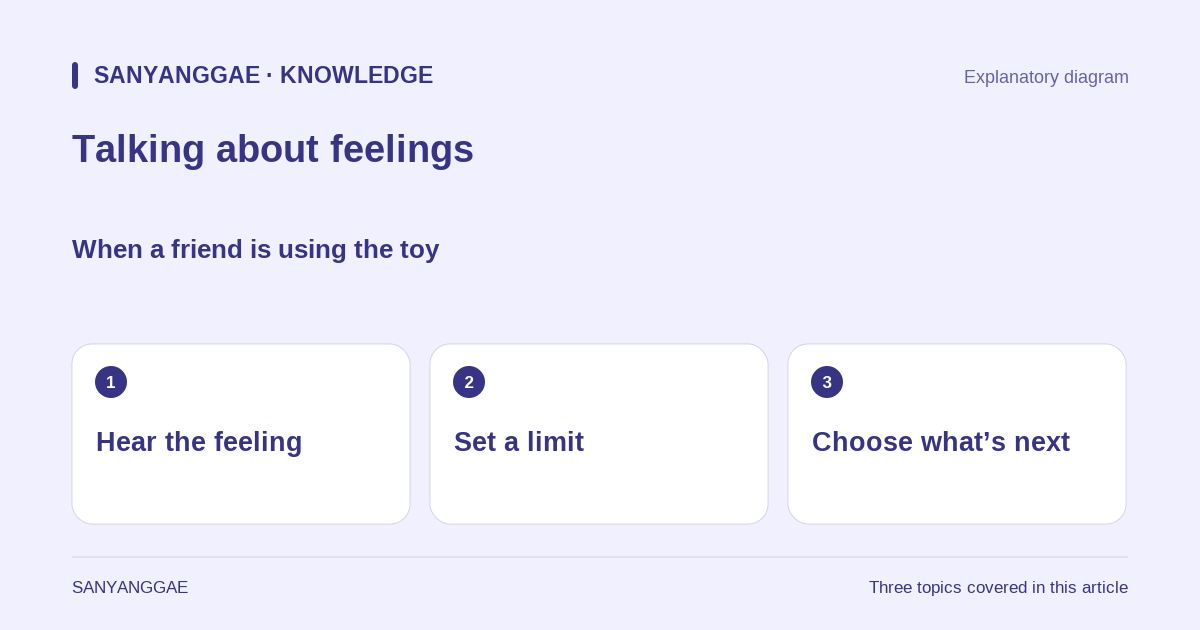
Talking about feelings doesn't mean expecting a child to be calm all the time. There is room to express anger or disappointment, and there are limits on actions that hurt others. A short conversation technique can't guarantee a higher EQ score.
Timing matters. Asking a distressed child for a long explanation is a different task from looking back together when the child feels at ease. Consider how much they can take in and whether they first need safety, rest or an explanation. This also eases the pressure on adults to solve everything at once.
1. Talk about feelings and actions separately
“You're upset. I can't let you hit.” You can acknowledge a feeling and set a limit on an action in the same breath. Give the child time to say what happened before assuming you've guessed the feeling. When emotions run high, keep everyone safe and return to the conversation once things settle.
A spoken limit may need to be followed by action. If the child is about to throw things, move those objects out of reach and make some space between people. “I've understood you, so you have to stop now” makes calming down immediately the child's job. An adult who is upset can also say less for a while or ask another caregiver to help. Attend to the surroundings and your own state as well as your words.
2. Revisit an experience through play
Tell a story about something that happened to a doll, or look at the expressions on characters' faces. Talk about how two people can feel differently about the same event. A caregiver who apologizes after making a mistake and says what they'll do next gives the child another example to watch.
In an account of something that happened at preschool or school, separate what the child describes from your guess about why it happened. If they say, “My friend wouldn't play with me,” listen calmly and check the facts with staff if necessary. Avoid claiming to know how the other child felt or forcing an immediate reconciliation. You can work out together which adult to ask for help and what to say if it happens again.
3. Choose what to do next
If a friend is using a toy, explore options together: waiting, asking for help or choosing another activity. Practice more than once, in ways that fit the situation and the child's abilities. If difficulties disrupt daily life for a long time or safety concerns recur, seek advice beyond a brief conversation technique.
4. Leave room for the child to name the feeling
You might keep asking, “You're angry, aren't you?” to show understanding when the child is embarrassed or tired. Suggesting a word for the feeling can open a conversation. It doesn’t mean you already know what’s going on inside the child. Try a short observation like “Waiting seemed hard” and give them a chance to correct you. Gestures or drawings are options when words are difficult. Help should never depend on producing the word the adult expects.
Imagine a child crying because a friend went down the slide first. Stay close enough to keep them from pushing. Then try, “You wanted to go first. We take turns here.” More explanation doesn't necessarily bring more calm. If they can't take in what you say, offer a place to rest and talk later. Even if they aren't smiling yet, they can rejoin the activity while the feeling is still there.
People and cultures differ in how they express feelings. A long explanation with eye contact is only one way to talk. Some children prefer to sit quietly beside you and say a few words later. Learning their preferences on an ordinary day lets you ask less of them in a tense moment. Empathy gives a child room to be understood and choose an action without having to put on a particular expression.
5. Explore two points of view with dolls
When revisiting a real conflict, avoid staging a trial to decide who was at fault. Make up a short story about two dolls reaching for the same block. Ask what each wants. If the child says, “They both want it,” use that answer to look for options: finding another block, taking turns or building together. Before suggesting your own answer, consider together whether the child's idea is safe and workable.
Taking another person's perspective doesn't require guessing every feeling correctly. A friend's tense face might signal anger, tiredness or a mind on something else. “We could ask what's going on” leaves a guess open to correction. If a child tells you about something real during play, listen with interest. Avoid treating every story as an established event or pressing for details. Consider the context and get help if something concerns you.
Caregivers' mistakes offer examples, too. If you raised your voice, you could say, “I spoke loudly earlier. It might have startled you. Next time I'll pause before I speak.” Name the action and take responsibility. The child needn't comfort or forgive you to bring the conversation to a close. Everyday limits can still stand after an apology. Recognizing a feeling is compatible with turning down a request and keeping a rule.
6. Look for realistic signs that a conversation helped
Counting how often a child manages not to cry may lead them to hide feelings they need to express. Look instead for a way they've found to ask for help, whether safety and connection could be restored after someone got hurt, and how easy the adult's guidance was to understand. One conversation won't carry over to every situation. Home and school make different demands, and fatigue and language skills can affect a child's response.
If a conflict keeps recurring, note what happens before and after it. Is it just before sharing toys, at a time when the child is hungry or somewhere that's getting crowded? Those details give you more ways to adjust materials, timing and support than a label like “poor emotional control.” On good days, record how much help the adult gave, too. This tells you which support helped, without counting a need for help as failure.
When joining in daily life remains very difficult over time or safety problems recur, play and conversation alone may be insufficient. Describe both the child's situation and the strain on the family, and discuss professional assessment and support. Naming the specific help needed with actions and relationships makes a consultation more useful than the broad term “EQ.” Alongside teaching feeling words, adults can practice setting limits calmly and recognizing when help is needed.