
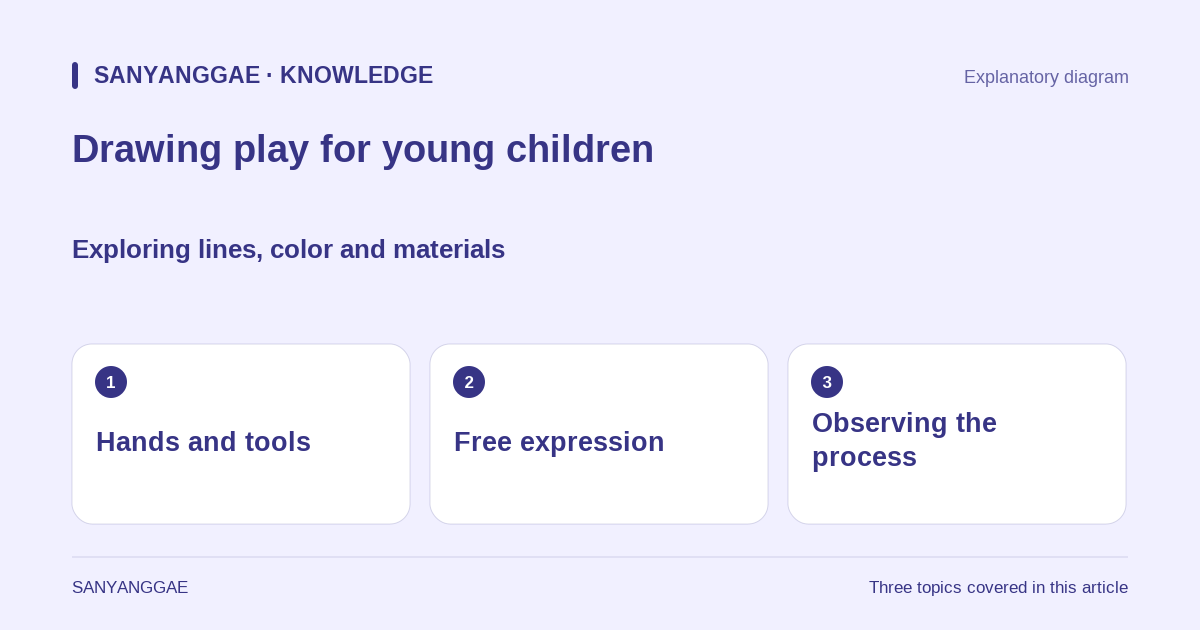
Drawing play gives children a way to move paper and tools and express their experiences. A lot of coloring cannot guarantee a measurable improvement in intelligence or concentration. Notice hand movements and expression without ranking a child’s finished picture against others’ work.
Even in the same coloring activity, filling in a shape chosen by an adult asks something different of a child than freely altering their marks. Decide first whether today’s goal is exploring tools, working together or telling a story. A clear purpose helps reduce unnecessary corrections and makes it easier to decide what to observe afterward.
1. Preparing tools and space
Set out tools the child can handle and large sheets of paper, and check age labels on the materials. Keep an eye on mouthing and small caps. Let the child make lines and marks with large movements before asking for a fine grip.
Plan how you will protect clothing and the floor. When adults constantly remind a child not to spill, exploring freely may feel difficult for everyone. Set up an easy-to-clean area or a mat and show where the materials can be used. Check whether the material is hard to get out of its container or the paper keeps slipping. See whether the tools and space help before asking the child to work harder with their hands.
2. Giving children a chance to talk about their work
With a question such as “What did you draw?” the child may feel they have to provide an answer. Try describing what you see, such as “That long line goes all the way over here.” Listen if the child adds a story, and see whether they want to choose another color or material. You can talk about the choices they made without guessing what the picture represents.
Ask the child, where possible, whether they want to keep or discard the work. They can choose a drawing to display or put aside paper to finish later. Avoid ranking the work of different family members or setting up a situation in which only pretty pictures draw praise. If you take a photo, do not demand a pose or an explanation the child does not want to give. A child’s sense of ownership matters whatever the picture looks like.
3. Developmental observations and practice
The CDC’s developmental milestones include observable behaviors such as drawing a circle when shown how. One drawing is insufficient to assess development. Unfamiliar textures or fatigue are among the many reasons a child might avoid an activity. If a difficulty persists or you are concerned about a change in functioning, consult a professional and share observations from across daily life.
4. From making marks to making choices and expressing ideas
When setting up drawing play, think about the choices available to the child. A large sheet of paper and two or three colors that are easy to use are enough to start. Fix the paper to a table or lay it on the floor according to the space and how the child moves, and decide whether to sit or stand. An uncomfortable position can affect how a child holds a tool, so look at their body position and the paper as well as their fingers. When drawing a prescribed shape is not the goal, there is no need to keep pointing out that a line crosses a boundary.
Imagine a first activity in which an adult draws one long line and the child makes whatever marks they choose. If the child keeps making dots, you can describe how the dots are gathering. Next time, use a different tool on the same paper or change the size of the paper. Making just a small change at a time helps you see what felt comfortable for the child. The child can take part with you in several ways, whether or not they copy your marks.
A child does not have to endure touching a disliked material for an art experience to be worthwhile. If a material on their hands feels uncomfortable, choose a tool that keeps it off their hands or let them watch an adult use it first. Plan to put down tools and wash hands at the end. A simple setup the family can clean up together is easier to keep using than a complicated activity that relies on an adult for all the cleanup.
5. Continuing the conversation without grading the picture
Suppose a child makes several blue lines. Instead of starting with a meaning such as “You drew the sea,” try saying what you saw: “There are lots of blue lines.” If the child says, “It’s raining,” follow their story. If they give no explanation, you can leave it there. Pictures do not always need a story. The child may later tell a different story about the same picture. It need not be treated as a lie or a changed correct answer.
When giving praise, mention a specific choice or experiment. The child might have switched colors, turned the paper or asked for help when needed. If an adult draws most of the picture to make it look good, the child has fewer decisions to make. When working together is the goal, make it clear who did which part. Comparing that piece with a child’s independent work by the same standard would miss how it was made. A photo of the finished piece tells only part of the story.
Think about situations where conflict might arise. If the child tries to draw on a wall, show where they can draw and move the paper there. If siblings want the same color, supply more tools or agree on how to take turns. These are questions about space and sharing. You can protect other people’s belongings and give the child room to express themselves.
6. What a drawing can and cannot tell you
Colors or the sizes of people in one drawing cannot establish a child’s personality, family relationships or emotional state. A child may use a color because it is close at hand or familiar. If you are concerned, look at changes in daily life and what the child says. When sharing a drawing online, present the child’s explanation faithfully and avoid labels that sound like a diagnosis.
The CDC describes things to observe at particular ages. Copying a drawing once after a demonstration does not replace developmental screening. The child’s familiarity with the tools, fatigue and interest in the activity can vary. If there are other concerns, such as persistent difficulty handling objects, changes in the use of both hands or the loss of a skill, consult a professional. It can help to record what materials the child used and what help they received.
Reflect on the activity by noting what the child chose and when they were comfortable taking part. For next time, pick one change, such as using larger paper, reducing the number of tools or allowing time to draw without telling a story. Drawing play is a chance to move, express ideas and share an experience with someone. Keeping that purpose in mind can ease pressure for both child and adult.