
Mammals (Cattle)
Galloway
Galloway
Classification and scientific name: Bos taurus
Sources checked:
A thick coat and a naturally hornless form are characteristic
The Galloway is a beef breed originating in southwestern Scotland. It relates to the white-belted Belted Galloway, but the registered populations are distinguished. A thick coat and a naturally hornless form are characteristic. Red or dun individuals occur as well as black.
Origins and distribution
Scotland
- Galloway
- Scotland
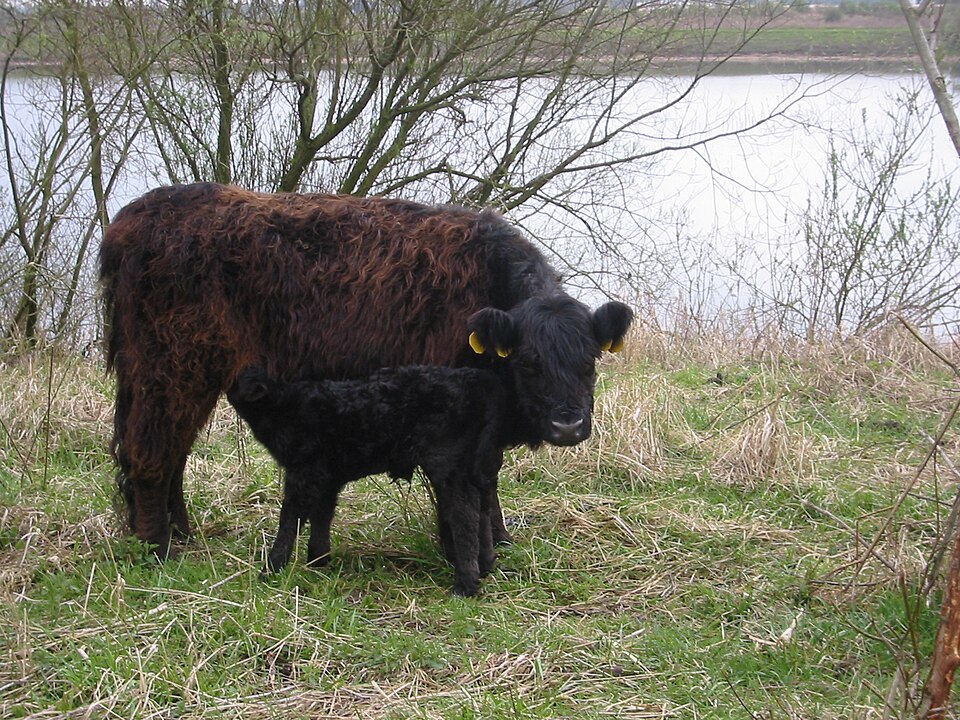
Reference photograph
Reference photograph of Galloway. Examine this individual’s color and form alongside the identification descriptions in the text.
Source: GerardM · Original material · CC BY-SA 3.0
1. Classification, origins and habitat
The Galloway is a beef breed originating in southwestern Scotland. It relates to the white-belted Belted Galloway, but the registered populations are distinguished.
Galloways are polled cattle associated with regional Scottish grazing. Despite similar names, read their history and standards separately from those of the Belted Galloway. A photograph without a white body belt can still show normal Galloway appearance.
2. Appearance and identification
A thick coat and a naturally hornless form are characteristic. Red or dun individuals occur as well as black.
The coat can look long and curly and differ between winter and summer. Red and dun, as well as black, occur, so do not describe one color as the breed’s only appearance. Observe the hornless head outline and thick coat together.
Distinguish ordinary Galloway photographs from Belted Galloways known for a broad white belt around the middle. Despite related histories, they are different registered populations. Shared long coats and hornlessness do not make all appearances and names identical.
3. Behavior and way of life
The breed has mainly been used for grazing. A coat adapted to harsh climates does not replace heat management in hot environments.
A history of grazing coarse vegetation highlights diversity in pasture resources. It does not guarantee adequate nutrition on every piece of land, so consider season and pasture condition. Despite being polled and fluffy, adults are powerful large livestock.
4. Observation, conservation and care
Check pasture condition and seasonal nutrition. When comparing breed photographs, consider body belts together with registered names.
Do not estimate nutrition from coat volume; observe body condition, gait and feed use. A thick coat does not remove the need for shade and ventilation in hot periods. When conservation farms introduce registered animals, check whether their labels say Galloway or Belted Galloway.
Evidence and references
- Oklahoma State University — Galloway
Classification, origins, appearance, ecology or uses of the breed
- Defra — Cattle welfare guidance on behavior, feeding and environment
General principles of feed, water, rest and handling. A United Kingdom source, not guidance on Korean legislation.