
Mammals (Cattle)
Highland cattle
Highland Cow
Classification and scientific name: Bos taurus
Sources checked:
Long outer hair, a thick undercoat, hair over the forehead and long horns are prominent
Highland cattle are a traditional domestic cattle breed developed in Scotland’s uplands and western islands. Long outer hair, a thick undercoat, hair over the forehead and long horns are prominent.
Origins and distribution
The Scottish Highlands and western islands
- Highland cattle
- The Scottish Highlands and western islands
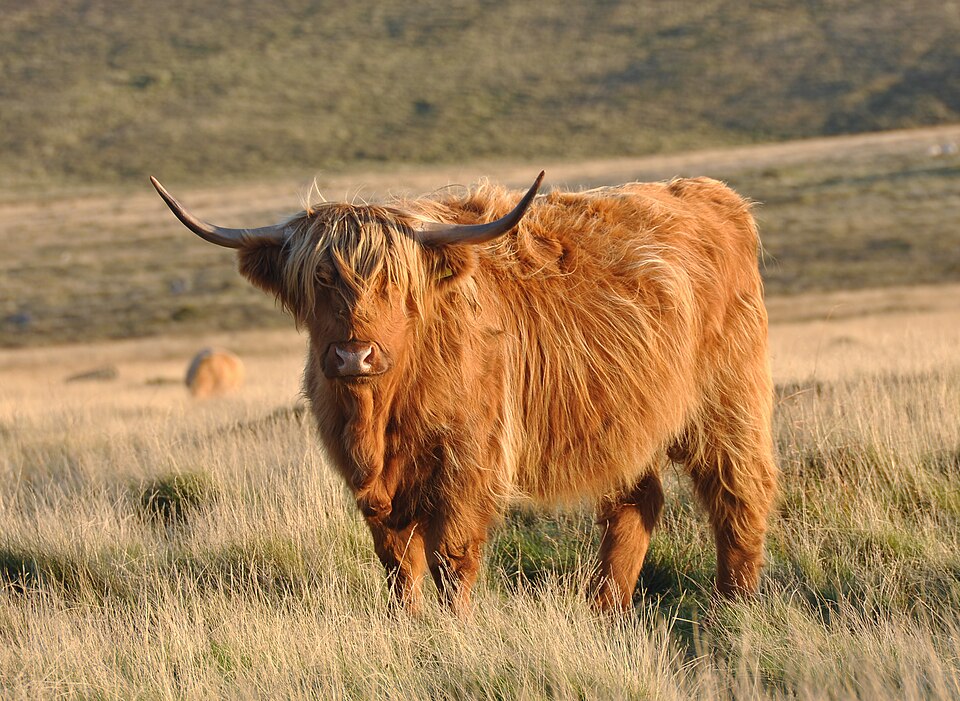
Reference photograph
Reference photograph of Highland cattle. Examine this individual’s color and form alongside the identification descriptions in the text.
Source: Nilfanion · Original material · CC BY-SA 3.0
1. Classification, origins and habitat
Highland cattle are a traditional domestic cattle breed developed in Scotland’s uplands and western islands. Size and coat color historically differed by locality, but these differences are now treated as diversity within one breed. Popular photographs of small calves on social media do not mean that the breed remains a small companion animal in adulthood.
Differences between island and mainland lines help explain variation in color and build within the breed. Rather than treating long hair as evidence of another species, understand regional livestock developing within domestic cattle.
2. Appearance and identification
Long outer hair, a thick undercoat, hair over the forehead and long horns are prominent. Colors include black, yellow and grayish shades as well as reddish brown. Horn thickness and direction also vary with sex and age. A close-up of a shaggy head can hide the adult’s large body, so consider the whole animal and its proportions against surrounding objects.
Hair covering the eyes or horns extending outside the frame reduces identification information. Whole-body photographs allow the lower outline of the long coat to be distinguished from the actual leg positions.
3. Behavior and way of life
The breed is associated with cold, rough grazing environments and is raised for beef using grass and shrubs. A coat adapted to cold is not evidence that no care is required in hot, humid weather. Hardiness or calmness in historical breed accounts does not guarantee immunity to all disease or safe touching by everyone.
Eating shrubs does not imply that every plant is safe to eat. Pasture plant composition and seasonal feed availability require management; a landscape photograph does not show the entire diet.
4. Observation, conservation and care
Management must provide clearance for long horns and assess body condition beneath the thick coat. A full appearance does not justify judging weight and nutrition by coat volume. In hot periods, consider water, shade, ventilation and activity timing. At visitor facilities, maintain the advised observation distance rather than approaching head-on because the fringe looks cute.
A thick coat has winter benefits and summer burdens. An origin in a cold region does not justify reducing water, shade or nutrition in other climates.
Evidence and references
- Oklahoma State University — Highland cattle
Species-specific information on origins, appearance, uses or ecology
- Defra — Cattle welfare guidance on behavior, feeding and environment
General principles of feed, water, rest and handling. A United Kingdom source, not guidance on Korean legislation.